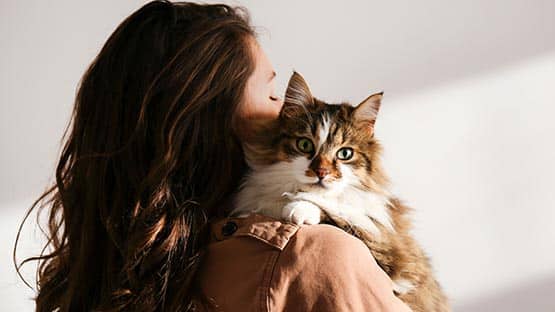
If you Google ‘ESA cat application’, you will find many sources expanding on the topic from different angles. It can be confusing to navigate the many claims around applying for your cat to be an ESA, or emotional support animal.
Additionally, many websites sell ESA cat registration services, which may contain misleading content. To start, it is important to know that you don’t have to register your cat as an emotional support animal with a legal body. The ESA cat application process refers to obtaining an ESA letter from a licensed mental health professional (LMHP).
We have drafted this guide to help you navigate the process safely and legally.
What is an ESA cat?
An emotional support cat is an animal that helps their owner with their mental and emotional well-being. ESAs help people with issues such as PTSD, anxiety, and depression through their companionship. Note that this doesn’t mean that the ESA cat is providing treatment, but is more so acting to boost professional therapy outcomes.
Is there a legal ESA cat application process?
At the federal level, there is no requirement for registering your cat as an emotional support animal. Additionally, emotional support cats don’t have rights under the Americans with Disabilities Act. This means that no registration or application can allow your cat special rights in public spaces such as restaurants or shops.
However, ESA cats have rights under housing regulations. The Fair Housing Act allows ESA cats to be exempt from ‘no-pet’ policies and standard pet fees. To be eligible for this exemption, owners will have to obtain a letter from a licensed mental health professional. This is the only documentation that is required as part of the ESA cat application process.
How long does an ESA cat application take?
An ESA cat application, consisting of a letter from an LMHP and approval by the landlord, can take anywhere from 5 to 12 days. Usually, the official letter is issued within a day or so. In some instances, depending on the individual LMHP, the letter can take a few days to be issued. Then the landlord’s approval can take another few days to a week.
Step-by-step ESA cat application process
The following sections clarify the exact steps you need to take to register your cat as an ESA. The process involves first getting an official letter from a licensed mental health professional, and then submitting it to your landlord for approval.
Step one: Mental health evaluation
If you are diagnosed with mental or emotional disabilities, including but not limited to anxiety or depression, you legally qualify to utilize an ESA animal.
If you haven’t been diagnosed with your symptoms and want an ESA cat, then it is important to get a professional mental health evaluation. Your psychiatrist, therapist, or psychologist will make your diagnosis as the first step to starting your ESA cat application.
Step two: Assessment of need
As part of your medical evaluation, your medical practitioner will ascertain that the companionship of an ESA will aid your case. The focus will be on ensuring that the emotional support animal is beneficial for your individual case. Once this is done, and the professional confirms your need for an ESA, you are eligible to apply for an official letter.
Step three: ESA letter issuance
At this point, once you are evaluated by an LMHP, they will move towards issuing your letter. The letter will state that you have a mental or emotional condition, and that your symptoms can be alleviated by the support of an ESA cat.
Step four: Housing submission and approval
At this final step, once you receive your ESA cat letter from the LMHP, you will have to submit it to your housing provider. They will ascertain the legitimacy of your letter and approve your request for reasonable accommodations. Through this letter, your ESA cat will be exempt from no pet policies and standard pet fees.
Note that the details of your diagnoses are to remain confidential and do not have to be shared with your housing provider.
Busting common ESA cat application myths
There are many misconceptions surrounding the ESA cat application. This is because some people confuse the process of service animal registration with that of ESA animals. Here are a few pointers to note:
- ESA cats do not have to be registered, certified, or have an ID
- ESA cats do not have public access rights
- Only a licensed mental health professional can issue an ESA letter
Being aware of the facts will help you avoid online scams that sell ESA registration certificates or ESA IDs.
Moving forward with your ESA cat
ESA cats can provide invaluable support and companionship, especially for individuals looking for help with their mental and emotional wellbeing. The key takeaway is that applying for an ESA cat is not about a government registration, but instead entails a mental evaluation that confirms your need for the animal. This process ensures that you can get the necessary accommodations that ensure you seamlessly benefit from the support of your ESA cat.
This content is provided for informational purposes only and is not a substitute for professional advice. AFP editorial staff were not involved in the creation of this content.


 Share
Share