Dear EarthTalk: As millions and millions of electric car batteries start to reach the end of their useful lives, how can we avoid an e-waste apocalypse?
– W. Alexander, San Francisco, Calif.
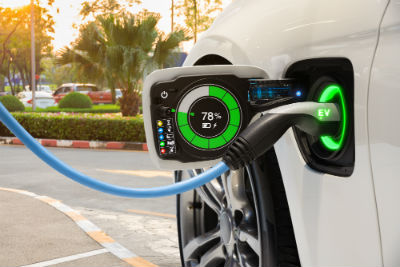
Record-breaking electric car sales confirm that the future of electric transport is here. Globally, 10 million lithium-ion battery-powered vehicles are now on the road. The International Energy Agency predicts that number will increase to 300 million by 2030, accounting for over 60 percent of new car sales. But a huge problem looms on the horizon: in less than a decade, nearly two million tons of lithium-ion batteries from electric vehicles will be retired each year, and the current recycling infrastructure isn’t ready for them. Most lithium-ion batteries are tossed in landfills, with only five percent recycled worldwide.
Researchers at Newcastle University in the UK warn that this growing stream of spent batteries poses “an enormous threat” to the natural environment and human health. “Degradation of the battery content in some cases may lead to the emergence of chemicals structurally similar to chemical warfare agents.”
Given the risks, upping our capacity for recycling these batteries is imperative not only to avoid possibly catastrophic landfill disposal, but also to reduce the need for harmful mining. More than 70 percent of the world’s cobalt, the most expensive element in a lithium-ion battery, is produced in the Democratic Republic of the Congo (DRC). One would assume this to be an economic miracle for miners in the DRC, however unrelenting poverty forces even the children to work in the mines instead of attending school.
In addition to pitiful wages, DRC miners face serious health threats and local environmental annihilation. Researchers at the University of Lubumbashi found that residents near the mines, especially children, had higher urinary levels of cobalt, cadmium and uranium. The urinary cobalt concentrations found in this population are the highest ever reported for a general population. Fish in the DRC are also heavily contaminated with high levels of metals, while soil samples are so contaminated that the mining regions of the DRC are considered among the 10 most polluted areas in the world.
Lithium mining has also spurred a backlash across the globe, including in Serbia, Tibet and Chile. And in the U.S., residents near Thacker Pass in Nevada formed a grassroots group to sound off on multiple concerns should a proposed lithium mine begin production there. Concerns include a possible dramatic decrease in air quality due to the tens of thousands of gallons of diesel fuel that will be burned daily at the proposed mine, releasing the same carbon dioxide emissions as a small city. The mine would also extract more than a billion gallons of water annually from an already over-allocated aquifer in the Quinn River Valley, possibly leaching dangerous substances into groundwater in the process. Further distressing are the adverse impacts to the area’s unique sagebrush steppe terrain, a habitat for over 350 species, including greater sage-grouse, golden eagles, pronghorn antelope, burrowing owls, pygmy rabbits and more.
Dramatically increasing recycling capacity for lithium-ion batteries and creating new ways to store electricity safely are crucial to staving off the worst impacts of our newfound reliance on this technology.
CONTACTS: Environmental impacts, pollution sources and pathways of spent lithium-ion batteries, pubs.rsc.org/en/content/articlehtml/2021/xx/d1ee00691f; Protect Thacker Pass, protectthackerpass.org; High human exposure to cobalt and other metals in Katanga, a mining area of the Democratic Republic of Congo, pubmed.ncbi.nlm.nih.gov/19486963/; Human exposure to metals due to consumption of fish from an artificial lake basin close to an active mining area in Katanga, pubmed.ncbi.nlm.nih.gov/26953137.
EarthTalk® is produced by Roddy Scheer & Doug Moss for the 501(c)3 nonprofit EarthTalk. See more at emagazine.com. To donate, visit earthtalk.org. Send questions to: [email protected].


 Share