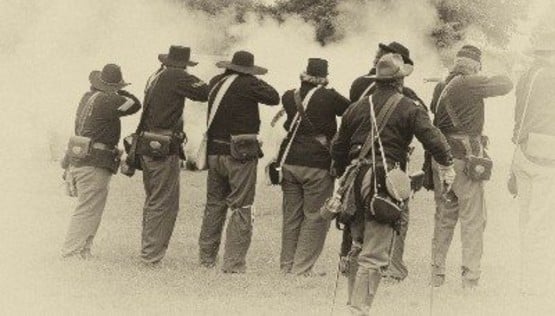
Living in the Shenandoah Valley means living in the presence of history.
We drive past Civil War battlefields on our way to work. We pass historic churches, cemeteries, farms, courthouses, and towns whose stories reach back centuries. History is not an abstraction here. It is part of the landscape.
That is why recent efforts by the Trump administration to reshape historical interpretation at the Smithsonian Institution and other federal sites deserve our attention. The administration argues that museums and historical institutions have become too focused on division, grievance, and national shortcomings and should instead present a more uplifting account of American history. Supporters call it a restoration of balance. Critics call it political interference.
The debate is often framed as a fight between patriotism and criticism. But that misses the more important questions.
Who benefits when history becomes more comfortable?
Who gets to decide what Americans remember?
History is never simply a collection of facts. It is also a collection of choices. What stories get told? What stories get repeated? Which figures are elevated? Which voices fade into the background?
No serious historian argues that America has not accomplished remarkable things. The nation’s ideals of liberty, self-government, and equal rights have inspired generations. But those ideals are only part of the story.
The America we inherited was built not only by presidents, generals, and industrialists, but also by enslaved people, immigrant laborers, factory workers, suffragists, civil rights activists, and ordinary citizens who challenged existing power. Their struggles were not side notes to the American story. They helped shape it.
This is not a rejection of American history. It is an expansion of it.
When governments begin deciding that certain historical narratives are too negative, too divisive, or too uncomfortable, we should be concerned, very. History is not meant to be an advertising campaign for the nation. It is meant to help us understand how we arrived where we are.
The current effort to reshape historical interpretation seems less interested in adding perspectives than in narrowing them. Slavery, Native dispossession, segregation, labor conflict, and discrimination are not partisan inventions. They are historical realities. To reduce their significance is to diminish the people who endured them and those who fought against them.
Patriotism does not require forgetting.
The purpose of history is not to make us feel guilty. It is also not to make us feel comfortable. The purpose of history is understanding.
A mature democracy should be capable of confronting the whole of its history, including the parts that challenge our self-image. If our freedoms and institutions are truly strong, they should not depend on selective memory for their defense.
The story of America is neither a tale of uninterrupted greatness nor one of unrelenting oppression. It is the ongoing struggle to make the nation’s highest ideals apply to more people. That story becomes smaller, not larger, when some voices are pushed back to the margins.
Historical understanding became deeper not because uncomfortable topics were excluded, but because more voices were included.
That is how historical literacy works. We do not arrive at a fuller understanding by removing complexity. We arrive there by embracing it.
A nation confident in its achievements should not fear the whole of its history.
It should welcome it.
Support AFP



 Share