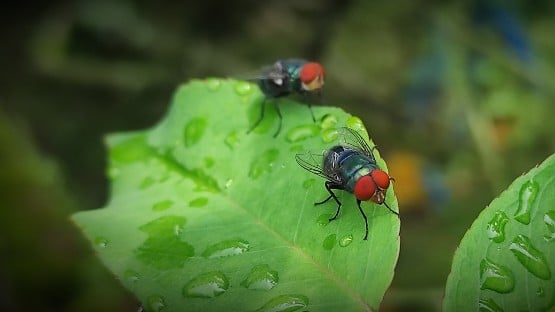
Good news for our cattle farmers here in Virginia: the people who would know are saying the New World Screwworm outbreak in Texas has an almost zero percent chance of making it this far.
The bad news for us all, though: beef prices, already high, could end up spiking, because the Trump regime is screwing up the response.
“It’s a definition of insanity,” Texas Agriculture Commissioner Sid Miller told NewsNation on Friday. “We’re doing the same thing over and over, expecting different results. It’s just not happening.”
Miller went to DC this week to talk directly with USDA officials to try to convince them to deploy a bait-and-kill method called the Screwworm Adult Suppression System – an integrated pest management tool that utilizes chemical attractants and toxicants in a bait pellet to kill adult female screwworm flies.
The use of SWASS and a second tool called the Sterile Insect Technique – releasing massive numbers of sterilized male flies to collapse local populations – led to the eradication of the parasite from the U.S. by 1966, but it re-emerged in the U.S. Southwest last year, after an outbreak in Panama and Costa Rica in 2023 that has been slowly, but steadily, making its way northward for the past three years.
The Trump USDA’s dawdling in dealing with the spread has allowed the initial U.S. outbreak to spread into New Mexico and Arizona.
Miller cited entomologists at Texas A&M projecting the NWS outbreak could persist for a decade as an obvious cause for concern.
“This is a $32 billion industry in Texas. We can’t afford to have that attacked,” Miller said in the TV interview.
Nor can the rest of us – those of us who like to eat beef, anyway.
John Currin, a clinical associate professor at the Virginia-Maryland College of Veterinary Medicine, thinks the short- and long-term odds of the screwworm reaching Virginia are “incredibly close to zero,” but cautioned that people transporting livestock or pets to or from Texas still need to think things through.
“People need to be aware, if they’re traveling into that area, to prevent bringing it back,” Currin said. “There are products available for both NWS prevention and treatment for livestock, pets and people who may be traveling there.”
The Virginia Department of Agriculture and Consumer Services is on the job monitoring interstate animal movements to prevent the entry of infected animals.
“As with any pest or disease outbreak, we encourage livestock producers and animal owners to stay informed and engaged with their animals’ health,” Virginia State Veterinarian Dr. Charlie Broaddus said. “If New World Screwworm does find its way to Virginia, we are ready to respond and help protect the health of our animal populations. We are fortunate that with NWS not surviving in sustained temperatures below 46 degrees, Virginia is not at risk for NWS to become established here long term.”




 Share
Share

Chris Graham