 In 1982 my then legislative assistant came to me distressed that her father had been found to have Alzheimer’s disease. My response was similar to that of many at the time to say, “What is that?” Not much was known about Alzheimer’s before the 1980s. Old people were called senile; some had dementia. If testing to determine the reason for memory loss was negative, the patient was declared to have Alzheimer’s disease–whatever that was. Soon after I became aware of Alzheimer’s Disease, national news stories started to break about the number of people suffering severe memory loss and the rapid rate at which that number was growing.
After consulting with researchers at the Medical College of Virginia, now the Virginia Commonwealth University School of Medicine, who were doing work in the areas of dementia and Alzheimer’s, I introduced legislation establishing the Alzheimer’s Disease and Related Disorders Research Award Fund to provide seed money for larger federal and foundation grants. The Fund continues to today and has shown a 10 to 1 return on money invested by the state in the first state level research fund. I also introduced legislation establishing the Alzheimer’s and Related Disorders Commission that continues to do studies and make recommendations on policies related to Alzheimer’s. Its work can be reviewed at http://alzpossible.org/, including the Dementia State Plan along with lists and descriptions of resources on the subject.
What I never realized when I was first introduced to this subject was the extensive nature of it. The Alzheimer’s Association estimates that 5.3 million have the disease with women almost twice as likely as men to get it. The direct costs associated with the care of Alzheimer’s sufferers are estimated to be $221 billion. Projected to the year 2050, the number of people with the disease is likely to be 13.8 million Americans with a cost of care of $1.1 trillion.
The effect of the disease on the individuals is devastating; the loss of memory for some can be gradual over many years and for others can be rapid. In my experience from chairing the Alzheimer’s Study Commission for several years I found that the effects on family care givers can be devastating as well. While some resist institutional care, the 24/7 responsibility of caring for someone can take its toll. The number of day programs that can accommodate individuals with Alzheimer’s Disease has expanded as have other opportunities for respite care.
According to the CDC, Alzheimer’s is the sixth leading cause of death in the United States and the only one in the top ten for which there is no prevention, cure or effective treatment. Congress has been slow to appropriate increased monies for expanded medical research. Although there continues to be some hopeful work going on, research and educational programming is highly dependent on individuals contributing through such organizations as the Alzheimer’s Association.
With the projected increase in the number of people affected by Alzheimer’s and the promising effects of genome research, funding should be a priority.
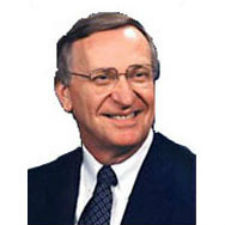
Ken Plum is a member of the Virginia House of Delegates.
Support AFP



 Share
Share