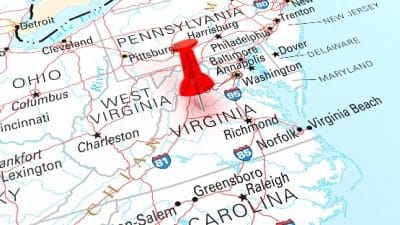
More than 150 major rivers and streams flow into the Chesapeake Bay, Virginia’s most well-known estuary. This historically significant body of water has also provided livelihoods for fishermen, recreation for locals and visitors that flock to the region, and of course has been a vital water source for residents for hundreds of years.
The environmental woes of recent decades, however, have made the bay more memorable for the major challenges that have been foisted upon its delicate ecosystem.
Virginia Tech researchers in the College of Agriculture and Life Sciences have been working on several fronts to develop novel strategies to preserve the Chesapeake Bay while also implementing ways to balance population growth with sustainable uses of the bay, including as a water, food, and recreation resource.
Kurt Stephenson, professor of agricultural and applied economics, investigates how and to what extent financial incentives can be created for pollution prevention from programs like nutrient credit trading.
In theory, regulated dischargers could purchase credits from entities and individuals who make investments to lower pollutant levels in the bay. Wastewater treatment plants successfully use nutrient credits to lower the cost of complying with stringent regulatory requirements.
Stephenson is looking at ways to expand the range of potential investments that could be used and credited for improving bay water quality.
“The first inclination is for source reductions,” said Stephenson. “But the goals for cleanup of the Chesapeake are so ambitious, we need to consider other avenues we have for mitigating excess nutrients. I’m asking, ‘How do you create incentives to enhance the assimilation of nutrients already in the system?'”
According to Stephenson, Virginia is the only state in the country that has authorized the use of in situ nutrient removal in a nutrient trading program. The commonwealth approved the system in 2012.
Pollution reduction investments lead to a cleaner bay more quickly, Stephenson said.
Another researcher in the college, Zach Easton, has also been ensuring that the Chesapeake Bay will remain a healthy water resource for decades to come.
Easton, an assistant professor of biological systems engineering in the College of Agriculture and Life Sciences and the College of Engineering, recently won a grant from the National Science Foundation to study the impact of climate change on the bay and develop strategies to mitigate the stresses of climate change on water quality and bay function, particularly with respect to farming and land development.
Easton also helped to alleviate runoff when legislation passed that dramatically reduced the amount of nitrogen and phosphorous allowed to flow from rivers and estuaries into the bay.
He developed a cost-effective biofilter that filtered out excess nutrient runoff and was easily incorporated into farming operations.
Other scientists from the college working on developing solutions to keep the Chesapeake Bay clean include Gene Yagow, senior research scientist in the Department of Biological Systems Engineering. One aspect of his research seeks to calculate the total maximum daily load of pollutants that the bay can accommodate using a method that breaks down water use by population segments.
Another scientist, Brian Benham, a professor of biological systems engineering, Extension specialist, and director of the Center for Watershed Studies, works to mitigate the harmful effects of agricultural and other land-disturbing activities and disseminate information about sustainable water resources management.
In addition, Stephenson, Easton, Benham, and Yagow are members of the Chesapeake Bay Program’s Scientific and Technical Advisory Committee, a collection of six federally-appointed, 11 jurisdiction-appointed, and 21 at-large elected scientists from across the six states and the District of Columbia that lie within the Chesapeake Bay drainage area.
In the Department of Entomology, Thomas Kuhar, professor and Extension specialist, is working to develop sustainable and integrated pest management practices to minimize the use of toxic pesticides that could make their way into the bay from farming vegetable crops. He conducts some of his research at the Eastern Shore Agricultural Research and Extension Center in Painter, Virginia.
In the Department of Food Science and Technology, David Kuhn is working with oyster hatcheries to boost profits and protect the watershed.
Many others from the college are working toward the health of the bay by researching everything from land use and stormwater to alternative energy development and wetland protection.


 Share
Share

AFP