Water conservation is becoming a priority for homeowners across the country, especially in regions that experience hot summers and periodic droughts. Choosing the right grass is one of the most effective steps toward maintaining a healthy, attractive lawn while cutting water consumption and long-term maintenance costs.
Understand your climate and growing conditions
The single most important factor in selecting a drought-tolerant grass is matching the variety to your local climate. Grasses fall into two broad categories: warm-season and cool-season. Warm-season grasses, including Bermuda, Zoysia, and Buffalo grass, thrive in the heat of the South and Southwest. They grow most actively from late spring through summer and go dormant in cooler months. Cool-season grasses, such as tall fescue and Kentucky bluegrass, perform better in northern climates where summers are mild and winters are cold.
Compare the most popular drought-tolerant grass types
Once you know your climate zone, comparing the leading drought-tolerant varieties becomes much more straightforward.
Bermuda grass is one of the most widely planted warm-season grasses in the United States. It forms a dense, durable turf and handles heat well. Warm-season grasses like Bermuda thrive in hot, humid environments and require only 1 to 1.5 inches of water per week. The tradeoff is that Bermuda needs full sun and goes dormant and brown during winter months.
Zoysia grass offers a slightly softer texture and better shade tolerance than Bermuda. It spreads more slowly but forms a thick mat that resists weeds and tolerates moderate drought. It suits homeowners who want a manicured look with less mowing.
Buffalo grass is a native prairie species and one of the most water-efficient options available. It works well in low-maintenance settings and dry climates, but it doesn’t hold up to heavy foot traffic as well as Bermuda or Zoysia.
Each variety comes with its own tradeoffs in appearance, traffic tolerance, and maintenance demands. No single grass is best for everyone.
Consider how your lawn is used
Drought tolerance matters, but so does durability. A lawn that sees daily use by children, pets, or sports activities needs grass that recovers quickly from wear. Bermuda grass, particularly improved cultivars, ranks among the best options for high-traffic areas. Its aggressive root system allows it to repair itself rapidly after damage.
Evaluate long-term maintenance needs
Drought tolerance and low maintenance are not always the same thing. Some drought-resistant grasses still require frequent mowing, heavy fertilization, or careful pest management. Before choosing a variety, think through what the lawn will actually demand across a full year.
- Mowing frequency: Bermuda grass grows quickly during warm months and typically needs mowing every five to seven days in peak season. Zoysia grows more slowly and requires less frequent cuts.
- Fertilization: Warm-season grasses generally need nitrogen applications two to four times per year. Skipping fertilization leads to thinning and reduced drought performance.
- Seasonal dormancy: Most warm-season grasses go dormant and turn brown in winter. This is normal and does not indicate poor health, but it is a visual reality homeowners should expect.
- Recovery from drought stress: Grasses with deep root systems bounce back faster after dry spells. Root depth is often a better indicator of true drought performance than surface appearance.
Choose a grass that aligns with your actual maintenance habits, not your ideal ones. The gap between those two things is where frustration and extra costs tend to live.
Look for grass varieties specifically bred for water efficiency
The shift toward improved cultivars
Turfgrass breeding has advanced considerably over the past few decades. Modern cultivars are no longer selected purely for appearance or growth rate. Researchers now prioritize water-use efficiency, root architecture, and the ability to hold color under reduced irrigation. The result is a generation of grasses that perform significantly better than their predecessors when rainfall gets scarce.
Consider TifTuf Bermuda grass
For homeowners in warm-season climates looking for a grass that combines drought tolerance, durability, and attractive year-round appearance, many consider TifTuf Bermuda grass as a reference point for what modern turfgrass breeding can achieve. The Federal Specialty Crop The research initiative has identified TifTuf as the most drought-tolerant Bermudagrass, and further testing has shown that it uses 38% less water than Tifway while maintaining better turf quality.
TifTuf Bermuda grass is a proprietary turfgrass developed by the University of Georgia in response to water scarcity and growing environmental pressures. (source) That kind of purpose-built breeding represents the direction the entire turfgrass industry is moving, and it sets a useful benchmark when evaluating any drought-tolerant variety.
Make a cost-effective decision for the future
Installation costs vs. long-term savings
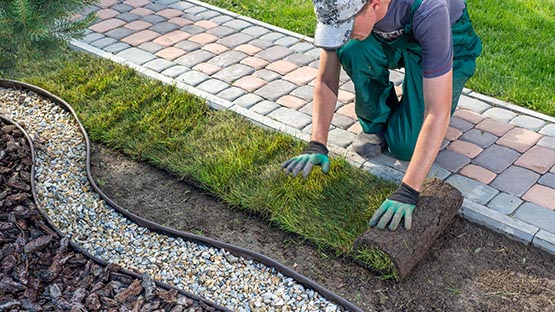
Sod typically costs more upfront than seeding, but it establishes faster, cuts erosion risk, and delivers a usable lawn within weeks rather than months. For drought-tolerant varieties, faster establishment also means less water needed during that critical early growth window.
Questions to ask before you buy
Before purchasing sod or grass plugs, work through these questions:
- Is this variety rated for my USDA hardiness zone and climate region?
- What is the expected water requirement per week during peak summer heat?
- How does this grass perform during dormancy, and will the appearance meet my expectations?
- What are the mowing height and frequency recommendations?
- Is certified or named-variety sod available, or am I buying an unverified generic?
Asking these questions before installation prevents the costly mistake of choosing a grass based on price alone, only to spend more on water and upkeep over the following years.
The takeaway
The best drought-tolerant lawn is the one that fits your specific climate, how you use your outdoor space, and how much maintenance you are realistically prepared to do. No single grass variety works for every homeowner, but narrowing down the options is straightforward when you start with climate, layer in usage requirements, and then evaluate maintenance demands. Water-efficient cultivars developed through modern breeding programs have raised the bar for what a drought-tolerant lawn can look like, and that raises the ceiling for what homeowners can realistically achieve even in dry, demanding conditions.
This content is provided for informational purposes only and is not a substitute for professional advice. AFP editorial staff were not involved in the creation of this content.




 Share
Share