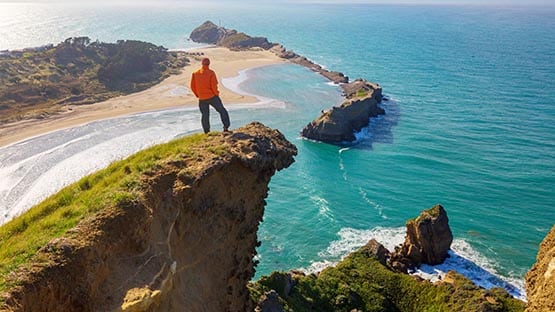
Most trips eventually come to an end.
The luggage gets unpacked. The photos get uploaded. Life returns to its normal rhythm. Within a few days, work meetings, school schedules, errands, and responsibilities begin filling our calendars again.
Yet some journeys remain with us long after we’ve returned home.
Years later, we still remember certain landscapes. We recall conversations that happened during long drives. We think about the people we met, the unexpected moments we experienced, and the perspective we gained from stepping outside our everyday routines.
What makes certain destinations so memorable isn’t always luxury, convenience, or even perfect weather.
Often, it’s the way a place makes us feel.
Travel gives us something modern life often doesn’t
Most of us spend our days moving from one responsibility to the next.
There is always another email to answer, another task to complete, another obligation demanding attention.
While routines provide stability, they can also narrow our focus.
We begin seeing the same streets, interacting with the same people, and following the same patterns day after day.
Travel interrupts that cycle.
It introduces uncertainty, curiosity, and discovery. Suddenly, we find ourselves paying closer attention. We notice details. We ask questions. We become learners again.
That shift alone can be surprisingly refreshing.
Why nature changes our perspective
One of the most powerful aspects of travel is the opportunity to spend time in places that remind us how large the world really is.
Standing beside an ocean, looking across a mountain range, or walking through a vast wilderness has a way of putting everyday concerns into perspective.
The challenges we carry often don’t disappear.
But they begin to feel more manageable.
Many travelers seek destinations where nature plays a central role because these environments encourage reflection in ways that busy cities and crowded schedules often do not.
The experience isn’t simply about sightseeing.
It’s about creating space to think.
The value of slowing down
Modern culture tends to celebrate productivity.
We are encouraged to optimize our schedules, maximize efficiency, and stay constantly connected.
The result is that many people struggle to slow down even when they have free time.
Travel can provide an opportunity to step away from that mindset.
Instead of focusing on what needs to happen next, we become more present in what is happening now.
A walk along a coastline.
A quiet morning with a cup of coffee.
An afternoon spent exploring somewhere unfamiliar.
These moments may seem simple, but they often become the memories that endure.
Shared experiences strengthen relationships
Research consistently suggests that travel experiences can strengthen family relationships, improve communication, and create meaningful shared memories. Families often report feeling more connected when they spend time together away from daily routines and distractions.
The reason may be straightforward.
Travel changes the nature of our interactions.
Conversations become less transactional.
Instead of discussing schedules, deadlines, and household responsibilities, people talk about what they are seeing, learning, and experiencing together.
Those conversations often reveal sides of people we don’t always see at home.
Parents learn new things about their children.
Couples reconnect.
Friends deepen relationships.
The destination becomes a backdrop for something more important: connection.
Why New Zealand captures the imagination of so many travelers
Some destinations seem almost designed for this type of experience.
People planning Holidays to New Zealand are often drawn by images of dramatic landscapes, rugged coastlines, mountain ranges, and outdoor adventures. But many travelers discover that the country’s greatest appeal goes beyond its scenery.
What makes a place memorable is often the combination of natural beauty and the feeling it creates.
The opportunity to disconnect from distractions.
The chance to spend time outdoors.
The ability to move at a different pace.
These qualities help explain why certain destinations continue to appear on travelers’ bucket lists year after year.
Travel teaches lessons we don’t expect
One of the most interesting things about travel is that the most valuable lessons are often unplanned.
You may leave home hoping to see a famous landmark and return having learned something entirely different.
Perhaps you will become more patient.
Perhaps you discover greater confidence in unfamiliar situations.
Perhaps you gain a deeper appreciation for different cultures and ways of life.
Travel has a way of challenging assumptions.
It reminds us that there are many ways to live, work, and find happiness.
That perspective can be difficult to gain without stepping outside our usual environment.
Experiences become part of our story
Psychologists and travel researchers frequently point to experiences as important contributors to well-being and life satisfaction. Family travel, in particular, has been associated with stronger relationships, positive emotions, and lasting memories that continue to influence people long after a trip ends.
Unlike possessions, experiences often grow more valuable over time.
A photograph becomes a reminder of a meaningful moment.
A story gets retold at family gatherings.
A shared memory becomes part of a family’s identity.
The trip itself may last only days or weeks.
The impact can last much longer.
Bringing something home
The best trips rarely end when the plane lands.
They continue influencing how we think, what we value, and how we view the world.
Sometimes the change is significant.
More often, it’s subtle.
A greater appreciation for nature.
A renewed commitment to spending time with loved ones.
A reminder that life is larger than our daily routines.
These lessons are easy to overlook while traveling.
They often become clearer after we return.
Conclusion
Travel is not simply about visiting new places.
It is about creating opportunities for discovery, reflection, and connection.
The destinations that stay with us are rarely memorable because everything went according to plan. They remain meaningful because of how they made us feel and what they helped us understand about ourselves and the people around us.
Long after the itinerary is forgotten and the photographs have been stored away, those experiences continue shaping the stories we tell and the memories we carry forward.
And that may be the most valuable part of the journey.
This content is provided for informational purposes only and is not a substitute for professional advice. AFP editorial staff were not involved in the creation of this content.


 Share
Share