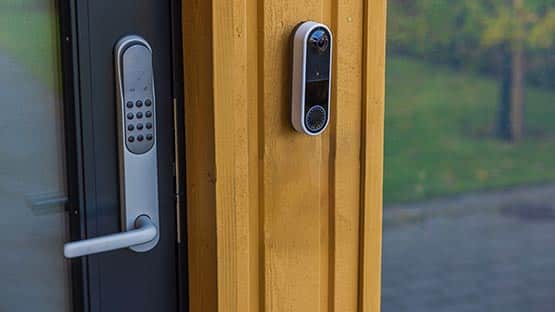
Home security looks very different from the systems many homeowners remember. Cameras, motion sensors, smart locks, and mobile apps can now work together to help protect a home, even when you’re away.
But choosing the right system involves more than picking the latest device. Before you buy, it helps to understand how these options work together. Here’s what to consider when choosing a home security setup.
A modern system combines several layers of protection
A modern home security system can combine alarms, cameras, and smart home devices to protect your home in different ways.
- Door and window sensors detect forced entry and alert a monitoring center. The center can contact you and, when needed, local authorities.
- Indoor and outdoor cameras can detect motion, send alerts to your phone, and record footage. Cloud storage can also let you review video after an alert.
- Smart devices add convenience. Smart locks, lights, and thermostats can connect to the same app. You can lock doors, adjust lights, and arm your system from one place.
Professional installation reduces the risk of setup mistakes
How you install a security system can affect how well it protects your home. If you place a sensor incorrectly or angle a camera poorly, you can end up with blind spots without realizing it.
DIY systems can work well for smaller homes and homeowners who feel comfortable setting them up. But you still need to place sensors correctly, connect the equipment, and set up the network. Mistakes can cause the system to miss activity or send too many false alerts.
Professional installation handles these details for you. A technician can check your home’s entry points, place equipment where it can work best, and test the system before leaving. If you want installation and professional monitoring handled together, home security from SafeStreets gives you both from the start.
Monitoring response depends on how the system stays connected
A camera does not always mean your home has professional monitoring. With a self-monitored system, alerts go to your phone, and you decide what to do next. A system with professional monitoring sends the alert to a staffed monitoring center first.
The connection also matters. Systems that use cellular networks can stay connected if your Wi-Fi goes down or someone cuts a landline.
Some systems also offer two-way voice through the control panel. The monitoring center can speak with you during an alarm and help determine whether it’s a break-in, a pet, or a false alarm. This can help prevent unnecessary emergency calls.
Burglary trends still support investing in prevention
More than 1.2 million burglaries were reported across the U.S. over the past two years, according to FBI Uniform Crime Reporting data.
You can’t prevent every break-in, but visible security measures can make your home less appealing to someone looking for an easy target. Cameras, yard signs, and visible alarm equipment can all show that a home has security in place.
The risk exists in smaller communities, too, like those across the Shenandoah Valley. Even in areas with fewer burglaries, one break-in can still mean stolen belongings, property damage, and added stress for the homeowner. Simple steps to secure your home can help reduce that risk.
Cost depends on equipment, monitoring, and installation choices
Home security costs vary based on the equipment, monitoring plan, and installation method. Monthly fees may cover 24/7 monitoring, app access, and cellular service. You may pay for equipment upfront or through a contract.
Check the contract length and cancellation terms before signing. Some providers require multi-year agreements, while others offer month-to-month plans at a higher cost.
Choosing the right setup starts with an honest look at the home
The right security system depends on your home and how you use it. A small, single-story home with two entry points may need less equipment than a larger property with several doors, a detached garage, or a long driveway.
It also helps to include security when planning other home maintenance. Thinking about both at the same time can make it easier to spot issues before they become urgent.
Start with a walkthrough of your property. Whether you do it yourself or work with a professional installer, check each entry point and area you want to monitor. This can help you choose equipment that fits your home instead of paying for devices you don’t need.
Where this leaves homeowners
The best home security setup is one that fits the home you actually live in. Start with your entry points, property layout, daily routine, and how much you want to manage yourself.
From there, compare the equipment, installation, monitoring, and costs of each option. Take the time to understand what each system offers before you buy. A thoughtful setup can give you practical protection without paying for features your home doesn’t need.
This content is provided for informational purposes only and is not a substitute for professional advice. AFP editorial staff were not involved in the creation of this content.
Support AFP



 Share