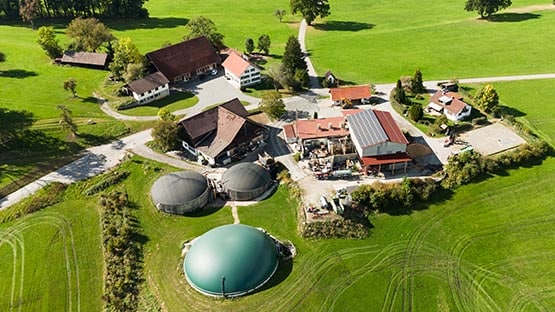
A dairy farm collects manure every day. A vegetable processor may pay to dispose of tons of peels, pulp, and rejected produce. Both handle organic materials that still contain usable energy.
Anaerobic digestion offers a way to recover that energy while keeping valuable nutrients in agricultural use. Manure and food-processing residues are broken down to produce biogas, which can replace purchased fuel or generate electricity. The remaining material can be processed for fertilizer.
Making the process work requires dependable collection and storage. For agricultural facilities, steel agriculture tanks provide containment for manure, process water, and other liquids involved in waste management.
How anaerobic digestion turns waste into energy
Inside a sealed digester, microorganisms break down organic matter without oxygen. As the material decomposes, it releases biogas containing approximately 50% to 75% methane. Carbon dioxide makes up much of the remainder, along with moisture and smaller amounts of other gases.
Operators must maintain suitable temperatures and feeding conditions for the microorganisms. Sudden changes in the amount or composition of incoming waste can reduce gas production.
Which agricultural wastes work best?
The type of organic material affects gas output, equipment requirements, and operating costs.
| Feedstock | Potential advantage | Main challenge |
| Livestock manure | Regular supply from dairy and hog operations | Sand, bedding, and relatively low energy yield per unit of wet material |
| Food-processing waste | Some residues offer high biogas potential | Variable composition, packaging, and excessive organic loading |
| Crop residues | Uses additional agricultural byproducts | Fibrous material may require pretreatment and slower digestion |
Manure and food waste can also be processed together through co-digestion. A dairy digester receiving suitable food-processing residues may produce more gas than one operating on manure alone. However, the additional material must be screened for contaminants, and feeding rates need to remain within the system’s capacity.
Using biogas and digestate
Biogas requires appropriate cleaning before use. Moisture removal is common, while hydrogen sulfide treatment depends on gas quality and equipment requirements.
The recovered gas can generate electricity or supply heat for buildings and industrial processes. More extensive purification produces renewable natural gas (RNG), which must meet the specifications of its intended use.
Digestate, the material remaining after digestion, contains nutrients such as nitrogen and phosphorus. Its liquid and solid portions can be separated for different agricultural uses. Land application requires nutrient testing and suitable management to avoid excessive fertilizer application or runoff.
When biogas makes financial sense
A digester changes the cost of handling organic waste, but the financial benefit depends on what happens to the gas and digestate afterward.
For a dairy farm with year-round heating or electricity demand, using biogas on-site may reduce purchased energy. A food processor could benefit by sending unavoidable organic residues to a nearby digestion facility instead of paying for conventional disposal. Some operators also receive tipping fees for accepting waste from other businesses.
Selling RNG creates another revenue opportunity, although gas upgrading, compression, transportation, and connection to a suitable market add considerable expense. A project producing enough biogas for farm heating will not necessarily support the investment required for commercial RNG sales.
The environmental benefit depends on existing waste practices
Manure stored in uncovered anaerobic lagoons can release substantial methane. Capturing that gas in a digester and using or destroying it can reduce emissions compared with the original storage arrangement.
Gas leakage and emissions from digestate storage must still be controlled. Treatment equipment also consumes energy, so the environmental assessment should account for the entire operation.
For food businesses, preventing edible waste remains preferable to processing it for energy. Anaerobic digestion is most useful for unavoidable residues that have no suitable food-use outlet.
Infrastructure behind a reliable biogas system
A digester requires more than a sealed vessel. Incoming waste must be collected and prepared, gas needs a safe route to treatment or use, and digestate must be removed and stored.
Contamination is a common source of operating problems. Sand from livestock bedding can settle inside equipment and accelerate pump wear. Food residues containing plastic packaging require separation before digestion. Poor feedstock preparation can lead to blockages and additional maintenance.
Tank design also affects performance. A properly engineered anaerobic digester tank provides containment suited to the operating temperature, liquid characteristics, and gas-handling requirements of the process.
Bolted steel digesters may use corrosion-resistant coatings and insulation, with roof or sidewall connections for mixing equipment. The design must account for exposure to hydrogen sulfide, internal operating pressures, foundation conditions, and access for inspection.
What should be checked before investing?
A feasibility study should answer four practical questions:
- Is the feedstock supply dependable? Measure daily volumes, seasonal changes, contamination, and transport costs. A digester relying on outside food waste needs reliable supply agreements.
- Where will the energy go? Compare on-site electricity and heating demand with the cost of selling power or upgrading gas to RNG.
- What happens to the digestate? Identify available storage, nutrient-management requirements, and suitable agricultural or commercial outlets.
- Can the project cover its operating costs? Include equipment maintenance, labor, permits, insurance, gas treatment, and financing alongside construction expenses.
Gas safety also belongs in the initial design. Methane is flammable, while hydrogen sulfide presents serious health hazards. Facilities need suitable gas monitoring, pressure protection, emergency procedures, and trained personnel.
The future of biogas in America’s circular economy
Biogas development offers opportunities for cooperation between livestock farms, food manufacturers, and energy providers. A dairy operation with an existing manure collection system may benefit from suitable organic residues supplied by a nearby processor. The processor gains a waste-management outlet, while the farm receives additional material for gas production.
These arrangements work best when transportation distances are manageable and feedstock quality remains consistent. Responsibility for processing, gas sales, and digestate management also needs to be established before construction.
Renewable fuel programs and certain state clean-fuel policies can improve the economics of qualifying projects. Their value depends on eligibility rules and changing credit markets. Better gas-cleaning equipment and automated process monitoring are also improving how facilities manage production, although substantial initial investment remains a barrier.
Not every farm needs its own digester. For smaller operations, delivering suitable waste to an established regional facility may be more economical than building and operating a separate system.
The strongest projects begin with a dependable organic waste stream and a clear use for the energy produced. When those conditions are met, biogas can reduce disposal expenses, supply useful fuel, and return nutrients to farmland. That is where the circular economy becomes a practical business model rather than simply an environmental goal.
This content is provided for informational purposes only and is not a substitute for professional advice. AFP editorial staff were not involved in the creation of this content.
Support AFP



 Share