Saving Virginia’s coasts: UVA research takes on sea-level rise
Most experts agree that sea-level rise will be a top threat to the commonwealth of Virginia in the coming decades.

Most experts agree that sea-level rise will be a top threat to the commonwealth of Virginia in the coming decades.

For unmanned aircraft systems to safely fly in increasingly crowded airspace, they must be able to accurately detect and avoid obstacles.

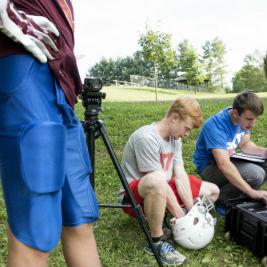
The majority of the head-impact research that will help keep athletes safer has focused on college and professional players.

Researchers in need of space to store, preserve, and share data have a new option available:VTechData, Virginia Tech’s new data repository.

The Virginia Tech Department of Physics research lab has pulled off a galactic turkey, getting all three of their proposed projects with the Hubble Space Telescope approved for the coming year.

Increased research and clinical funding is necessary to better understand the epidemiology of concussions and improve treatment following injury.

A black bear’s ability to give birth during hibernation — a time when food and other resources are extremely limited — has always puzzled scientists.

Some of nature’s most fascinating relationships happen beneath the soil, according to one Virginia Tech undergraduate researcher.

Right in line with her athletic endeavors, Mackenzie Wernick is researching how fatigue affects a person’s loading symmetry when they run.

The Virginia Tech Mid-Atlantic Aviation Partnership, Dominion Virginia Power, and HAZON Solutions conducted drone research flights last week.
Our content is free to read, but we do have bills to pay. Pitch in and help us keep the community informed.