Joe Rogan — podcaster, UFC commentator, “comedian” — has spent years building the most valuable brand in media on a single premise: what you see is what you get. No corporate influence, no party line, no filter. Just a guy in a studio asking questions and telling it like it is.
It’s a cultivated image that’s made him the most listened-to podcaster on the planet and an influential force in the 2024 presidential election.
But a recent conversation with Rogan’s friend, libertarian comedian Dave Smith, subtly reveals the gap between that image and the reality underneath it.
Here are a few key moments from that interview that, when combined, shed light on what’s really happening beneath the surface.
The authenticity setup
The conversation opens with Smith kissing the ring, as he offers Rogan some familiar flattery that doubles as a thesis statement for their entire dynamic:
“However anyone feels about you, you’re authentic. And it’s very hard to deny that.”
It’s worth taking this seriously for a moment, because it’s not entirely wrong. Rogan is a genuinely compelling broadcaster. His long-form format, his willingness to let conversations breathe, his obvious curiosity — these things are real (or were real), and they explain a loyal audience that numbers in the tens of millions.
Authenticity built this empire.
But authenticity at that scale is also a product. Rogan operates under a $250 million Spotify deal. He is, whether he likes the framing or not, a media institution. And Dave Smith — a libertarian to MAGA-adjacent comic who benefits directly from access to that platform — is not offering a neutral observation here.
He’s greasing the wheels of an interview between two men who largely agree with each other. Smith’s compliment might be genuine from his perspective, but it also helps prop up both of their brands in the process.
The slip
A few minutes in, Smith says the quiet part loud:
“The best thing about Donald Trump winning was that the corporate media finally admitted it… they would always kind of go like ‘the fringe Joe Rogan’… but 2024, the election — that’s when they all admitted it.”
There it is. Not “one aspect of Trump winning” — but the best thing. Smith isn’t framing the 2024 election as a political event to be analyzed. He’s framing it as a personal vindication, a victory lap for their side of the culture war, and Rogan’s silence speaks volumes.
Smith’s quote is telling in a way Smith probably doesn’t intend. The grievance being nursed here was never really about media bias or journalistic integrity. It was about status. Being called “fringe” stung, and Trump winning was the moment the scoreboard finally reflected what they believed all along.
The politics were almost secondary. And once Trump didn’t deliver on his promises, the reaction was surprise or disappointment rather than accountability.
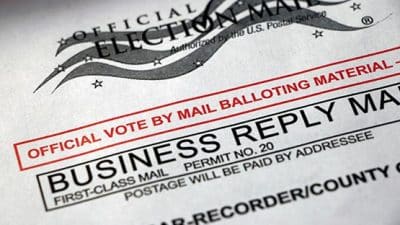
Before the 2024 election, Rogan sat down with Donald Trump for a three-hour interview that functioned, in effect, as an endorsement. The biggest issue being the lack of pushback from Rogan during the Trump interview — he threw softball questions and never brought up Epstein or anything controversial.
His influence was real — real enough that commentators across the country credited him as a meaningful factor in the outcome. And here is his friend, on his show, celebrating that outcome as the best thing to come out of Trump’s victory.
The rebrand
Which makes what comes next seem almost unbelievable in its timing. A few minutes after Smith’s victory lap, Rogan pivots smoothly into his centrist persona:
“I’m not on either body, anyone’s side. The Democrats aren’t ever going to get someone like me because I’m not with either or… I’m with whoever makes sense.”
The whiplash is the point. Read these two quotes back to back and ask yourself whether they belong to the same conversation, let alone the same worldview.
One moment, Trump winning is cause for celebration. And in the next breath, Rogan is a free agent who can’t be bought, waiting for a candidate who simply “makes sense.”
The AI governance bit — Rogan joking that he’d be fine with “President Perplexity” running the country — is doing a specific kind of work here. It’s the sound of a man performing detachment. Too clever for politics, too independent for teams, too plugged-in to pretend any of this matters that much.
The subtext reads: both sides suck, we’re overwhelmed, so let’s get rid of this broken system and give in to AI.
Don’t forget that Rogan has given platforms to Peter Thiel and Elon Musk, as well as members of the administration, and has a direct line to President Trump. This doesn’t sound like someone without a bias.
As much as Rogan loves to remind us, “I don’t know what I’m talking about” — and despite his influence on the last election — he can escape criticism by declaring ignorance. It’s a helpful angle when you’ve just spent a year helping elect someone and don’t want to own the consequences. “I’m with whoever makes sense” is an exit ramp that’s always available, because it requires no clear definition and no actual accountability.
The cover
The interview’s final move is its most clever. Rogan takes on MAGA directly — not to reject it, but to distance himself from it:
“The concept of making America great is a great idea. But as soon as you have a team… you’ve got a bunch of people running around spouting out opinions and you have to go along with them because they’re MAGA… You messed up by becoming a part of a group.”
This is a masterclass in having it both ways. Rogan validates the core of the movement — the concept, the patriotism, the genuine believers — while distancing himself from its embarrassing elements: the bots, the chaos, the “dorks.”
Love the king, hate the court.
It lets him keep the audience, keep the credibility, and remain conveniently unaccountable for whatever the movement does next. No one thinks of themselves as the “dorks” of the movement, and that way his followers can point the finger at some anonymous “dork” themselves.
The “groups are the problem” argument sounds principled until you apply it. Rogan isn’t actually outside the system — he’s one of its most powerful members. And keep in mind, Rogan is the leader of the “Rogansphere” which is a group of his comedian friends who all seem to believe the same thing.
An “outsider” endorsement, precisely because it comes without the label, is often worth more than a party-line one. By loudly not being MAGA, Rogan may have done more for MAGA than most of its official champions.
That’s not a paradox. That’s using leverage.
Support AFP



 Share
Share