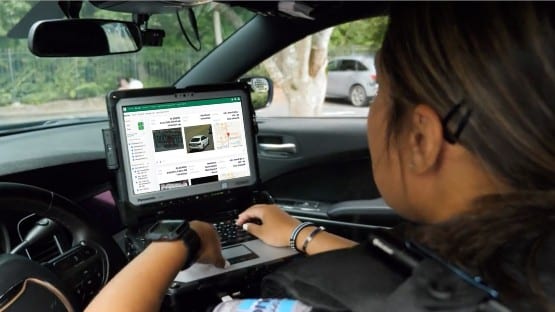
The Richmond Police Department has terminated direct access by the ATF to its license plate reader program after it was apparently misused for immigration enforcement.
Queries were allegedly made by an analyst with the Bureau of Alcohol, Tobacco, Firearms and Explosives, in violation of RPD’s operational standards, related to ICE, or Immigration and Customs Enforcement.
In response, the analyst’s access was immediately terminated. Moving forward, no federal agencies will have access to its license plate reader program, according to a statement from the RPD.
“ATF is a valued partner in our efforts to combat violent crime in Richmond, but their analyst should not have been granted access to our system — and absolutely should not have used it for immigration enforcement purposes,” said RPD Chief Rick Edwards.
The RPD administrator who granted the ATF agent access to the program is no longer in the department.
“I’ve been clear with the public, with city leadership, and within this department, the Richmond Police Department does not enforce federal immigration law, and we do not investigate a person’s immigration status,” Edwards said.
“If ATF had formally requested access for that purpose, I would have denied it.”
Anthony Spotswood, the ATF special agent in charge, said in a statement that the agency values its partnership with the Richmond Police Department and regrets that this situation occurred.
“Our ATF analyst accessed RPD’s system in support of ATF’s overall mission and although all the queries involved criminal activity, they were not in compliance with RPD’s guidelines. While our investigative analysts support both criminal and immigration-related efforts, the majority of these searches were directly tied to local investigations involving gun trafficking, violent offenders and fraudulent firearms purchases,” said Spotswood. “In one instance, a potential residency violation may have prompted the use of ICE in a search field, but all queries were related to criminal activity, not civil immigration enforcement.”
Chief Edwards said it is “frustrating” that this occurred, but he appreciates the ATF’s willingness to acknowledge what happened and provide clarification on the searches.
“We remain committed to working with our federal partners on the investigation and prosecution of violent crime,” said Edwards. “But moving forward, no federal agencies will have access to our license plate reader program. This tool is vital to solving serious crimes in our city, and we will ensure it is used lawfully, responsibly, and in alignment with Richmond’s values.”
RPD: The timeline around the unauthorized queries by the ATF
- The ATF analyst requested access to the RPD license plate reader program on Feb. 7, 2025, to “assist our agents and TFOs [task force officers] with investigations in and around Richmond.” At the time of their request, the ATF was not actively involved with immigration enforcement. The RPD administrator of the program granted access to the ATF analyst.
- The RPD administrator of the program is no longer with the department.
- In March 2025, the mission of the ATF changed to include immigration enforcement.
- In early March, four detainees from an ICE detention facility in Farmville escaped. In the effort to assist the investigation, the ATF analyst made numerous inquiries to RPD’s license plate reader program in an effort to apprehend the escapees.
- In total, the ATF analyst queried 49 unique license plates receiving more than 400 results to those inquiries. Over a quarter of the results received related to the incident in Farmville.
- The cases involved in the ATF analyst’s queries were:
- a mixture of cases that the ATF traditionally investigates with RPD and other partners, i.e. firearms offenses or violent crime, regardless of a subject’s immigration status (35 of the 49 unique license plates)
- cases that Homeland Security Investigations pursues regarding immigration enforcement (14 of the 49 unique license plates). According to the ATF, all of those cases in the second group involved individuals that had committed a crime or had a criminal background.
- The analyst did not include the name of the state for a license plate query which produced a result from a different state for the same license plate numbers and letters. According to the ATF, all queries made using the system were for investigations in the state of Virginia.
- Pursuant to the new Virginia law taking effect on July 1, 2025, other states no longer have connections to Virginia license plate information.
- On June 11, the new RPD administrator received an alert from Flock Safety, the vendor of the license plate readers, that two searches from the ATF analyst inadvertently accessed Illinois vehicle data with ICE in the query field which is a violation of Illinois law.
- Within five minutes of the new RPD administrator recognizing the ATF analyst had access to the RPD system and was using it in violation to RPD guidelines, the administrator terminated the ATF analyst’s access to the system.
- An immediate audit was conducted to ensure no other federal partner or other user outside of RPD personnel had access to the license plate reader program. No other user was found to have access.
- The new administrator began an internal investigation on how and when access was granted to the ATF analyst by the previous manager.
- Last Wednesday, RPD received a media request to discuss “a set of Flock license plate searches the Richmond PD ran from around March 31- April 9, 2025. These searches show ICE in the Flock Safety audit log reason field. Upon receiving this request, a more comprehensive investigation was conducted by RPD leadership.
- ATF officials were invited to Richmond Police headquarters to discuss the matter. Yesterday, the ATF officials and the ATF analyst met with the chief and senior command staff. ATF agreed to provide more data on the searches they conducted.
- ATF states that no apprehensions occurred solely off the information obtained by the ATF analyst using the RPD license plate reader technology.
Support AFP


 Share
Share

Crystal Graham