As inflation hits and prices are rising, I decided to look at the electric costs of my home and out buildings on my farm. My combined monthly bill on five Shenandoah Valley Electric Coop meters on my farm is upwards of $900 per month. These include an equipment shed with shop, a hay barn, a two-stall horse barn, a garage and my old farmhouse.
In 2025, I built a new hay barn, and after Shenandoah Valley Electric Coop told me it would be $2,000 to run a line from the nearest pole to the barn, I decided to investigate DIY solar.
There are several companies that sell solar components at contractor prices online and that help you design an on-grid and off-grid solar system. I chose Signature Solar (I get no kickbacks for this).
About the author
- Bill Rogers is a resident of Augusta County.
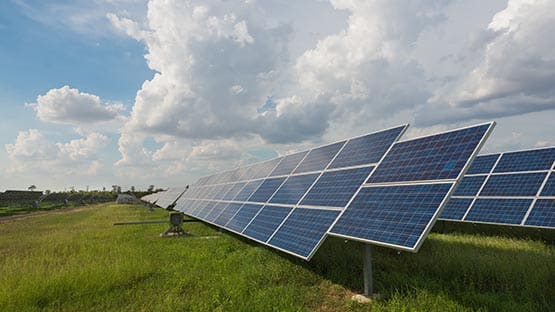
They helped me design a small system for my new barn. I purchased eight high-wattage solar panels, an inverter, batteries, ground mounted solar racks and wiring for about $10,000. I watched YouTube videos (there are many) on how to install the system. It took me and my friend about three days to figure it out and install the system. The components are really off-the-shelf components that are assembled with few tools. I was surprised how painless it was, and it worked the first time I turned it on.
I currently run a 24-hour light, security system, barn lights, a well pump and 6 trickle chargers for equipment with plenty of power available as needed.
So, $10,000 seems like a lot to some people. Here is my logic. I can bank $10,000 and make 4 to 6 percent interest. That amounts to about $500 extra per year. Or I can invest in offsetting my SVEC bills monthly. My estimate for my new barn electric bill would be about $150 per month for the barn. Plus, I offset the $2,000 that SVEC wanted to run the service line. So, annually my return on my $10,000 is $1,800, plus the one-time charge of $2,000. That’s easy math for me.
The payback for the investment is 5.5 years, and then you have 20 to 30 years after that with no-cost power.
The panels are warrantied for 25 years, and the inverter is warrantied for 10 years.
ICYMI
Additionally, SVEC is asking the State Corporation Commission for an increase in electric rates of $6.25 per 1,000 kilowatts of power starting May 1, 2026. And increases will only continue. DIY off-grid solar power stops the ongoing increases from SVEC. It’s obvious that SVEC has no interest in solar installations when their latest edition of Cooperative Living magazine has no mention of solar in 36 pages.
Since that installation last year, I have invested in a second solar system and converted most of the circuits in my garage to a second solar system. This one consists of 22 solar panels capable of producing 11,000 watts of power at peak times. This system offsets my main house well, two heaters to keep my buildings from freezing, a heater in my horse waterer, lights, security systems and trickle chargers for my vehicles.
I could have designed this as a net-metered system with SVEC and eliminated the batteries using SVEC as the battery, but with batteries I can keep my well and heaters operating during a power outage. SVEC made it very difficult to do net metering, so I chose to go off grid. I’m seeing $200 a month ($2,400 per year) offset on my SVEC bill, and I plan to eventually charge my Ford F150 EV with solar.
Last, I am working now on converting my horse barn to solar. I’m adding a very small system to offset two fans, a heated tack room and two night lights. This bill is currently $110 per month. I can’t wait to tell SVEC to take out the meter.
All told, I expect to offset $450 in electric bills every month for the next 30 years. That math represents a $160,000 savings excluding inflation and rate increases.
Most solar companies don’t do off-grid systems, and if they do the cost would be three times than what I paid.
DIY solar is not just for the person who lives in a cabin in the woods, solar systems can have a high return for our outbuildings in Augusta County and the surrounding areas.
Support AFP



 Share
Share