Virginia Environmental News
The January cold snap and brutal ice storm, followed by recent warmth brought one of the worst maple syrup seasons to Highland County in recent memory. Hotter and drier summers and less predictable winter weather patterns are imperiling this centuries-old tradition.
The Augusta County Board of Supervisors agreed to contribute $5,000 as a local match for a GO Virginia grant to fund a study considering whether the county could host a data center.
Virginia lawmakers passed a bill directing utilities to gather and report detailed data on their use of the power grid. This data can then be used by regulators to force efficiencies and reduce costs, optimizing their current infrastructure before building new power plants.
Virginia lawmakers passed a bill to cement the state’s membership in the Regional Greenhouse Gas Initiative. It is designed to prevent future governors from withdrawing it after former governor Gov. Youngkin used a loophole to do so in 2023.
Dominion Energy says its huge 2.6 GW Coastal Virginia Offshore Wind Farm will begin delivering power by the beginning of April.
The Virginia General Assembly almost unanimously passed a bill legalizing “balcony solar.” This makes Virginia the second state after Utah where you can buy a plug-in solar array at a big-box store and set it up on your balcony or anywhere the sun shines.
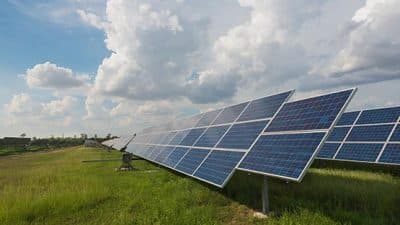
LEGO is including a huge solar installation at its new $1.5 billion facility being built in Chesterfield. It is also building to LEED Platinum certification, the highest level under the Leadership in Energy and Environmental Design rating system.
Gov. Spanberger appointed Josephus Allmond, a former Southern Environmental Law Center attorney, as her cabinet-level Chief Energy Officer to address high utility bills and Virginia’s long-term power needs.
Our Climate Crisis
Scientists recognize that climate change is accelerating, making our weather wilder. Extreme weather pushed temperatures above 100°F in parts of California and the Southwest in March, even as it was still winter. At the same time, blizzard conditions whipped the upper Midwest.
The snowpack in Colorado this winter is the lowest it has been since record-keeping began. People are, consequently, bracing for an early and severe fire season.
Wyoming just wrapped up its warmest winter ever, surpassing Dust Bowl records. Snowfall records hit new lows and temperatures soared to new highs at almost every weather station in the state.
Rising seas may threaten tens of millions more people than scientists and government planners originally thought because of mistaken research assumptions on how high coastal waters already are. They underestimated baseline coastal water heights by an average of one foot.
Politics and Policy
The Republican One Big Beautiful Bill Act subsidizes fossil fuels by an average of $3.5 billion each year, according to a new report from Senate Budget Committee Democrats. This does not even include the general corporate tax cuts in the bill.
The Trump administration will pay the French energy giant TotalEnergies nearly $1 billion to abandon its plans to build wind farms off the East Coast and, instead, invest in oil and natural gas projects in Texas and elsewhere.
The Trump-led attack on solar energy may be easing as some MAGA influencers reckon with its crucial role in powering AI and keeping utility bills in check.
U.S. automakers risk being reduced to niche producers of gas vehicles if they don’t catch up to Chinese carmakers and technology companies in electric vehicles and self-driving cars.
The UK business secretary says they must “double down” on renewable energy as the US and Israel’s war with Iran has exposed the nation’s reliance on costly fossil fuels from parts of the world which are fundamentally unstable. Other countries in Asia and Europe will follow suit.
Rescinding the EPA “endangerment finding” to regulate greenhouse gas emissions may have undermined the Trump administration’s legal arguments against state-level climate policy. They can no longer claim that such state laws are preempted by federal regulation.
The Trump administration has choked off Cuba’s oil supply, and China is stepping in by supplying solar panels. As a consequence, Cuba is rapidly ramping up its solar power from almost none to now supplying 10% of its electrical grid.
Energy

Globally, more solar and wind power was built than ever in 2025. The scramble for much-needed electricity and cheaper tech are driving the growth.
TerraPower’s nuclear reactor project in Wyoming is the first new commercial reactor to receive federal approval in nearly a decade. It is the first in a new wave of smaller, advanced reactors meant to be easier to build and less expensive than the large reactors of the past.
Geologists have discovered a gigantic reserve of natural hydrogen in France. Early tests suggest it burns clean and could be cheaper than factory-made green hydrogen.
The use of coal in the UK fell last year by 9 million tons and helped drive down its greenhouse gas emissions by 2.4%. The amount of coal used last year was the same as in 1600 when some of William Shakespeare’s works were first performed on stage.
Asia is pivoting to coal as the U.S.-Israeli war against Iran has choked off its supply of LNG.
An oil company quickly dug a four mile deep geothermal well in Colorado. The goal was to test whether new drilling techniques could reduce the cost and time required to drill superdeep geothermal wells — a potential global clean-energy game-changer.
Base Power announced the launch of a 100-MW home battery network for a Texas utility. It will install enough home batteries to rival a gas-fired peaker power plant.
Hydropower was long the leading source of renewable energy in the U.S. but is now surpassed by wind and solar. Its growth has been flat and most hydroelectric dams are more than 50 years old.
Households in India are rushing to buy electric induction stoves, draining stocks online and in stores, amid fears of a potential cooking gas shortage tied to the war in the Middle East.
Texas led the U.S. last year by installing 11 GW of solar power — more than twice the amount installed by any other state. It is also on track to lead the country in battery energy storage.
China has joined an international pledge to “triple global nuclear energy capacity between 2020 and 2050.”
Land, Food, and Agriculture
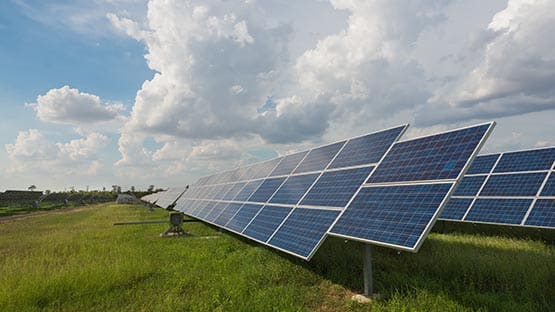
A mammoth solar farm is moving forward in the heart of California. Farmers are among its backers because they don’t have enough water to grow crops on big chunks of their land, and they’re looking for new uses for it.
An experiment by a team of Swiss researchers shows that biochar survives cow digestion largely intact, potentially turning cattle into a vehicle for spreading this carbon-stabilizing ingredient into the soil.
As climate change intensifies wildfires and other extreme weather events, a coalition led by the Chicago Botanic Garden is collecting the Midwest’s dwindling supply of native seeds and placing them in long-term storage.
Shortly after Trump took office, the U.S. Department of Agriculture took down its climate risk data for farmers. Now, after a lawsuit, it has agreed to put it back up and, even if the webpages come down again, the data can remain public.
Ecojustice
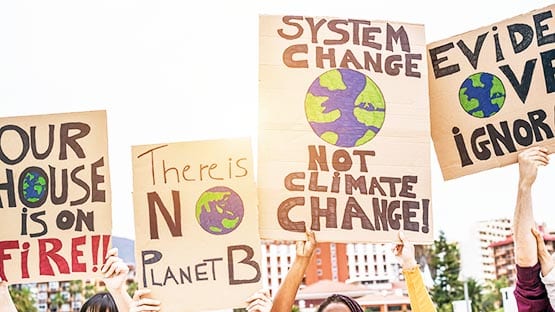
The U.S. has caused $10 trillion in damages to the global economy over the past three decades through its vast planet-heating emissions, with a quarter of this economic pain inflicted upon itself.
A North Dakota judge approved a $345 million verdict against Greenpeace in a suit against its role in protests against the Dakota Access Pipeline near the Standing Rock Sioux Reservation in 2016 and 2017. The verdict could bankrupt Greenpeace.
Israel’s bombing of Iran’s oil infrastructure will have major long-term environmental repercussions. The massive black cloud of smoke that spread across Tehran may just be the beginning. The toxic chemicals could lead to acid rain and damage the skin and lungs.
U.S.-Israeli bombardment has exacerbated Iran’s water woes, which had already been pushed to the brink by climate change, excessive agricultural use and decades of mismanagement. The war could lead to broader assaults on critical water infrastructure in the Gulf, threatening supplies for millions.
The U.S.-Israel war against Iran unleashed more carbon pollution in two weeks than Iceland does in a year. This is only the beginning. The carbon costs of the war will continue to rise dramatically as it drags on and multiply again when the destroyed infrastructure is rebuilt.
The federal government recently pulled $1.5B in funding from tribal clean energy programs. Tribes are now finding another way by turning to philanthropy, alternative lenders, and their own institutions.
Black homeowners across the U.S. are seeing their troubles mount when insurers refuse to pay out and drop long‑time customers after a natural disaster. It’s part of a national home insurance crisis supercharged by climate change.
Ecological and Climate Action
Slashing methane from oil and gas, waste systems, coal mines, and more, offers one of the fastest climate wins available. It accounts for nearly 30% of human-made global warming.
Cycle lanes, electric cars and other interventions have helped 19 cities around the world, including London, Beijing and San Francisco, slash levels of pollutants by more than 20%.
As gas prices rise, you may want to consider an electric bike or scooter rather than an electric car. It’s a massive difference in upfront cost compared to a car.
The German village of Feldheim is self-reliant in energy, making it immune to the energy price shock caused by the war in the Middle East. It slowly began building out wind powered energy and then added biogas derived from cow manure and crop residue. A wood-fired backup heating system, a solar installation, and a large battery storage unit round out the setup.
Ann Arbor, Michigan, has created a Sustainable Energy Utility. It runs in tandem with the privately owned utility serving the city and offers a supplemental service that residents can opt into. Part of the service is offering house energy audits and energy efficiency upgrades.
Support AFP



 Share
Share