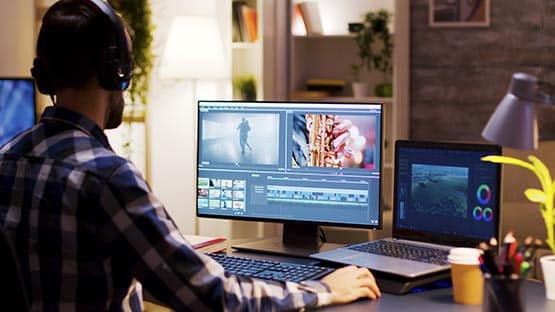
When viewing a professionally produced video, the mechanics of the timeline usually remain completely invisible. Scenes flow into one another naturally, dialogue carries across visual shifts without a hitch, and the audience stays immersed in the narrative. That effortless viewing experience relies heavily on how editors handle spatial and temporal changes. Far from being simple digital flourishes or decorative software presets, video transition effects act as the punctuation marks of moving images. They dictate how time bends, how tension builds, and how breath is taken between distinct narrative beats.
Understanding video transition effects
At the core of post-production lies a fundamental challenge. Raw footage consists of isolated clips captured across different hours, locations, or setups. Bringing these fragments together requires a bridge. A transition effect connects one shot to the next, controlling cognitive load so the human brain can process shifts in location or time without disorientation.
Moving abruptly from a bright outdoor interview to a dark control room creates visual friction if handled poorly. Thoughtful editing tools smooth out that friction, steering the viewer’s focus directly to where it matters most. Editors do not rely on these effects to decorate a timeline; they use them to preserve spatial logic and maintain emotional continuity.
Why transitions matter in video production
Pacing governs rhythm. A suspenseful sequence edited with rapid cuts creates anxiety and urgency, whereas a documentary focusing on architecture employs slow, measured changes to cultivate a sense of scale and calm. Transitions govern this psychological pacing.
Without intentional transitions, videos feel disjointed and amateurish. When an editor pairs a scene change with an appropriate visual cue or a subtle audio overlap, the narrative gains momentum. The viewer stops watching a collection of independent video clips and starts experiencing a unified story.
Popular transition effects and how they work
Modern editing software provides an extensive library of options, but skilled editors rely on a disciplined subset of techniques to manage pacing.
The standard cut and invisible edits
The straight cut remains the most powerful and frequently used tool in media production. It requires no transition effect or frame overlap, moving instantly from one viewpoint to another. When executed with strong visual continuity, the straight cut feels completely invisible.
To maintain auditory flow alongside these visual changes, editors utilize J-cuts and L-cuts. A J-cut allows the audio from the incoming clip to play before the visual appears, while an L-cut lets the audio from the preceding shot linger over the opening of the next scene. These techniques anchor dialogue-heavy scenes, preventing the edit from feeling rigid or robotic.
Optical and motion transitions
When time must pass or space must be crossed explicitly, optical transitions enter the workflow:
- Cross dissolves: Blending the end of one shot seamlessly into the start of another signals a softer passage of time or a gentle shift in mood.
- Dips to black or white: These serve as heavy punctuation marks, typically closing out chapters, sequences, or entire projects.
- Whip pans and zooms: Driven by rapid camera momentum or digital scaling, these high-energy effects match fast-paced content like travel vlogs or modern promotional clips.
- Match cuts: Joining two distinct shots through a shared geometric shape, motion vector, or conceptual theme allows editors to jump across years or continents while maintaining absolute visual harmony.
Creative transitions for social media content
The explosive growth of vertical video formats for social media platforms has changed how creators approach framing and transitions. Because portrait displays limit horizontal movement, editors rely heavily on dynamic zooms, kinetic text layers, and rapid push transitions to maintain high viewer retention within tight mobile environments.
In short-form environments, pacing is everything. Creators often sync visual changes directly to audio beats, using quick directional wipes or snappy scale effects to keep viewers hooked from the first second. However, even in fast-moving social media content, restraint separates professional work from chaotic noise.
Using transitions in interviews and promotional videos
Different genres demand entirely different editing philosophies. Corporate interviews and talking-head videos require absolute transparency. Here, flashy spinning effects or random glitch presets destroy credibility. Instead, editors use clean straight cuts, subtle audio balancing, and specialized tools like morph cuts to smooth out jump cuts when removing filler words or stumbles.
Promotional videos and brand films operate on a different frequency. These projects use transitions to mirror the energy of the product or service being showcased. A sleek tech commercial might employ precise geometric wipes and clean matching motions, while an outdoor adventure promo relies on whip pans and natural environmental occlusion, where an object passing the camera lens hides the cut.
Common editing mistakes to avoid
Even with powerful software at hand, creators frequently fall into traps that undermine their work:
- Over-editing: Applying a flashy, stylized transition between every single clip exhausts the viewer and degrades the impact of the video.
- Mismatched energy: Pairing a sluggish cross dissolve with high-tempo, aggressive electronic music creates an uncomfortable dissonance.
- Ignoring sound design: Visual cuts rarely work in isolation. Neglecting to layer room tone, sound effects, or overlapping audio bridges makes even the cleanest visual edit feel abrupt.
- Failing to capture handles: When exporting or cutting clips, forgetting to leave extra head and tail frames means software cannot generate proper optical overlaps, resulting in choppy execution.
Practical rules for cleaner editing
Achieving a professional finish requires discipline. Default to straight cuts for the vast majority of your timeline, reserving stylized effects for genuine narrative shifts. Limit your project to two or three consistent transition styles to maintain visual unity. Always preview your edit sequence in full context rather than judging transitions in isolation. If an effect does not explicitly clarify the story or improve pacing, cut it.
Frequently Asked Questions
What are the most common video transition effects used by professionals?
The standard cut remains the most frequent choice because it preserves natural pacing without drawing attention to itself. Cross dissolves and dips to black are also standard for indicating time passage or scene breaks.
How do J-cuts and L-cuts improve dialogue scenes?
J-cuts and L-cuts decouple audio from video timing. By letting dialogue lead the visual change or linger past the cut, editors create a conversational flow that feels much more natural than rigid, simultaneous audio switches.
When should I use a morph cut?
Morph cuts are designed primarily for interview or talking-head footage. They use optical flow analysis to smooth out jump cuts when removing filler words, creating the illusion of a continuous shot.
Why do flashy transitions sometimes ruin a video?
Overusing animated or stylized presets distracts the audience from the content and narrative. Professional editing prioritizes clarity and seamless flow over decorative software tricks.
How do editing handles affect transitions?
Handles refer to the extra frames at the beginning and end of a video clip. Without sufficient handle footage, editing software cannot create smooth cross-fades or optical overlaps between shots.
This content is provided for informational purposes only and is not a substitute for professional advice. AFP editorial staff were not involved in the creation of this content.
Support AFP



 Share