Owning a car means some maintenance is unavoidable. Tires wear down, fluids need changing, filters get dirty, and engine oil eventually needs to be replaced. The good news is that most of these jobs are not a surprise.
That is the idea behind vehicle preventive maintenance. Instead of waiting until a car develops a problem, regular inspections and scheduled services help identify wear and tear before it becomes a bigger repair. A mileage-based car maintenance checklist makes it easier to keep track of what needs attention and when.
The exact schedule depends on the make, model, model year, and driving conditions. For Subaru owners, scheduling regular maintenance at a trusted Subaru service center can make it easier to stay ahead of routine service and keep your vehicle running reliably for years to come.
Here is a practical look at what drivers should keep on their radar as the miles add up.
Every 5,000–7,500 miles: Take care of the basics
Regular oil service is one of the most important things a driver needs to do for an engine. Oil helps lubricate moving parts, reduce friction, and manage heat inside the engine. As it ages, contaminants build up and its ability to do its job can decline.
For many Subaru models, the manufacturer’s schedule calls for engine oil and the oil filter to be replaced every six months or 6,000 miles whichever comes first. Older Subaru models can have different maintenance intervals, so checking the maintenance schedule for the specific vehicle is important.
A basic service visit should also be an opportunity to check:
- Engine oil and oil filter
- Tire pressure and tread
- Brake operation
- Exterior and interior lights
- Windshield wipers
- Washer fluid and other fluid levels
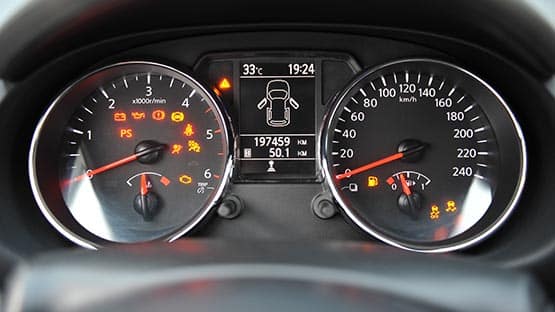
- Dashboard warning lights
These may seem like small details, but small problems are often easier and less expensive to address when they are caught early.
Around 12,000 miles: Look beyond the oil change
Once a vehicle reaches roughly 12,000 miles, tire and brake inspections are also essential. Tires should be checked for uneven wear and rotated according to the manufacturer’s recommendations. Brakes should also be inspected for signs of wear.
Subaru’s maintenance information for several model years includes tire rotation and inspection at 12 months or 12,000 miles, along with inspections of the brakes, steering, suspension, and related components.
This is also a good time to pay attention to anything that feels different. A vibration through the steering wheel, a squeak when braking, or a change in ride quality may be worth having inspected rather than simply waiting for the next service appointment.
Around 30,000 miles: Schedule a more thorough inspection
At approximately 30,000 miles, routine maintenance starts to involve more than oil and tires.
Some car manufacturers’ schedules for certain model years call for inspections of drive belts, fuel-system components, cooling-system hoses and connections, brake systems, steering and suspension components, and wheel bearings around this mileage. Brake fluid replacement may also be due depending on the vehicle and schedule.
This is where engine maintenance deserves particular attention. A technician can look for fluid leaks, damaged hoses, worn belts, or other issues that may not be obvious during everyday driving.
Around 45,000 miles: Check filters and fuel-system components
As the mileage continues to climb, air and fuel filtration become increasingly important.
Some Subaru maintenance schedules specify replacement of the air cleaner element and fuel filter around 45,000 miles. Other model years use different intervals, so drivers should check the schedule for their particular vehicle before booking service.
The air filter, in particular, is easy to overlook. It plays an important role in maintaining proper airflow to the engine. A technician can determine whether it needs replacement or simply continued monitoring.
Tires, brakes, battery condition, fluid levels, and suspension components should continue to be checked as part of routine service.
Around 60,000 miles: Give the drivetrain some attention
Reaching 60,000 miles is an important maintenance milestone. At this point, the focus expands to systems that help transfer power from the engine to the wheels.
Depending on the Subaru model and model year, maintenance at this interval can include inspections or replacement of transmission and differential fluids, CVT fluid inspection, and air cleaner replacement. Some vehicles have additional drivetrain requirements.
The important point is not to assume that every vehicle needs the same 60,000-mile service. Subaru’s official maintenance schedules demonstrate how requirements can differ between models and years.
For an AWD vehicle, drivetrain maintenance deserves particular attention because several components work together to deliver power to all four wheels.
75,000–100,000 miles: Keep an eye on wear items
Higher mileage does not automatically mean a vehicle is nearing the end of its useful life. With consistent maintenance, a well-cared-for vehicle can continue to provide dependable transportation for many years.
However, this is when keeping accurate service records becomes especially useful.
Depending on the vehicle, maintenance during this period may involve spark plugs, belts, hoses, fluids, and other components. Certain Subaru models also have specific timing-belt requirements, while others use different engine designs. Subaru’s official schedules should be consulted before replacing or servicing these components.
Drivers should also pay attention to changes in starting, acceleration, fuel economy, braking, steering, or engine noise. A change does not necessarily mean a major repair is coming, but it is worth investigating.
At 100,000 miles and beyond: Stay consistent
A 100,000-mile odometer reading is not a reason to stop investing in maintenance. If anything, consistency becomes more important.
At higher mileage, technicians should continue checking the engine, cooling system, drivetrain, suspension, brakes, tires, and electrical components. Spark plugs, timing belts where applicable, fluids, and other scheduled maintenance items should be handled according to the manufacturer’s recommendations. Subaru’s schedules also specify long-term coolant replacement intervals that can extend well beyond 100,000 miles.
Remember: Time counts too
Mileage is only one part of preventative maintenance.
A driver who travels just 5,000 miles a year can still need scheduled service. Subaru states that service intervals are based on months passed or miles driven, whichever comes first.
Driving habits matter, too. Frequent short trips, heavy traffic, extended idling, towing, and dusty conditions can place different demands on a vehicle. That makes it important to consider how the car is being used rather than relying exclusively on the odometer.
Subaru service in Jackson, MS
For Subaru owners, following the manufacturer’s maintenance schedule is a good starting point. Having the work performed by technicians who understand Subaru vehicles can make it easier to identify model-specific requirements and potential concerns.
Paul Moak Subaru provides Subaru service in Jackson, including routine maintenance, oil changes, tire rotations, brake service, battery replacement, inspections, and more. The dealership’s service department also provides a complimentary multi-point inspection during service visits, covering areas such as tires, brakes, fluids, lights, and windshield wipers.
For local drivers searching for a Subaru dealership Jackson MS, Paul Moak Subaru is located at 740 Larson St. in Jackson. The dealership serves drivers from Jackson and nearby communities, including Pearl and Ridgeland.
Make preventative maintenance a habit
The best car maintenance checklist is one that actually gets used.
Keep your service records, follow the maintenance schedule for your specific vehicle, and do not ignore changes in the way your car drives. Oil changes, tire rotations, brake inspections, fluid checks, and scheduled services may not always feel urgent, but they can make a significant difference over the life of a vehicle.
Most importantly, vehicle preventive maintenance is about staying ahead of problems rather than reacting to them. Whether your Subaru has 6,000 miles or 100,000 miles, regular care can help protect its performance, reliability, and long-term value.
When in doubt about what your vehicle needs next, check the manufacturer’s maintenance schedule or speak with a qualified Subaru service professional. A little attention at the right mileage can go a long way toward keeping your car ready for the miles ahead.
This content is provided for informational purposes only and is not a substitute for professional advice. AFP editorial staff were not involved in the creation of this content.


 Share
Share