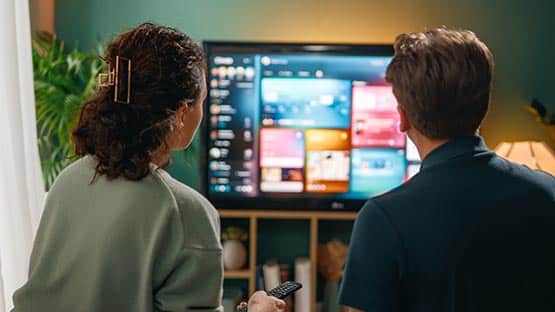
For much of the last two decades, “screen time” meant sitting back and watching, whether that was television, film, or endless video feeds. That pattern is changing quickly. Audiences, particularly younger ones, are increasingly choosing experiences where they participate rather than simply observe, reshaping how entertainment companies think about engagement. What’s actually driving this shift away from passive consumption, and how far does it reach?
Passive viewing is losing its grip on attention
Traditional viewing habits assumed a captive audience willing to sit through content in a fixed, linear order. That assumption no longer holds. With near-unlimited content available on demand, viewers have grown accustomed to skipping, scrubbing and multitasking rather than watching anything passively from start to finish.
This restlessness reflects a broader shift in expectations. Rather than accepting whatever a broadcaster or platform serves up, audiences increasingly want some degree of control over pacing, outcome or direction, even within otherwise familiar entertainment formats.
This shift is especially visible in how younger audiences approach entertainment during downtime. Rather than dedicating a fixed block of time to a single passive activity, many now move fluidly between short interactive sessions, treating entertainment as something to dip in and out of on their own terms, rather than a scheduled event to sit through from beginning to end.
Interactivity creates a stronger sense of ownership
When someone actively makes choices within an experience, whether that’s picking a path in an interactive story or making decisions in a game, they tend to feel a stronger personal connection to the outcome than they would as a passive viewer. This sense of ownership is a powerful driver of engagement, since people naturally invest more attention in outcomes they helped shape.
Several formats have capitalized on this shift particularly effectively:
- Interactive streaming specials that let viewers influence plot direction in real time.
- Live, participatory formats where audience choices directly affect what happens on screen.
- Skill-based and chance-based games that combine entertainment with a genuine sense of agency over the result.
This last category, which includes online casino games, illustrates the trend clearly: platforms such as Runa Casino offer exactly this kind of active participation, where every spin or hand played is a direct result of a player’s own decision to engage, rather than content simply unfolding in front of them.
Social connection through shared participation
Interactive entertainment often carries a social dimension that passive viewing struggles to replicate. Multiplayer games, live-streamed events with real-time chat, and shared interactive experiences all create a sense of doing something together, even when participants are physically apart.
This social layer has become increasingly important as more entertainment consumption happens at home, on individual devices, rather than in shared physical spaces like cinemas. Interactive formats help recreate some of that communal feeling that passive, solitary screen time often lacks.
Live chat features, shared leaderboards and real-time reactions all contribute to this effect, giving people a reason to stay engaged with an experience for longer, simply because other participants are visibly part of it alongside them, even if only through a screen.
The technology making interactivity effortless
Widespread high-speed internet and increasingly powerful mobile devices have removed most of the old technical barriers to interactive entertainment. Actions that once required specialized hardware or noticeable loading delays now happen instantly, which matters enormously for maintaining a sense of immersion during active participation.
This technical smoothness has, in turn, allowed interactive formats to expand well beyond traditional gaming into areas like fitness apps, educational platforms and live shopping events, all of which now incorporate real-time audience participation as a core part of the experience rather than an occasional gimmick.
What this shift means for entertainment going forward
As interactive formats continue to gain ground, passive viewing isn’t disappearing entirely, but it’s increasingly being treated as one option among many rather than the default choice. Entertainment providers that fail to offer any interactive element risk feeling static and disconnected compared with competitors who give audiences a genuine sense of agency.
For consumers, this shift offers a practical takeaway: when choosing how to spend leisure time, it’s worth considering how much active participation a given format actually offers, since that sense of involvement is often what separates entertainment that’s simply consumed from entertainment that’s genuinely remembered. Next time you’re deciding between watching something or taking part in something, pay attention to which choice leaves you feeling more engaged afterwards.
This content is provided for informational purposes only and is not a substitute for professional advice. AFP editorial staff were not involved in the creation of this content.


 Share
Share