A single ping from a pole-mounted camera can become the reason a detective knocks on your door, the reason a magistrate signs a warrant, and the reason a prosecutor files charges. You never spoke to an officer. You had no contact with any witness. A camera on a utility pole read your plate crossing an intersection at the wrong minute, and that timestamp is now the spine of the state’s case against you.
This is how automated license plate reader hits, most often from Flock Safety cameras, have slipped into ordinary criminal files without much fanfare. They aren’t smoking-gun evidence, but something more useful to prosecutors: a plausible thread that turns a hunch into probable cause.
A plate hit is not a placement
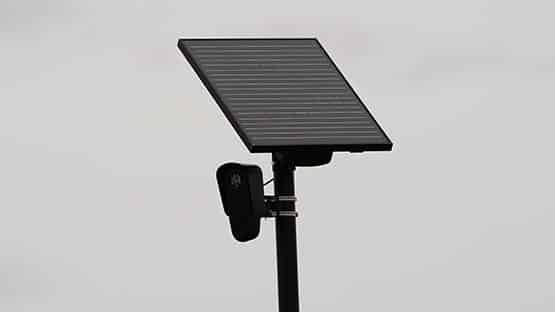
The trouble starts with what the camera can and cannot see. An ALPR reads a plate as a vehicle passes a fixed point. It logs the plate, the timestamp, and the location of the camera. That is the entire data point.
It does not log who was driving, where the car went next, who got out, or whether the car sat at that intersection for two seconds or twenty minutes. In a typical burglary or shooting investigation, though, the affidavit reads as if the camera did much more. It puts your plate near the scene at around the right time, and those two soft words carry a lot of weight when a judge is looking at a warrant application at the end of a long day.
The scale is what makes this possible. Flock operates a nationwide camera network dense enough in many suburbs that a single trip to the grocery store triggers several reads. Multiply that by every registered vehicle and every unsolved property crime, and the coincidences pile up on their own.
Why ‘just explain where you were’ backfires
The instinct, once you learn a camera clocked your car near an incident, is to call the detective and clear it up. Say you were driving home from your sister’s. Say you took that route because of construction on the other one. Sort it out before it grows.
That instinct is what a criminal defense firm, such as the Kinard Law Group, spends the most time undoing. A voluntary statement locks you into a timeline built from memory, up against a timeline built from machine logs. If your recollection is off by fifteen minutes, or you forgot a stop, the discrepancy isn’t read as human forgetting but as a lie, and the lie becomes its own evidence.
Prosecutors will pair the plate hit with the inconsistent statement and argue consciousness of guilt.
There is also the courtroom reality that ALPR data is arriving with less friction than most drivers assume. Courts have largely blessed warrantless queries of these databases so far, and a Brennan Center analysis has noted that aggregated ALPR histories can chronicle a driver’s movements in a way the Supreme Court once found troubling for cell-site data. The doctrine hasn’t caught up. Meanwhile, the hits keep coming in as leads, and leads keep hardening into charges.
What actually works when a hit lands on you
The better approach is unglamorous and boring, and it starts before you say a word to anyone in a uniform. Good defense counsel can usually shape the first 48 hours in ways that decide the next eighteen months.
- Say nothing on the record. Decline the interview politely and in writing. “I’d like to speak with counsel first” is a complete sentence, and it admits nothing.
- Preserve your own timeline. Pull your phone’s location history, ride-share receipts, toll transponder logs, gas station card charges, and doorbell footage from that evening. Do it fast. Retention windows on your side are also short.
- Ask what the hit actually says. Through counsel, request the raw ALPR return, the camera ID, the direction of travel, and the exact timestamp. A hit at a camera three blocks north of a scene, facing away, is not the hit the affidavit implied.
- Watch for a second driver. Family members, spouses, roommates, and teenagers drive registered vehicles all the time. The plate says the car was there; it says nothing about who was behind the wheel.
The camera is a lead, not a verdict
An ALPR hit is a starting point for an investigation, not the end of one. Defense work in these cases is largely about forcing the state to prove the second half of the sentence, the part the camera never captured.
There is also a growing record of the system being misused, which matters because it undermines the aura of neutral machine truth that prosecutors like to project. Reporting over the past year has documented officers using Flock to track romantic partners and other personal targets hundreds of times, in cases that ended in resignations and criminal charges.
A tool that can be turned on an ex without a case number isn’t a tool a jury should accept as beyond question. The camera saw a plate. Much of what comes after still has to be shown.
This content is provided for informational purposes only and is not a substitute for professional advice. AFP editorial staff were not involved in the creation of this content.


 Share
Share