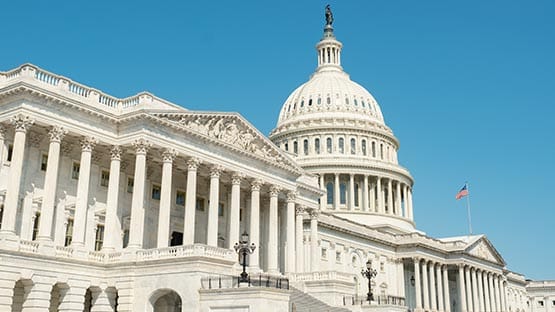
Across state capitals, lawmakers and regulators are dealing with a rapidly changing digital entertainment market that increasingly sits between established consumer industries and emerging technology. Alternative promotional platforms, dual-currency sweepstakes systems and token-based entertainment models have expanded their reach, prompting general assemblies and regulatory agencies to reconsider where existing state laws apply, and whether new rules are needed.
In this landscape, some states are moving toward tighter restrictions, while others are examining licensing, consumer-protection standards, and taxation frameworks. The result is a fragmented regulatory landscape that challenges businesses, consumers, and policymakers alike.
A new legislative question
Traditional state statutes were generally written for business models that lawmakers could readily identify and regulate. Digital platforms complicate this picture. Many contemporary promotional services operate through websites and mobile applications, use virtual currencies or promotional credits, and rely on nationwide digital distribution.
Dual-currency structures have become a particular focus of legislative scrutiny. Under these systems, people may use one currency for entertainment purposes while another form of promotional credit can potentially be redeemed for prizes or other rewards. Companies often emphasize the promotional nature of these systems, while regulators are examining whether the underlying mechanics create a structure that should fall under existing state restrictions.
That distinction has become central to legislative discussions. Rather than focusing solely on branding or terminology, policymakers are increasingly examining how a platform actually operates, how users acquire credits, whether those credits can be redeemed, and what role chance or other mechanisms play in determining outcomes.
State assemblies take different paths
The absence of a uniform national framework has left states to develop their own approaches. In some legislatures, proposals have sought to prohibit or substantially limit certain promotional models. Elsewhere, lawmakers have explored regulatory systems that would impose registration requirements, operational standards, or consumer safeguards. Recent industry analysis of the evolving state regulatory landscape highlights the contrasting approaches emerging across jurisdictions, from proposed restrictions in New York to efforts to establish a regulated market in New Jersey.
For some lawmakers, the main concern is consumer protection. They point to potentially confusing terms, aggressive digital marketing, inadequate age controls, and unclear redemption procedures. From this perspective, the priority is ensuring that consumers understand what they are purchasing or receiving and what conditions apply to promotional credits.
Other policymakers are more concerned with regulatory consistency. They argue that businesses operating across state lines face substantial uncertainty when similar platforms are treated differently from one jurisdiction to another. A company may be permitted to operate under one state’s interpretation while facing restrictions or enforcement action elsewhere.
The issue therefore is not just about individual platforms. It also raises questions about how states regulate internet-based businesses whose operations cross traditional jurisdictional boundaries.
Regulators focus on the details
State regulatory bodies are also playing an increasingly important role. While legislatures establish statutory frameworks, agencies often interpret existing regulations and decide whether particular business models fall within their scope.
That process can involve detailed reviews of platform architecture, promotional terms, payment mechanisms, age-verification procedures, and redemption systems. Regulators may also examine how a company’s marketing describes its products and whether consumers can reasonably distinguish promotional credits from other forms of digital currency.
Token-based entertainment adds another layer of complexity. Digital tokens can serve as access mechanisms, rewards, or units within a broader entertainment ecosystem. Their legal treatment depends less on the technology itself than on how the tokens function in practice.
This has encouraged regulators to look beyond labels. Calling an asset a token, credit, or promotional unit does not necessarily determine its legal status. Increasingly, a system’s practical characteristics appear to matter more than its terminology.
Operators face a patchwork of rules
For platform operators, the evolving environment creates significant compliance challenges. A business that wants to serve customers nationally may need to monitor legislation and regulatory guidance across dozens of jurisdictions.
That can affect product design as well as market availability. Companies may alter promotional mechanics, restrict access in particular states, strengthen identity checks, or revise their terms of service in response to changing rules.
The uncertainty can also influence investment decisions. Businesses operating in emerging digital markets generally benefit from predictable regulatory conditions. When requirements differ substantially between states, legal and compliance costs can rise, potentially favoring larger companies with greater resources.
Smaller operators may face a different calculation. Even when a platform has a potentially viable business model, the cost of evaluating state-by-state requirements can become a barrier to expansion.
Consumers are part of the policy debate
For digital consumers, the legislative debate is not simply an argument about business regulation. Changes in state policy can determine which platforms are accessible, what promotional programs are available, and what protections accompany participation.
Consumer advocates have encouraged lawmakers to pay particular attention to transparency. Clear disclosures about eligibility, promotional credits, redemption conditions, and account restrictions can help consumers understand a platform’s operations and terms and conditions before using it.
Age verification and responsible marketing are also becoming prominent considerations. Policymakers are examining whether digital platforms can effectively prevent underage participation and whether promotional campaigns could appeal more to younger audiences.
The road ahead
The next phase of state policy will likely involve a combination of legislation, agency interpretation, and court challenges. As new platform models emerge, lawmakers will have to decide whether existing definitions remain effective or whether statutes need to be rewritten around modern digital mechanics.
For businesses, the direction of travel suggests that compliance strategies will become increasingly important. For consumers, clearer disclosures and stronger safeguards could provide greater certainty. For states, the challenge will be finding rules that are specific enough to protect the public without becoming obsolete as technology evolves.
The debate ultimately reflects a larger policy transition. Digital entertainment platforms are moving faster than many traditional regulatory frameworks were designed to accommodate. State governments now face the task of determining whether these new models represent a distinct category requiring specialized oversight or whether existing principles can be adapted to cover them.
Whatever approach individual states choose, the policy crossroads is becoming harder to ignore. As alternative promotional platforms, dual-currency systems and token-based entertainment continue to develop, state lawmakers and regulators will remain central to determining how, and where, the next generation of digital consumer platforms can operate.
This content is provided for informational purposes only and is not a substitute for professional advice. AFP editorial staff were not involved in the creation of this content.

 Share
Share