There’s a common image people carry in their heads — the homesteader, miles from town, lantern on the table, no phone in sight. It’s romantic. It’s also mostly wrong. Today’s off-grid families are quietly building some of the most tech-sophisticated households in the country. They just use technology differently. Purposefully. On their own terms.
The numbers tell a different story
Over 250,000 American households currently live off-grid full-time, according to data compiled by the Renewable Energy World Network. This number has been climbing steadily since 2018. And a 2023 survey by Homestead.org found that 78% of off-grid households use at least one internet-connected device daily for homestead management.
Technology didn’t disappear when the power grid did. It just got smarter. And this is logical, while many of the consequences are actually exaggerated. Much content can simply be downloaded. Today, it’s easy to check free novel reading website Fictionme on your smartphone even if there’s no network connection. Simply install a reading app like FictionMe and download the books. In the future, they will be available offline. The same goes for films, educational videos, articles, etc.
Solar power, managed by an app
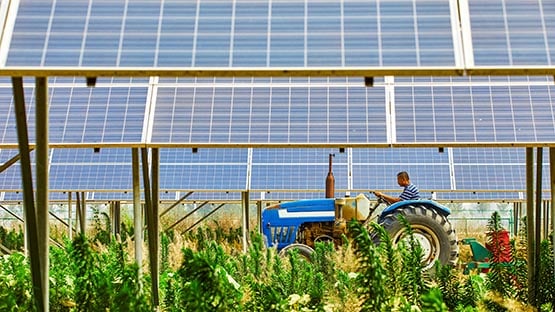
Most off-grid homes run on solar. That part isn’t new. What has changed is how precisely people now manage their systems.
Charge controllers like the Victron SmartSolar series connect directly to a smartphone via Bluetooth. A homesteader in Montana can check battery voltage, solar input, and daily energy consumption before they even pour their morning coffee. Real-time data means fewer surprises — and fewer dead batteries in January.
Battery banks and predictive monitoring
Modern lithium battery systems — think Battle Born or EG4 — come with built-in battery management systems (BMS) that track cell health over time. These systems log thousands of data points per day. Some users connect them to Raspberry Pi setups that send automated alerts if a cell drops below a safe threshold.
Small failures get caught before they become expensive ones.
Weather forecasting as a daily tool
A farmer who relies on the grid can shrug at a cloudy week. An off-grid homesteader cannot. Cloud cover directly affects energy production, water pumping schedules, and preservation decisions.
Apps like Weather Underground and Windy have become daily necessities for many homesteaders. Some go further, installing personal weather stations — Davis Instruments is a popular brand — that feed hyperlocal data into their planning. Three cloudy days ahead? Time to run the generator for a few hours and top off the batteries.
Water systems: Smarter than ever
Water is everything on a homestead. And managing it well requires knowing what’s happening underground, in the tank, and at the tap.
Ultrasonic tank sensors now cost under $50 and send water level data directly to a phone. Pair that with a smart pump controller and you have an automated system that fills tanks at off-peak solar hours and shuts off if a leak is detected. That kind of setup would have cost thousands just fifteen years ago.
Precision gardening with soil sensors
Growing your own food sounds simple. In practice it involves dozens of variables — soil moisture, pH, nitrogen levels, temperature at root depth.
Sensors like the Xiaomi Mi Flora or the more robust Vegetronix probes sit in the ground and push readings to a central dashboard. One homesteader in Tennessee described checking her sensor data the same way office workers check email. The result: 40% less water used on her market garden in the first season after installation. Less waste, more yield.
Food preservation goes digital
Canning and fermenting have ancient roots. But knowing exactly when your ferment is ready — or catching a failed seal before it causes illness — is something modern technology does very well.
Bluetooth thermometers like the Inkbird series monitor temperatures inside fermentation vessels and smokers around the clock. Some homesteaders use dedicated apps that log temperature curves and flag anomalies. The old-timers used their nose and experience. Today’s homesteaders use both — plus data.
Communication: Staying connected without a tower
Cell service disappears fast once you’re ten miles from town. This is where satellite communication has genuinely changed life for off-grid families.
Starlink has been transformational. Download speeds averaging 50–200 Mbps in rural areas mean that homesteaders can attend telehealth appointments, their kids can do schoolwork, and they can run small businesses without driving to the library in town. This is enough to download on the App Store and read books for days on end. It runs on roughly 50–75 watts — easily handled by a well-sized solar setup. Distance from the grid no longer means distance from the world.
Emergency preparedness and two-way radios
Not everything needs to go through a satellite dish. Garmin inReach devices allow two-way text messaging anywhere on Earth via satellite, with no monthly commitment required for basic plans.
For shorter-range communication, GMRS and ham radio setups remain popular — and completely grid-independent. A homestead family can coordinate across hundreds of acres without touching a cell tower. In an emergency, these systems become critical.
Security and remote monitoring
Leaving a homestead for a few days used to mean worrying. What if an animal got into the chicken coop? What if a water line froze?
Solar-powered security cameras — Reolink and Eufy both make popular off-grid-compatible models — connect to local storage and push alerts over Wi-Fi or cellular backup. A family in Vermont told Modern Farmer magazine they caught a bear breaking into their barn at 2 a.m. via a phone notification. They scared it off remotely using a speaker. No trip home required.
Learning and community online
Knowledge is infrastructure. Homesteaders have always traded skills and information. Today, that trade happens on forums like Permies.com, in Facebook groups with hundreds of thousands of members, and through YouTube channels run by working homesteaders.
This isn’t passive scrolling. People share seed-saving techniques, troubleshoot solar wiring problems, debate fermenting timelines. The collective knowledge available online would fill a library that no single homesteader could build alone. Going off-grid no longer means going without expertise.
The philosophy behind the tools
Here’s what ties all of this together. Off-grid living is not about rejecting technology. It is about rejecting dependence on systems you don’t control.
A homesteader who uses solar-powered sensors, satellite internet, and smart water monitors is still self-sufficient — perhaps more so than someone who relies on a utility company and a grocery store. Technology, chosen carefully, deepens that independence. It does not diminish it.
The balance that actually works
None of this means every homestead needs every gadget. The best-run homesteads use technology where it solves real problems and skip it where it doesn’t. A rain gauge nailed to a fence post works fine for some. A connected weather station works better for others. The context decides.
What matters is intention. These families aren’t using technology because it’s there. They’re using it because it helps them live better, work smarter, and stay safer — on their own land, on their own terms.
This content is provided for informational purposes only and is not a substitute for professional advice. AFP editorial staff were not involved in the creation of this content.




 Share
Share