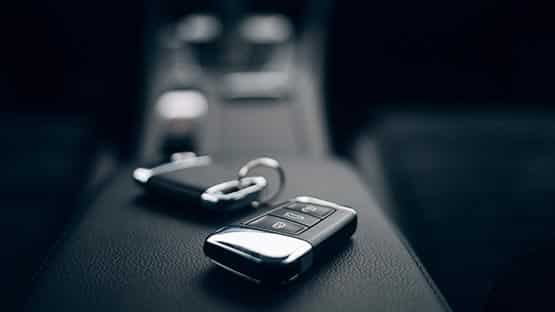
Can a car itself prove who was behind the wheel? More and more, yes. That one data point is reshaping how prosecutors charge auto theft and unauthorized-use cases, and how defense lawyers push back.
Push-button start and passive keyless entry turned every modern vehicle into a running witness. The body control module notes when a door was unlocked, which fob was present, when the start button was pressed, and sometimes how far the car moved afterward.
When a cruiser pulls someone over in a car that was reported missing, the officer no longer has to rely on a story alone. The car has one of its own. The question for anyone staring at a charge is which decisions to make first, because most of them close doors you’ll wish were still open.
Decide whether to say anything at all
The first fork in the road is the one people blow through without noticing. An officer asks how you ended up with the car, or who gave you the key, or whether you knew the owner. Explaining feels like clearing things up. At the roadside, it rarely works out that way.
A fob-event log is a short list of timestamps. Any story you tell at the scene either lines up with those timestamps or it doesn’t, and the moment it doesn’t, you’ve handed the prosecution its best exhibit. Silence is awkward, but a recorded contradiction is worse.
Ask for a lawyer and stop talking. That’s the one move you can’t undo later. If you’re facing an unauthorized-use or auto theft allegation, call a criminal defense attorney before you give any statement, written or recorded.
Decide whether consent was really consent
Auto theft and unauthorized use are not the same charge, and the distinction turns on what the driver intended and what the owner allowed. Theft generally requires an intent to permanently deprive, while unauthorized use often requires nothing of the kind. In several states, operating a vehicle knowing the owner didn’t give effective consent is enough on its own, and the statutory elements can be satisfied without ever showing anyone meant to keep the car.
Consent is rarely a clean yes or no, and that is where the fight usually sits. The fob record shows what happened mechanically; it says nothing about what was agreed to. Any defense worth having starts there.
Decide what the data actually proves
A lock/unlock timestamp and a key index are not a confession. They tell you a fob was in range at a particular second, and that an authorized credential started the vehicle. They say nothing about who was holding the fob, who was in the driver’s seat, or whether the signal was legitimate at all.
Relay attacks are the obvious wrinkle. To the car, a relayed signal looks the same as the owner walking up with the key. The log will faithfully record a ‘normal’ unlock and start that the owner never performed.
Push further and you reach the defense questions that count. Which fob index triggered the event? Was the vehicle’s firmware current? Were there prior anomalous entries nobody flagged? A log without context is an argument, not proof.
Decide who gets to pull the records
Vehicle data lives in several places: the body control module, the event data recorder, the infotainment head unit, and the automaker’s telematics servers. Each has its own access rules. Investigators often work through the dealer, a forensic vendor, or the manufacturer directly, and police guidance documents walk officers through how to extract VIN-linked timestamps and last-use data from keyless systems.
On-vehicle data is generally treated as belonging to the owner or lessee, which means a third party usually needs consent, a warrant, or another narrow legal basis to pull it. If you’re the accused and also the registered owner, that cuts both ways: investigators may need your permission or a judge’s, and your lawyer may want the full download before the state does. If you’re not the owner, the person who is controls a record that could clear you or sink you. Decide early whether to ask them for it, and through whom.
Fight the inference, not just the data
The strongest cases against a fob-log narrative rarely attack the data. They attack the inference the prosecutor wants the jury to draw from it. A timestamp says the car started at a certain moment. The state wants that to mean the defendant started it. Those are two different claims, and the distance between them is where a defense lives.
That distance gets wider when the owner’s story shifts, when more than one fob was in play, when the vehicle sat in a shared driveway, or when the keyless system has a known vulnerability the automaker has already patched in later model years. None of it is automatic. It takes a lawyer who knows to ask for the module download, the firmware version, the fob index, and the telematics pull, and who knows what to do with the answers.
The car may be a witness. It is one of several, and it doesn’t get the last word.
This content is provided for informational purposes only and is not a substitute for professional advice. AFP editorial staff were not involved in the creation of this content.



 Share