Part of the job of being a college football coach is having to deal with the media, for now, anyway.
We’re not long from the press conferences that really don’t offer anything of value anyway going the way of the weekly TV coaches shows – remember those relics of the ‘80s, with the likes of George Welsh sitting in a studio on a Sunday morning grumbling his way through highlights of yesterday’s game?
I remember Jimmy Miller, now the color guy on UVA Basketball radio broadcasts, in features at the end of Terry Holland’s weekly show as “The Magic Man.”
Ah, the good ol’ days.
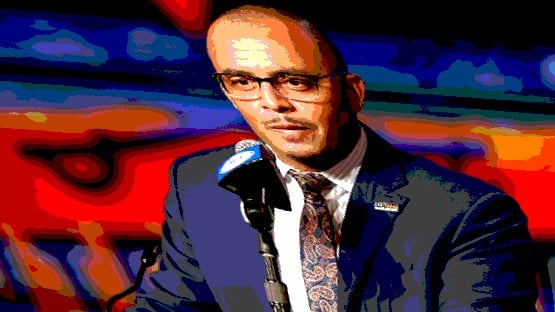
We don’t get that anymore, and if there is a god in heaven above us, we soon won’t have a few reporters in a room with Tony Elliott each Tuesday throwing the UVA Football head coach questions that he doesn’t want to have to answer.
Whoever is responsible for media training over there is to be commended.
I’ve been interviewing people for 30 years – mayors, governors, senators, presidential candidates, football and basketball coaches – and one thing became obvious to me, dang, years ago.
When you’re interviewing somebody going through a rough patch – be it Mark Warner, when he was governor, trying to get a state budget passed, or Al Groh, on the hot seat, after back-to-back losing seasons – the smart ones run the clock out on you.
Interviews don’t run forever; the PR people for a politician or a college coach give you a set amount of time, usually in 15-minute increments.
The hired hands stand off to the side, and when it gets close to the time allotted, their job is to look at their watch, with a whisp of exasperation, giving off the vibe of:
C’mon, guys, one more question, The Honorable Governor/Senator/Coach Such-and-Such has to perform life-saving brain surgery/convene a new round of peace talks between the Israelis and Palestinians/eat lunch.
Fifteen-minute increments, keep that in mind.
The archives on the UVA Athletics YouTube page tell us that Elliott likes to be in and out of his weekly Tuesday pressers in 30 minutes.
As I write this, his team is 4-5, 2-4 in the ACC, on a three-game losing streak, and is coming off a 51-7 loss at Wake Forest before the bye week.
And doesn’t want to have to talk about how the fanbase and donors want him to make changes to his staff when the season ends in three weeks, and in the immediate term, want him to make a change at QB.
All of that is prelude to me pointing out that Elliott used 14:03 of his presser this week to answer this question:
After you’ve had time to watch the Wake Forest film, you said you wanted to evaluate a lot. Where did y’all kind of land on your evaluations, both offensively and defensively?
Elliott begins his answer at 7:55 in the video; the answer ends at 21:58.
The following is 2,869 words on that 31-word question.
I think our TE has future United States senator in him once he’s done with football.
The response: In full
Yeah, as I said, I think the critical situations, we got to coach better, we got to play better In those situations. Again, as you look at it, just offensively, you evaluate the 12 third downs. I thought there was one call in there in a third-and-six, third-and-seven, where there weren’t probably enough answers for the guys. And so, you’re hoping to get zone coverage, and you get man coverage, and that’s the worst coverage you can get versus that concept, so, the kids didn’t have anywhere to go. Other than that, I thought the calls based on the amount of sequencing that we were doing were there. And if you just look at our execution, if we just control what we can control, we drop the first one, it’s right there. Now we got to coach the back better.
There’s no question the back’s coming across. He gets hung up, he needs to get out. We got to coach him better, but we got the ball right at the sticks. We dropped it. The next one, we have the ball underneath, knife the defenders, we get the first down, we dance, we dance around. Then we do give up a sack in one of those situations. Then we have a handoff later where there’s three yards there, we need to get three yards. We ran too wide, we got two. I thought even on, you know, we run too wide, we get two, alright. I thought even on the play that wasn’t a good call, the quarterback made us right and got five yards, right, and got us to a fourth-and-one.
And then down in the red zone, we were sequencing plays. The quarterback needs to put the ball on the front shoulder. He made one bad throw third down where if he hits Solo, that’s Solomon Beebe, on the front shoulder, he’s going to knife it, he’s going to go make that play, and we’re probably not in a fourth-and-three, we get the first down. Then he hits Dey Dey [Da’Shawn Matrin], and proud of Dey Dey, because he made the correction. Now he splits the defenders, we get the – proud of Dey Dey, because he made the correction – we get to fourth-and-one. We got our best call. We got our three best linemen at the point of attack. And we lose one-on-one, you know, right there.
So, when you evaluate it, right, it’s, you know, guys, it’s one guy, two guys, man, doing their job, right, to the standard every single play. There’s another third-and-six where we’re sequencing at midfield, and our left tackle, man, his technique’s not right. We get run down from the backside where Beau’s [Pribula] probably going to hit that for about three, four yards, and now it’s fourth-and-two, and we were planning on going for it in fourth down, so, the initial call was a little bit more conservative.
Then the first third-down defense, we’re playing Cover 2, and the corner is taught once the quarterback opens you, then you panic drop underneath #1. We don’t panic drop, and now we give up a 14-yard completion on the sideline, which shouldn’t happen versus Cover 2. But that’s on us as coaches. We gotta coach him better and make sure he’s prepared to do that.
So, schematically I don’t see a problem schematically with where we are, except for a call or two here, which is gonna happen in the course of the game. Where we gotta get better is, we gotta make sure that every young man that we put on the field, right, is prepared and understands, you know, how to function and operate in those situations.
It’s another third-and-six on defense, and we got an inverted Cover 2, right, which means now, instead of the corner being a hard cover, we’re playing inverted, where the corner drops deep, and the nickel runs to the flat. Well, the nickel’s eyes, righ,t are in the wrong spot, so, he hesitates instead of running to the flat. Now he gets outflanked by the receiver. And the frustrating thing for me is, that’s the same play that we ran later on in fourth-and-six, and we don’t execute it the way that we’re supposed to.
And so that’s really, you know, kind of what you evaluate. And so, the answer is, we got to simplify where we can simplify. We have to make sure that when we go out to practice, we’re putting the guys in a position to have seen the play, recognize the play, go execute the play. And then we got to challenge the guys to make sure that they take ownership of the details. We got to throw and catch and make sure we’re completing catches, cuz we had two drops on the field, catches, because we had, you know, two drops on third down that go for conversions, you know, that keep, and you never know what’s going to happen.
And then we go out, and when we get our one-on-one, we got to win, man. Fish (Fisher Camac) has got the guy in his grasp, man. He’s got to get Gio [Lopez] to the ground. We don’t get Gio to the ground, and we got him leveraged, and then next thing you know, it’s a big play out there to midfield, and then boom, here they’re rolling. And it’s the same thing that happened on that first third down. We got a good call, it’s Cover 2, that ball shouldn’t be completed versus Cover 2. However, we don’t play it with the proper technique, it’s completed, and then what happens the next play? Big shot play, right? And now it’s a ball thrown up which is a 50/50 ball. So, you either win, or they get pass interference, if that makes sense.
And I think the flip side for us, right, and then when you watch the game, when we did get the ball in space, man, we got form tackle, we didn’t make anybody miss. So, then we got to go out, and we got to coach, and we got to drill that better in practice to give our guys the confidence when they do have the ball in space to go make things happen.
Third-and-11 call, we got a screen call, again, we missed the assignment. As I said before, that’s probably asking, Dey Dey being asked to do too much because right now with the situation with Kam (Courtney) being down, he’s probably the top playmaker that we got. So, we’re moving him around, putting him in a lot of different positions. And on film, if you watch it, he taps his head to say that, hey, I got the play call adjustment, and then we have a missed assignment. Sometimes that happens in football. We got to figure out why. Some of that is overloading the young man because we’re trying to, you know, put guys in position.
And it’s the same thing with Juice [Jaylen Jones]. Right there, we’re asking him to play inverted Cover 2. Did we give him enough reps in practice to make sure that his eyes are clean so he can out-leverage that? And then now, #8 doesn’t catch the ball up the sideline on a third and eight, right? Or, you know, Jam (Jackson), making sure that we’re playing Cover 2. We don’t let a guy get in our blind spot, right, behind us that now pins on the sideline.
So, you know, it’s a function of, you know; we got to make sure that the guys understand, which is coaching, and then simplify it as much as we can.
We still have the complexity that we need.
With the guys that got up front, we got to play better up front. We got to pass off twists. Like, you watch the one sack that we had, we’re in a three-way slide, and the center has somebody crossed his face, a split second. He’s waiting on the handoff from Makilan (Thomas). A split second, right? He’s waiting on the handoff from McKale (Boley) because he’s got to get a bump call. Well, then, now he’s late, and the looper that’s coming in the A gap, he should be sitting right there, right? So, it’s those things that we got to get it cleaned up. It’s not a function of the guys not knowing what to do, it’s more a function of the detail and how to do it.
And that’s what we got to clean up.
So, you know, when you look at it, if I just look at the things on just the Wake Forest game, the 12 third downs that we had on offense. If we control what we can control, we catch the ball, if we put our foot in the ground, and we get north and south, right, and understand the situation, the running back doesn’t run too wide, understands it’s third-and-three, and puts his pads down and goes and gets it, then you got a chance to be 6-of-12, you’re feeling a whole lot better about yourself.
So, when you say it’s a game of inches, and I’m not trying to make any excuses, I’m just trying to, you know, outline detail of just how close it is.
And so hopefully, with the week that we’ve had to look at those things in detail, man, have some honest conversations as a team, as a coaching staff, man, we can get back to, you know, playing with those details that, and they want to. It’s just a function of can we simplify our lives enough, to eliminate the distractions so that we can put in the quality work so that on gameday it translates, if that makes sense, right? It’s one thing to do it out here in practice, the next thing is to do it when it’s full speed, when it’s live, when there’s a lot of things going on. Can you have the eye discipline to do your job exactly how it’s coached? And then, as coaches, can you make sure that from an ego standpoint, you’re not trying to fix the problem with more scheme, you’re minimizing the scheme as much as you can to really get back to building the true fundamentals necessary? Because of those plays that I talked about offensively, a lot of those are just fundamental plays, fundamental plays that you got to make, throw and catch, block.
Boley, you’ve cut off the backside of counter countless times. You can’t overthink it, right? Don’t overthink it, don’t try to make too many calls. Make a call, stick with it, as long as everybody’s on the same page, we’re gonna be alright. And that’s kind of what you see when you peel the onion back.
The first thing to do is, they fire the quarterback. Well, hell, the quarterback’s 22-of-29, right? And I told you he missed one throw on third down. He put the ball where it was supposed to be for most of the night, and he had two drops. I could say three, but I’ll go two. Now he’s 70-something percent, right? And then the other quarterback comes in and does a good job, right? Really proud of Eli (Holstein). And I think if there’s a way that you can find to play two quarterbacks, I’d love to be able to do that, because I think we’ve got two quality quarterbacks. But I think that’s also a function of everybody else around them doing their part so that is possible, if that makes sense.
So, it’s been a good two weeks of just having a chance to, one, just be able to really dive into yourself before you have to play another opponent. So, a lot of things to work on, but biggest point of emphasis is third-down offense. We got to be better on third down. Now, some of that is a little bit skewed because there’s a lot of things of times, 19 times we were sequencing, knowing we were going to go for it on fourth down. So, my philosophy on a sequencing situation is, you’re trying to get half of it or put yourself in a fourth-and-short. Don’t put the ball in jeopardy. And so, some of the run calls, some of the quick game passing and some of the longer yardage situations was because we were sequencing, trying to get to a fourth down. And then we still got to get better on fourth-down conversions. I think we were 3-of-7 the last game.
Defensively, really want to focus on the fourth-down defense and then the third-and-long explosives. We’ve given up some super explosives on third-and-long when we should be getting off the field. Now, some of the things we got to correct there are our edge guys got to, they can’t rush past the quarterback. They got to counter and eliminate that B gap. You know what I’m talking about? They got to eliminate that B gap. And so we’re anxious to get to the quarterback. We’re rushing too high. And if you watch the game, especially with a guy like Gio, what does he do? He recognizes that, and then he slips out. And then you’re playing man coverage, or it’s a long yard to zone situation, and everybody’s dropped. And now it’s a large gap between you and a guy running full speed, so, even if he doesn’t make you miss, he’s got seven, eight yards before you can make contact. So, that’s one of the things that we got to do on third down, is cage the quarterback and not let him get out and extend plays and keep them on schedule.
Special teams wise, man, Sparky’s (Daniel Sparks) punting the heck out the ball, but that is a problem, because now it’s hard for us to cover that. So, you’re studying the tape and you’re to cover that, right, so, you know, you’re studying the tape, and you’re looking at it, and you’re, like, alright, they’re catching the ball with 20 yards of separation. The closest guy is a gunner that’s running full speed with somebody in his hip pocket that’s 10 yards away. So, we got to do some things to help our guys schematically and then also fundamentally and maybe teach things a little bit different because Sparky is kicking the heck out of the ball. And then you say, well, why don’t you change it up? Well, a couple years ago, we moved the pocket, and he kicked it right into the back of the three guys in front of him. So, that’s not really what he does. So, we’re going to try and figure out another solution from the standpoint of figuring out how to cover it better. That’s an area that we got to get better.
Obviously, we know we’re not very good statistically in sacks allowed. I think we’ve gotten better since the Florida State game, you know, so to speak, we’ve improved areas there, but that’s an area where overall we just got to make sure our quarterback’s not getting hit. Like, I think everybody wants a new quarterback, but hell, any quarterback that’s getting hit, and he’s getting hit early in the game, it’s going to be hard for him to be as efficient as possible. Like, the interesting thing is, like, we’re pretty good in time of possession, so, we’re possessing the ball.
What we got to do is we got to stay on the field, right, in third down or fourth down, and then we got to convert, you know, in the red zone. And then there’s also some situations where we had nine times where we didn’t come away with anything in the red zone. Well, four of those were two, like, blowout situations where we’re chasing players, four of those were two blowout situations where we’re chasing points, and we got to go for it. We missed a couple of field goals. We had a turnover. We got stopped a couple of times. So, some of that can be improved statistically just by taking the points instead of chasing touchdowns when you’re behind. But the situation in the game called that. But I think if we can possess the ball, right, and then if you evaluate the third downs, you look at it after Delaware, Florida State, starting at Florida State in particular, with all of the sacks, we were third-and-long all night long. And then we’ve been a couple games where we’ve put ourselves in tough positions. And so first- and second-down efficiency needs to improve from that standpoint to keep us out of third and long. So, those are just some of the assessments that we’ve looked at this week and trying to get better.
Support AFP



 Share

Chris Graham