I’ve been following Houston’s overdose numbers for the better part of three years now, and I’ll be honest — the trajectory still catches me off guard every time I pull the latest data.
Harris County leads Texas in fentanyl deaths. Not per capita. Total. In 2022, the county recorded 487 fentanyl-related deaths according to the Texas Department of State Health Services. To put that in perspective, the county saw 104 fentanyl deaths in 2019. That’s roughly a 370% increase in three years.
And by 2025, the Houston Chronicle was reporting that overall drug overdose deaths in Harris County had climbed 75% in five years, with fentanyl-related deaths specifically spiking nearly 500% over that same window.
So how did we get here?
The geography problem
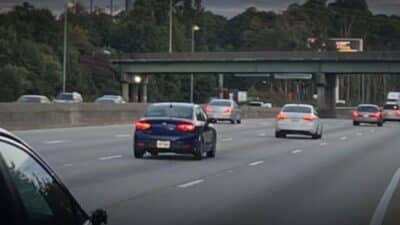
Houston is a port city. It sits at the intersection of I-10 and I-45, two of the most heavily trafficked drug corridors in the country. The Gulf Coast position makes it a natural distribution hub — cartels have used Houston as a staging point for decades, and fentanyl simply followed the existing supply chain.
But geography only explains how fentanyl gets here. It doesn’t explain why so many people are dying from it.
The real problem is that most people who die from fentanyl in Houston never intended to take fentanyl in the first place.
The counterfeit pill crisis
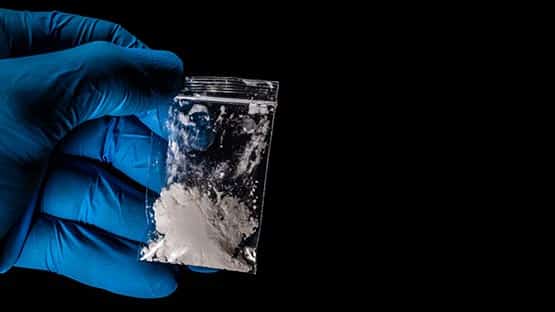
This is the part that doesn’t get talked about enough. We’re not mainly dealing with people who sought out fentanyl. We’re dealing with people who bought what they thought was a Percocet, a Xanax, or an Adderall — and got a pill pressed with fentanyl instead.
A lethal dose of fentanyl is about 2 milligrams. That’s roughly the size of five grains of salt. The pills being manufactured in cartel labs are not made with pharmaceutical precision. One pill in a batch might contain a survivable amount. The next one might contain enough to kill three people. There’s no way to tell by looking at it.
The DEA’s Houston field division has seized millions of these counterfeit pills, and they consistently find that a significant portion contain lethal doses. This isn’t a problem limited to people with long histories of drug use. It’s hitting teenagers buying what they think is Adderall for a study session. It’s hitting professionals who think they’re taking a painkiller they’ve taken before.
What makes Houston different from other Texas cities
When you compare the raw numbers, Harris County’s position at the top of the state becomes clear — but the per-capita picture adds nuance. Travis County (Austin) actually had a higher overdose death rate in 2023 at 33 per 100,000, compared to Harris County’s 21 per 100,000. Dallas County sat at 25, and Tarrant and Bexar counties each reported 23.
But Harris County’s sheer population — over 4.7 million people — means the absolute number of deaths dwarfs every other county. And the concentration of those deaths isn’t evenly distributed. Certain Houston zip codes bear a wildly disproportionate share of the burden, often in communities with the least access to treatment.
That’s the uncomfortable truth about Houston’s fentanyl crisis: the people dying are disproportionately the ones who can’t easily access help.
The treatment gap
Harris County has a massive population, and on paper, it has a lot of treatment resources. But the gap between “resources exist” and “people can actually access them” is enormous.
Wait times for publicly funded treatment can stretch weeks or months. Many people who show up to an ER after an overdose are stabilized, given a referral, and discharged — with no warm handoff, no same-day medication, and no follow-up. The window of motivation after an overdose is short. If someone has to wait two weeks for an intake appointment, they’re usually back to using before that appointment comes.
Private treatment centers and drug rehab in Houston have helped fill part of this gap, particularly for people with insurance coverage or the ability to self-pay. Facilities offering same-day intake and medical detox can intervene during that critical window when someone is actually ready to make a change. But the broader system still leaves thousands without a clear path from crisis to care.
What’s actually being done
To Houston’s credit, the response hasn’t been nothing. But it’s been uneven, underfunded, and sometimes undermined by state-level politics.
- The HEROES program. The Houston Emergency Opioid Engagement System, run through UTHealth Houston, is probably the most innovative thing happening in Harris County right now. The program sends peer recovery specialists and paramedics directly to people who’ve recently overdosed — not waiting for them to show up at a clinic, but going to them. Patients can be started on buprenorphine (Suboxone) the same day, in the emergency department, with follow-up coaching and behavioral support built in. It’s a model that other cities should be studying.
- Naloxone distribution. Texas lawmakers passed legislation in 2023 allocating $10 million for a fentanyl awareness campaign and directing Narcan distribution to every county. Harris County has been a major beneficiary of this push. The overdose-reversal drug is increasingly available at pharmacies without a prescription, and community organizations are distributing it for free.
- House Bill 6 (fentanyl murder charges). Since September 2023, prosecutors can charge fentanyl dealers with murder if someone dies from a dose they provided. The Harris County DA’s office had roughly eight active cases under this law as of late 2024. Whether this deters dealing or just adds to mass incarceration is up for debate, but the law exists and is being used.
And then there’s the thing that isn’t being done.
Fentanyl test strips remain illegal in Texas. They’re classified as drug paraphernalia under state law. A 30-pack costs about $30 on Amazon, and they’ve been legalized in the majority of US states. The Texas House has passed legalization bills with overwhelming bipartisan support — unanimously in 2025 — but the legislation has repeatedly died in the Senate.
The argument against legalization is that test strips enable drug use. The counterargument, as one Republican state representative put it on the House floor, is straightforward: “It is a mine detector for a person trying to walk across a minefield who is going to walk across the minefield anyway.”
More than 7,000 Texans have died from fentanyl poisoning since 2019. Most of them didn’t know they were taking fentanyl. A $1 test strip could have told them.
Where this goes from here
Houston’s fentanyl problem is not getting better in any linear way. Some pockets are improving — Travis County saw a 36% drop in fentanyl deaths from 2023 to 2024 after a horrific spike. Harris County’s trajectory is harder to read because the data lags and the population is so large that trends take longer to show.
Things that work are known. Same-day access to medication-assisted treatment works. Naloxone distribution works. Peer recovery outreach works. Meeting people where they are — in ERs, on the street, in their homes — instead of waiting for them to navigate a bureaucracy while they’re in withdrawal, works.
And the things that are being blocked — test strips, expanded harm reduction, syringe exchange programs — have evidence behind them in every state and country where they’ve been tried.
Houston has the infrastructure, the medical institutions, the treatment centers, and the people to turn this around. What it needs is the political will to use every tool available, not just the ones that poll well.
Sources: Texas Department of State Health Services, Harris County Institute of Forensic Sciences, Houston Chronicle, Houston Public Media, Texas Tribune, CDC, UTHealth Houston HEROES program, USAFacts.
If you or someone you know is struggling with substance use in the Houston area, the SAMHSA National Helpline (1-800-662-4357) provides free, confidential treatment referrals 24/7. The Harris Center for Mental Health crisis line can be reached at 713-970-7000. This content is provided for informational purposes only and is not a substitute for professional advice. AFP editorial staff were not involved in the creation of this content.




 Share
Share