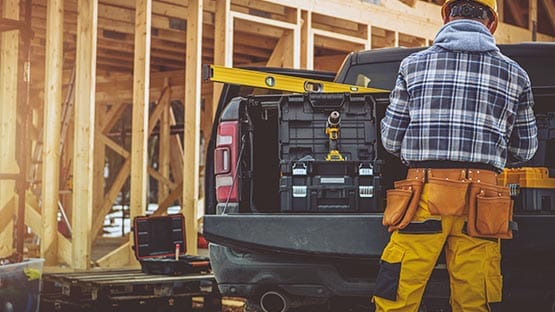
Insuring a contractor’s pickup or work van costs about $1,200 a year. A dump truck can run $4,000 or more. Those numbers surprise almost nobody in the trades. What surprises people is the third number: the amount a personal auto policy pays when a truck doing business work gets into a serious accident. Too often, that number is zero.
GeneralContractorsInsurance.com, a national contractor insurance agency that has covered the trades for more than 30 years in all 50 states, sees the pattern regularly: a contractor grows from side work into a real operation, the truck starts hauling crew and materials daily, and the insurance never changes with the job description.
Personal auto policies were not written for working trucks
A personal auto policy prices a vehicle that commutes, runs errands, and sits in a driveway. A contractor’s truck does none of that. It hauls lumber, tows a trailer, carries a crew between sites, and logs miles that look nothing like a commute. Many personal policies contain business-use exclusions, and a carrier that discovers commercial use during a claim investigation can decline to pay.
The exposure gets worse with employees. When a helper drives the truck to a supply house and rear-ends someone, the claim lands on a policy that may not cover that driver at all. Consider a Shenandoah Valley remodeler whose apprentice takes the van for a material run and causes $38,000 in damage and injuries. If the van sits on a personal policy, the remodeler may spend months finding out whether any of that is covered. On a commercial policy, the answer arrives with the policy documents.
What commercial coverage actually costs
Commercial auto insurance for a standard pickup or van runs about $1,200 a year. Heavier iron costs more because it does more damage: a dump truck commonly runs $4,000 and up. Premiums move with vehicle weight, driving radius, and the records of everyone behind the wheel, which is why disciplined operations check motor vehicle records before handing over keys, not after.
Set the cost against the rest of the insurance stack and it stays proportionate. A general contractor insurance policy for liability runs about 0.75 percent of annual revenue with a floor near $1,600 a year. The truck that carries the whole operation to work costs roughly the same to insure properly as the liability policy behind a $160,000 business. Neither is the place to improvise.
One habit protects the premium over time. Report any vehicle incident within 24 hours, because claims reported inside a day cost significantly less to close than claims that age, and a clean loss history keeps renewal pricing where it belongs.
The gear inside the truck is a separate conversation
Commercial auto covers the vehicle and the damage it causes. It does not cover the $7,400 of tools that vanish when someone pries the door open overnight. Tools and equipment that travel are covered under an inland marine policy, an old shipping term that now means gear on the move, and for a small contractor it runs about $800 a year. Contractors who have absorbed one trailer break-in tend to consider it the easiest insurance decision they ever made.
The truck also shows up in paperwork more than owners expect. Commercial job contracts increasingly require proof of auto liability alongside general liability, all on the same certificate. Agencies that issue same-day certificates of insurance make that requirement a formality instead of a delay, and on projects where the start date is tied to compliance paperwork, hours matter.
The pattern across all of it is the same. The truck stopped being a personal vehicle the day it started earning money, and the insurance has to make the same transition. A contractor who moves the vehicle to a commercial policy, adds the tool coverage, and keeps a certificate ready has closed the gap for about the cost of one small change order a year. The one who waits is betting the business on an adjuster never reading the exclusions page. Adjusters always read the exclusions page.
This content is provided for informational purposes only and is not a substitute for professional advice. AFP editorial staff were not involved in the creation of this content.


 Share
Share