Sports content has changed dramatically in recent years. Fans no longer only want to watch highlights after a game or see carefully edited interviews. They want access to the moments that happen before competition, during training, and behind the scenes. The rise of athlete-driven content has created a new expectation: sports figures are not only competitors anymore, but also storytellers who give fans a closer look at their daily lives.
The NIL era helped accelerate this trend by showing how valuable authentic athlete content can become. Since the NCAA opened the door to name, image, and likeness deals in 2021, athletes have increasingly become responsible for building their own audiences and maintaining a consistent online presence. However, this shift is not limited to college sports. Professional athletes, Olympic competitors, fitness personalities, and even local sports figures are facing the same challenge: creating engaging content while still focusing on training and competition.
This is where wearable technology, especially smart glasses with built-in cameras, has started to change the way athletes capture and share their experiences. Instead of relying on camera crews or constantly recording with a phone, athletes can now create first-person content naturally while they train, travel, and compete.
Why first-person sports content connects with fans
The popularity of behind-the-scenes sports content comes down to one simple factor: authenticity. Fans want to feel like they are experiencing the athlete’s journey rather than watching a polished advertisement.
Platforms such as Instagram, TikTok, and YouTube have rewarded content that feels personal and spontaneous. Training sessions, recovery routines, travel days, and preparation before competition often perform better than highly produced videos because they create a stronger connection between the athlete and the audience.
Research examining athlete social media behavior has shown that behind-the-scenes content can generate stronger engagement compared to traditional promotional posts. For athletes trying to grow their personal brands, this creates a clear opportunity. The most valuable content is often not the moment when they are performing in front of thousands of people, but the smaller moments that happen before and after the competition.
Wearable cameras naturally support this type of storytelling. Because the camera captures what the athlete sees, the final content feels more personal and less staged. Viewers are not simply watching an athlete’s routine. They are seeing it from the athlete’s perspective.
How smart glasses change the way athletes create content
Athletes have no shortage of interesting moments worth sharing. A professional runner preparing before a race, a basketball player arriving for a game, a cyclist exploring a new route, or a young athlete attending an important tournament all have stories that fans want to follow.
The challenge has always been capturing those moments consistently.
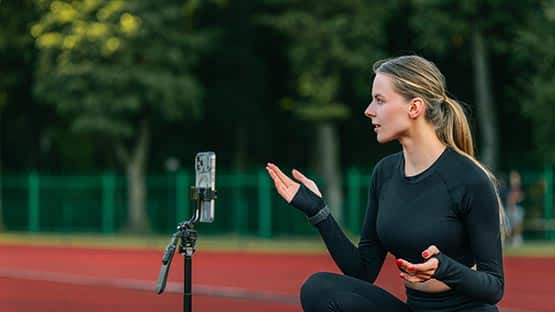
Traditional filming often requires another person carrying a camera, which is not realistic for every training session or travel day. Recording with a smartphone also creates problems because athletes need to stop what they are doing, frame the shot, and think about the content instead of focusing on the experience itself.
Smart glasses solve part of this problem by making content capture more natural. The camera is already part of the athlete’s everyday equipment, allowing them to record moments without interrupting their routine.
For example, an athlete traveling to an away event can capture everything from arriving at the venue to preparing backstage, warming up, and interacting with teammates. Instead of creating a separate filming session, the content becomes part of the athlete’s normal day.
The wearable tech athletes are starting to use
Not every wearable camera works well for sports. Athletes need technology that is comfortable, lightweight, and practical enough to use during movement, travel, and outdoor activities.
The latest generation of Meta sunglasses built around performance eyewear frames reflects this shift toward sports-focused wearable technology. Unlike traditional cameras that feel like extra equipment, smart glasses are designed to look and feel like everyday eyewear while adding recording and connected features.
This matters because athletes often need technology that does not distract them. Whether they are training outdoors, traveling between events, or preparing for competition, wearable devices need to fit naturally into their routine.
The open-ear audio feature is also useful for athletes and sports creators. They can listen to music, communicate, or manage calls without completely blocking out their surroundings. For athletes balancing training, partnerships, and content responsibilities, reducing the number of devices they need to carry can make their workflow much easier.
Why wearable cameras create better sports stories
The biggest advantage of wearable cameras is not just video quality. It is the perspective they provide.
When an athlete pulls out a phone to record a moment, the environment often changes. People become aware of the camera, conversations become less natural, and the final content can feel more like a performance.
First-person wearable footage creates a different experience. It captures the atmosphere as it actually happens. A locker room conversation, a training session, or the emotions before a competition can feel much more genuine when viewers see it through the athlete’s eyes.
According to the NCAA’s own research on athlete wellbeing and content production, managing the demands of content creation can add pressure for athletes. Although the research focuses on student-athletes, the broader challenge applies across sports: athletes want to connect with fans, but creating content should not take away from preparation and performance.
Wearable technology helps solve this problem by making content creation less disruptive.
What sports brands are looking for today
Brands have also changed the way they approach athlete partnerships. Modern sponsorships are no longer only about placing a logo on a jersey or creating a professional advertisement. Companies want authentic stories that show how athletes actually use products and experience their sport.
This is why athlete-generated content has become so valuable. Fans are more likely to trust content that feels personal rather than something that looks like a traditional advertisement.
The NIL movement highlighted this shift in college sports, but the same principle applies across the entire sports industry. Professional athletes, fitness creators, and emerging sports personalities are all building communities around their experiences.
Smart glasses fit into this model because they allow athletes to turn everyday moments into stories. A training session, a competition day, or a behind-the-scenes experience can become content without requiring a full production team.
According to the NCAA’s NIL resource center for student athletes, building a personal brand requires consistency and authenticity over time. Those same principles apply to athletes at every level who want to create stronger relationships with their audiences.
The future of athlete-created content
The athletes who benefit most from wearable technology will not necessarily be the ones with the largest audiences today. They will be the ones who understand how to share their journey in a way that feels genuine and consistent.
Smart glasses and other wearable cameras provide a practical solution because they remove many of the barriers that have made athlete content creation difficult. They allow competitors to focus on their sport while still giving fans a closer look at their experiences.
As sports continue becoming more connected and personal, first-person content will likely become an even bigger part of how athletes communicate with fans. The future of sports storytelling may not only come from professional camera crews. It may come directly from the athletes themselves.
This content is provided for informational purposes only and is not a substitute for professional advice. AFP editorial staff were not involved in the creation of this content.


 Share
Share