The transformation of outdoor living spaces has become one of the most significant trends in American home improvement over the past decade. As homeowners increasingly view their gardens as extensions of their living areas, the materials chosen for these spaces have come under greater scrutiny. Amongst the myriad options available, natural stone has emerged as the premier choice for garden paving, experiencing a remarkable surge in popularity that shows no signs of abating. This renaissance of an ancient material reflects a broader shift in how Americans approach landscape design, combining aesthetic aspirations with practical considerations and environmental awareness.
The timeless appeal of natural stone
Natural stone possesses an inherent beauty that synthetic materials simply cannot replicate. Each piece of limestone, sandstone, slate, or granite tells a geological story millions of years in the making, with unique variations in color, texture, and pattern. This individuality means that no two natural stone patios are identical, offering homeowners a truly bespoke outdoor space that reflects their personal style whilst complementing their property’s architecture.
The organic character of natural stone creates an immediate connection between the built environment and the natural landscape. Unlike manufactured paving that can appear artificial or jarring in garden settings, natural stone blends seamlessly with surrounding plantings, water features, and other landscape elements. This harmonious integration has become increasingly valued as homeowners seek to create outdoor sanctuaries that feel like natural extensions of their properties rather than stark, manufactured surfaces.
Furthermore, natural stone ages gracefully, developing a rich patina over time that enhances rather than diminishes its appeal. Where concrete slabs may crack and appear worn, natural stone weathers beautifully, acquiring character and depth that actually increases its aesthetic value. This quality resonates particularly well with homeowners who appreciate the Japanese concept of wabi-sabi—finding beauty in imperfection and the passage of time.
Unmatched durability and longevity
One of the most compelling practical reasons for natural stone’s growing popularity is its exceptional durability. Properly installed natural stone paving can last for generations, easily outliving the homeowners who install it. Historic examples abound, from ancient Roman roads still bearing traffic to centuries-old cobblestone streets throughout Europe, demonstrating stone’s remarkable ability to withstand the elements and heavy use.
In the American context, where climatic conditions vary dramatically from the humid Southeast to the arid Southwest and the freeze-thaw cycles of the Northeast, natural stone has proven its resilience across all environments. High-quality granite and slate, in particular, demonstrate excellent resistance to weathering, maintaining structural integrity through scorching summers, freezing winters, and everything in between.
This longevity translates directly into economic value. While the initial investment in natural stone paving typically exceeds that of concrete or manufactured pavers, the total cost of ownership over a property’s lifetime often favors natural stone. The material requires minimal maintenance, rarely needs replacement, and doesn’t fade or deteriorate in the way that some alternatives do. For homeowners planning to remain in their properties long-term or those conscious of resale value, natural stone represents a sound financial decision.
Environmental considerations and sustainability
The contemporary homeowner is increasingly environmentally conscious, and natural stone aligns perfectly with sustainable landscaping principles. As a naturally occurring material, stone requires minimal processing compared to concrete or manufactured pavers, resulting in a significantly lower carbon footprint during production. The extraction and fabrication process, while still impactful, is considerably less energy-intensive than creating synthetic alternatives.
Natural stone is also entirely recyclable and reusable. Reclaimed stone from demolished structures or renovated landscapes can be repurposed indefinitely, creating a circular economy that reduces waste. Many suppliers now offer reclaimed stone options, appealing to environmentally minded consumers who appreciate the reduced environmental impact and the additional character that salvaged materials provide.
Moreover, natural stone contributes to permeable landscaping when installed with appropriate jointing materials. Unlike solid concrete surfaces that create runoff and contribute to urban heat islands, stone paving with sand or gravel joints allows rainwater to percolate through to the soil below. This permeability helps recharge groundwater supplies, reduces strain on stormwater systems, and creates a cooler microclimate in the garden—all increasingly important considerations as climate change intensifies.
Versatility in design applications
The range of natural stones available and the variety of installation patterns possible provide designers and homeowners with virtually unlimited creative possibilities. From the warm honey tones of sandstone to the cool greys of slate, from the crystalline sparkle of granite to the subtle elegance of limestone, natural stone offers a palette to suit any aesthetic preference.
This versatility extends beyond color to encompass texture and finish. Stone can be honed smooth for a sleek, contemporary appearance, left naturally riven for rustic charm, or thermally treated for enhanced slip resistance. Different sizes and shapes—from precise rectangular slabs to irregular crazy paving—enable designs ranging from formal and geometric to organic and naturalistic.
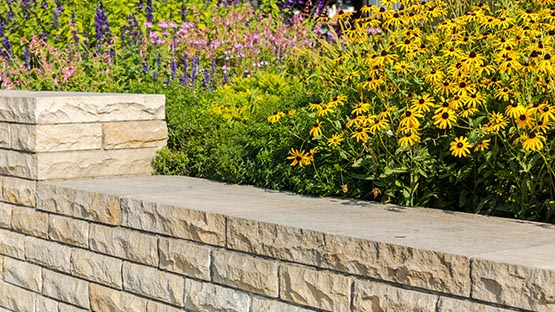
The material’s adaptability makes it suitable for various garden features beyond simple patio surfaces. Natural stone excels in creating steps, retaining walls, edging, pathways, and pool surrounds, allowing for cohesive design throughout the landscape. This ability to use the same material in multiple applications creates visual continuity that elevates the entire outdoor space.
Enhanced property value and curb appeal
Real estate professionals consistently report that high-quality landscaping, particularly when featuring natural stone, significantly enhances property values. Natural stone paving signals quality and permanence to potential buyers, suggesting that the property has been well-maintained and thoughtfully improved. In competitive markets, a beautifully paved natural stone patio or pathway can be the distinguishing feature that sets a property apart from comparable listings.
The immediate visual impact of natural stone—what Americans call curb appeal—cannot be overstated. A well-designed stone pathway leading to the front door or a spacious stone patio visible from the street immediately elevates a property’s perceived value and desirability. This first impression carries substantial weight in real estate transactions and neighborhood prestige.
Low maintenance requirements
Contrary to some misconceptions, natural stone requires remarkably little maintenance when properly installed. Regular sweeping and occasional washing with water typically suffice to keep stone paving looking its best. Unlike wood decking that requires annual sealing or concrete that may need pressure washing and resealing, natural stone largely maintains itself.
Some stone types benefit from periodic sealing, particularly in areas prone to staining, but this is a straightforward process requiring minimal time and expense. The inherent density and hardness of many natural stones make them naturally resistant to staining, scratching, and biological growth. When individual stones do become damaged—a rare occurrence—they can typically be replaced individually without disturbing the entire installation.
The influence of outdoor living trends
The explosive growth of outdoor living spaces in American homes has directly contributed to natural stone’s popularity. As homeowners invest in outdoor kitchens, fire pits, dining areas, and entertainment spaces, they naturally gravitate towards materials that match the permanence and quality of their indoor finishes. Natural stone provides the substance and sophistication that these significant investments deserve.
Social media platforms showcasing stunning outdoor designs have further fueled this trend, with natural stone paving featuring prominently in the most admired and shared garden transformations. This visual inspiration has made high-quality outdoor spaces more accessible and desirable to average homeowners, driving demand for premium materials like natural stone.
Conclusion
The ascent of natural stone as the preferred choice for garden paving represents more than a passing trend—it reflects a fundamental shift in how Americans value and invest in their outdoor spaces. The material’s timeless beauty, exceptional durability, environmental credentials, design versatility, and low maintenance requirements create a compelling proposition that synthetic alternatives struggle to match.
As outdoor living continues to gain importance in residential design and environmental consciousness shapes purchasing decisions, natural stone’s popularity seems certain to grow further. For homeowners seeking to create outdoor spaces that combine aesthetic excellence with practical longevity and environmental responsibility, natural stone paving offers an unparalleled solution—one that will provide beauty and functionality for generations to come.
This content is provided for informational purposes only and is not a substitute for professional advice. AFP editorial staff were not involved in the creation of this content.



 Share
Share