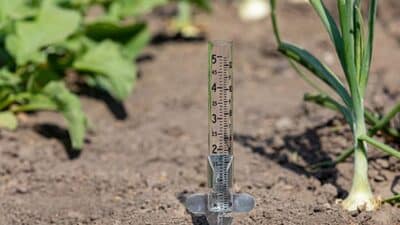
Decades of acid rain from regional air pollution has affected soil and water quality in the Meadow Run watershed in Shenandoah National Park, resulting in negative impacts to aquatic species and overall forest health.
Meadow Run, located northeast of Crimora in Augusta County, is listed as pH-impaired under Section303d of the Clean Water Act. While air pollution has decreased in the last two decades, scientific research has demonstrated that many sensitive watersheds like Meadow Run do not have the capacity to restore themselves naturally.
The National Park Service prepared an environmental assessment under the National Environmental Policy Act of a proposal to restore the Meadow Run watershed.
Three alternatives were evaluated in the EA, including a no-action alternative and two action alternatives. The no-action alternative would let natural processes continue without NPS intervention. Alternative B, split-dose liming, and Alternative C, uniform-dose liming, are action alternatives that would apply limestone sand (referred to as “liming”) at different dosages across the project area to reduce the negative effects of acid rain.
Split-dose tailors the liming to the restoration levels needed based on soil depth and the landform features.
The EA process concluded with a Finding of No Significant Impact for the two action alternatives. The NPS has selected Alternative B, split-dose liming, for implementation because it best meets the purpose and resource need without causing significant impact on park resources.
The decision was made with input from the public and scientific experts, by following a rigorous process required under the NEPA.
The FONSI document is available on the project’s web page at parkplanning.nps.gov/MeadowRunRestoration.
Liming has proven to be an effective method for improving soil and water chemistry in other locations to include recent restoration efforts at the Monongahela National Forest in West Virginia. It can restore terrestrial and aquatic ecosystems with beneficial effects for plants and wildlife impacted by human-caused acidity.
Liming at this scale would be conducted by helicopter because of the large amount of limestone sand needed and because the project area is steep and remote. Using a helicopter to perform the liming operation will be similar to wildfire response operations recently experienced within the park and, with willing landowners, may include operations off the park.
Aerial application of limestone sand would take place over two to three months in the late fall or winter (December to February).
The NPS will now develop a detailed project implementation plan describing logistics and measures to minimize impacts to visitors and potentially affected park neighbors. Relevant details from this plan will be shared with the public prior to commencement of the project.
Funding for this restoration is available from an air quality permit court settlement in 2016.



 Share
Share

AFP