
Don’t let complex language keep you from drinking tap water, researchers say

 Share
Share
With the rise in bottled water and sugary beverage alternatives, regular tap water is struggling to make its way into the daily U.S. diet.
 Share
Share
With the rise in bottled water and sugary beverage alternatives, regular tap water is struggling to make its way into the daily U.S. diet.
 Share
Share
Research into blood vessel growth, inorganic synthetic chemistry and studying dopamine and the biological clock has netted three University of Virginia second-year students prestigious research awards.

 Share
Share
On March 16 Gov. Terry McAuliffe signed a bill that authorizes Virginia Tech and Virginia State University to grow industrial hemp for research purposes. The Virginia Department of Agriculture and Consumer Services will issue the growing licenses.
Share
From examining the genes in the monkey flower, to exploring the Rev. Martin Luther King’s political, social and theological beliefs, to epilepsy therapies, to sustainable tourism, 38 University of Virginia undergraduates will pursue 36 grant-funded research projects this summer.
Share
Many researchers are windy, but Jorge Arenas gets right to the point in this 90-second story on YouTube about why scientists must better understand the noise wind farms create.
Share
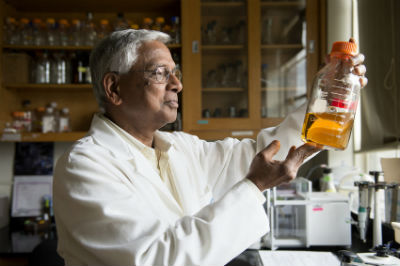
Important news for men receiving treatment for prostate cancer: Two new studies from the University of Virginia School of Medicine have upended the widely held view that it’s best to delay radiation treatment as long as possible after the removal of the prostate in order to prevent unwanted side effects.
 Share
Share
A $1.4 million gift from Smithfield Foods Inc. will support antibiotic alternatives studies in the Virginia Tech College of Agriculture and Life Sciences and at the Virginia-Maryland College of Veterinary Medicine that will investigate methods to enhance animal well-being and production efficiency in swine-rearing operations.
Share
Governor Terry McAuliffe announced this week that Virginia is the first state in the nation to receive a wind energy research lease in federal waters from the United States Bureau of Ocean Energy Management (BOEM).
 Share
Share
Virginia Commonwealth University School of Medicine researchers have discovered a biological clue that could help explain why some drinkers develop a dependence on alcohol and others do not.
Share
Life science researchers at Virginia Tech have accelerated a game-changing technology that’s being used to study one of the planet’s most lethal disease-carrying animals.


We don’t take press releases or official statements as the final word. Digging in to get the whole story takes time and resources.