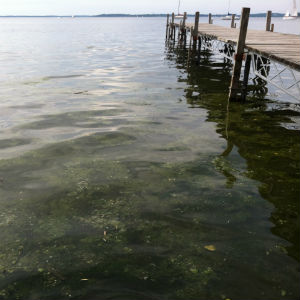
Virginia Tech researchers will examine the linkages between humans and freshwater quality

 Share
Share
Understanding human interactions with the natural environment can enhance the protection of surface water quality in lakes and streams.
 Share
Share
Understanding human interactions with the natural environment can enhance the protection of surface water quality in lakes and streams.
 Share
Share
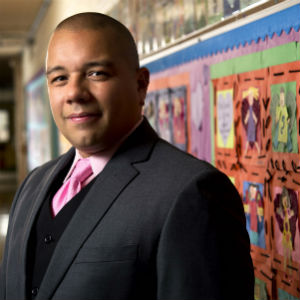
The Institute for Society, Culture and Environment at Virginia Tech has named Anthony Peguero, a professor of sociology, as its spring 2016 senior fellow.
 Share
Share
Mariana Falconier, associate professor and clinical director of Virginia Tech’s Center for Family Services at the Northern Virginia Center in Falls Church, has won a grant totaling $7.2 million for a five-year project to promote healthy relationships and economic stability among low-income couples.
Share
Technology to predict how our bodies will manage chronic diseases such as Crohn’s disease and inflammatory bowel disease promises to accelerate the discovery of new treatments, identify leads for further study, and occasionally uncover hidden knowledge about how our immune system operates.
 Share
Share
The complexity of the human immune response has been difficult to characterize on a “big picture” level, but researchers at the Virginia Bioinformatics Institute at Virginia Tech have written the book on how it can be done.
Share
Virginia Tech researchers are urging changes in how commercial aircraft engines are designed in the wake of a possible new threat to passenger aircraft safety: the likelihood of drones, or unmanned aerial vehicles, being sucked into turbofan engines at high speeds.
Share
A taut tug on the line signals the arrival of dinner, and the leggy spider dashes across the web to find a tasty squirming insect. The spider, known as an orb weaver, must perfectly execute this moment, from a lightning-fast reaction to an artfully spun web glistening with sticky glue.
Share
A new award from the National Science Foundation may help researchers at the Virginia Bioinformatics Institute unlock the secrets of the body’s internal clock.
Share
The naturally occurring bacteria on a frog’s skin could be the most important tool for helping the animal fight off a deadly skin disease, according to an experiment conducted by Virginia Tech researchers.
Share
A team of Virginia Tech researchers has refined a mathematical model that simulates the impact of genetic mutations on cell division – a step that could provide insight into errors that produce and sustain harmful cell populations, such as those found in tumors.


We don’t take press releases or official statements as the final word. Digging in to get the whole story takes time and resources.