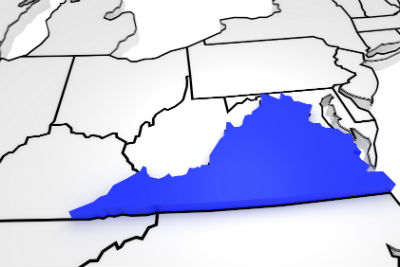
After nearly 400 years of capital punishment in Virginia, and more than 1,300 executions, “the time and the opportunity, remarkably, came together” to end the death penalty, said noted Virginia Tech historian Peter Wallenstein.
“It was surprising, yes. Though then again, Democrats are in control of Virginia affairs, uniquely so across the former Confederate South, and take a very different approach to all manner of policy matters. They had the chance to act during this session, and did,” said Wallenstein, whose current research includes the history of Virginia Tech, the Reconstruction era, and the civil rights struggle in Virginia.
In late March, Gov. Ralph Northam signed the bill into law, making Virginia the first Southern state and the 23rd overall to end capital punishment. At the signing ceremony, the governor noted that 296 of the 377 inmates Virginia executed for murder in the 20th century — or about 79 percent — were Black.
“The disparities are grotesque,” said Wallenstein. “Seven decades ago, Black lawyers in Virginia — Samuel W. Tucker in particular — developed data in the context of the case of the Martinsville Seven that the death penalty was disproportionately — that is to say exclusively — used against Black men, but not against whites for similar crimes, this in a time of white-only juries. And not so very much changed after that.”
Wallenstein also points to the impact of widespread protests over systemic racism of the past year, and the continuing aftermath of the death of George Floyd.
Quite aside from racial considerations, the death penalty has seen huge opposition for many years.
“Criminal misbehavior by police and prosecutors in obtaining convictions,” he said. “Discovery of errors in findings of guilt, with execution leaving no possibility of exoneration while a person still lived to experience it.”
Support AFP



 Share
Share

Chris Graham