Clocks fall back one hour this weekend, leading to more vehicles on the road when it’s dark outside.
While people generally look forward to the extra hour of sleep, there’s also a dangerous spike in auto accidents.
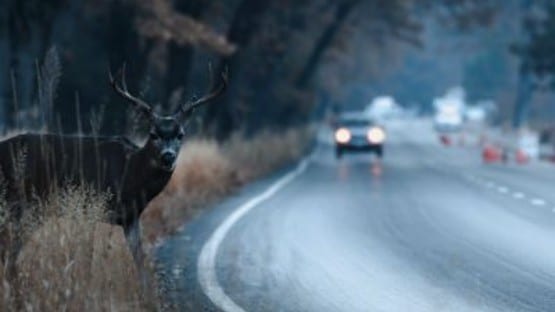
The shift in human activity can catch animals off guard and lead to more animal/vehicle collisions.
Daylight savings time also coincides with deer mating season which also increases the potential for crashes, according to the Virginia Department of Transportation.
The highest number of vehicle crashes involving deer in the state occurs in November each year with the peak during the two-week period after the time change.
”Deer and other animals’ internal clocks don’t change just because humans change their external clocks,” said Elly Boehmer Wilson, Environment Virginia state director. “Drivers should be extra diligent when driving, especially at night. If you see a deer, or even a squirrel, along the side of the road, slow down. You never know when they might run.”
Drivers are encouraged to keep an eye out for deer on roadways or foraging on the sides of the road. While deer cross roads at all times of the day, they do so more often at dawn and dusk.
People should also use extra caution where deer crossing signs are installed as these roads have been identified as high-traffic areas for deer.
“One of the scariest and most dangerous things that can happen to anyone is running into an animal crossing the road, and in too many parts of Virginia, wildlife have no other way to get to the other side,” said Wilson. “These accidents always tick up right after we change our clocks.”
Drivers in Southwest Virginia should also be on the lookout for elk, with an average male weighing 750 pounds. Elk roam along Corridor Q in Buchanan County on Route 460/121 and Southern Gap Road.
If you hit and kill a deer or elk that needs to be picked up or encounter a deceased animal creating a hazard on a state road, you may fill out a report on VDOT’s website or call (800) 367-7623.
Clocks fall back as Daylight Savings Time ends on Sunday morning at 2 a.m. The National Weather Service recommends you check the batteries in your smoke detectors or carbon monoxide detectors this weekend as well.
VDOT: Driving tips during deer and elk mating season
- Drivers should ensure headlights are working properly
- Clean your vehicle windshield for streaks
- Dim dashboard lights in darkness
- While the urge to swerve is instinctual, do not veer for deer. Swerving aggressively could cause you to lose control of your vehicle and increase the severity of a crash. If a deer jumps in front of you, gradually brake to avoid hitting the animal.
- Prepare for the unexpected. Deer may stop in the middle of the road or double back.
- If you see one deer, slow down because they usually travel in groups so there’s likely to be others nearby.
- Check the shoulders of a road or highway and use your high beam headlights when able. Deer tend to stand on the sides of the road and then suddenly move into the road. Slow down and hit your horn to scare the deer, as they dart and run in either direction.
- If you hit a deer, pull off to the shoulder, and turn on your hazard lights. Do not exit your vehicle and search for the deer, because it could hurt you.
- Elk are less likely to jump in front of vehicles. However, when they are present on the side of a road, they are less likely to move. Never assume an elk (or any animal) will avoid you.
Support AFP


 Share
Share

Crystal Graham