 Researchers at the University of Virginia School of Medicine and the UVA Biocomplexity Institute have been selected to help establish a national pathogen genomics surveillance network working to better identify, respond to and prevent future infectious disease outbreaks and pandemics.
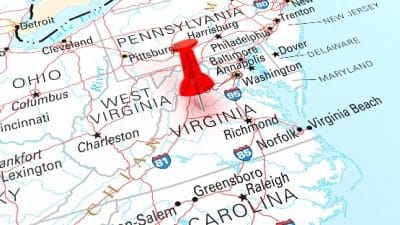
Together with the Virginia Division of Consolidated Laboratory Services, Virginia Department of Health and Virginia Commonwealth University, the UVA researchers are establishing a Virginia-based center in the national Pathogen Genomics Centers of Excellence Network.
The Virginia center is one of just five in the nation chosen by the U.S. Centers for Disease Control and Prevention, according news releases from UVA Health and VCU.
“We are extremely pleased to bring VCU’s expertise in pathogen genomics to bear on the many issues that we face in public health,” said P. Srirama Rao, Ph.D., vice president for research and innovation at VCU. “Working together with these partners, we look forward to addressing the pathogens that may emerge as the current and future microbial threats of public health importance.”
A key to developing testing, treatments and vaccines for COVID-19 – as well as predicting the virus’s spread – was understanding the genetic makeup of the virus through whole-genome sequencing. The goal of this genomics network: leverage genomic pathogen data to help drive the response to future and current infectious diseases.
“Combining pathogen genomics with epidemiologic data can reveal transmission pathways to help us better understand a pathogen. The sooner you have that knowledge, the sooner you can develop ways to slow or stop its spread,” said Amy Mathers, MD, an infectious diseases specialist at UVA Health and the initiative’s leader at UVA. “You can also develop diagnostics to identify it and test for it.”
Both UVA Health and the UVA Biocomplexity Institute are well positioned to discover new ways to better respond to infectious disease outbreaks. A laboratory team led by Mathers and Mindy Poulter, PhD, helped UVA Health become the first hospital in Virginia to stand up COVID-19 testing in the early weeks of the pandemic, and Mathers also led a study confirming wastewater testing as an effective method for tracking COVID-19.
The Biocomplexity Institute’s COVID-19 Response Team, meanwhile, has been consulting with the CDC, Department of Defense and Commonwealth of Virginia on the COVID-19 pandemic since early 2020, including producing a weekly report for the Virginia Department of Health with disease projections and analyses.
The team will focus on the growing issue of antibiotic resistance and “superbugs” that do not respond to existing antibiotics, as well as the further refinement of wastewater surveillance to detect antibiotic resistance as well as other infectious diseases. That data and information, in turn, will be shared with researchers at the Biocomplexity Institute to aid them in developing more accurate models and analyses of both future infectious disease outbreaks as well as the effects of antibiotic resistance.
“Wastewater surveillance has already been shown during the COVID-19 pandemic to extremely useful metric for measuring the disease and guiding response to outbreaks. That said, this is still a new surveillance technique, and there is a lot of research needed to hone this in to a fully operational and routine tool in our arsenal,” said Madhav Marathe, PhD, Director of the Network Systems Science and Advanced Computing Division at the Biocomplexity Institute. “Additionally, wastewater surveillance has the promise to provide a host of other useful information for public health officials, and we are excited to work with them on helping translate that data into practice.”
The team at the Biocomplexity Institute will also work more broadly to share actionable information on infectious diseases through a national platform called Scalable Cyberinfrastructure for Genomic Surveillance, as well as provide training on how to best use the platform and its wealth of information.
“The goal is to enable the sharing and analysis of biosurveillance data for CDC and other local public health agencies to use in their crisis responses as well as regular day-to-day public health practice,” said Bryan Lewis, PhD, MPH, a computational epidemiologist at the Biocomplexity Institute.




 Share
Share

Crystal Graham