A healthy 47-year-old man from New Jersey died four hours after eating a hamburger at a cookout, and his death remained a mystery until researchers at the University of Virginia School of Medicine stepped in.
UVA Health’s Thomas Platts-Mills, a world-renowned allergist, and expert on the lone star tick and meat allergy associated with a bite, assembled a team to do an investigation.
Experts had feared that fatal anaphylaxis was possible, but this is the first confirmed case.
Findings were published in the Journal of Allergy and Clinical Immunology: In Practice.
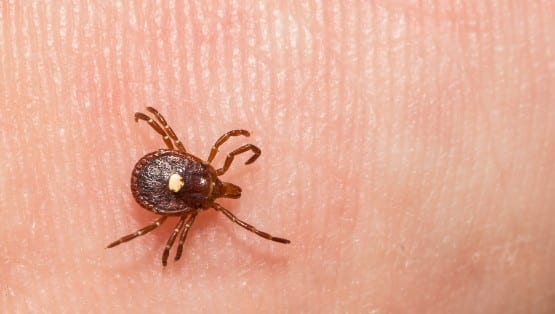
Lone star tick bites can cause mild cases of hives, or in the worst cases, it appears, it can cause death. The bite sensitizes people to alpha-gal, a sugar found in red meat. Once sensitized to the sugar, people may develop allergic symptoms such as rash, nausea and vomiting after eating beef, pork or lamb.
The takeaway, Platts-Mills said, is that if you have severe abdominal pain three to five hours after eating red meat, you should be tested for an alpha-gal sensitivity. Physicians should also be on the lookout for people who may have developed the allergy.
“It is important that both doctors and patients who live in an area of the country where lone star ticks are common should be aware of the risk of sensitization,” Platts-Mills said. “More specifically, if they have unexpected episodes of severe abdominal pain occurring several hours after eating mammalian meat, they should be investigated for possible sensitization to the oligosaccharide alpha-gal.”
Lone star ticks are the most common tick species to bite in Virginia, according to the Department of Health. They are most commonly found in areas below 1,600 feet in the Piedmont and Coastal Plain regions of the state. The tick is known for aggressive biting, but not everyone bitten develops the allergy.
Investigation: New Jersey man died after eating a hamburger

The case in New Jersey began in the summer of 2024. The man, who was not named, had gone camping with his wife and children, and ate steak for dinner one night. He woke up hours later with severe abdominal pain, diarrhea and vomiting, telling his son he thought he was going to die. He survived and had recovered by morning.
Two weeks later, he ate a hamburger at a cookout. He started feeling ill after 7 p.m., and his son found him collapsed in the bathroom approximately 30 minutes later. He died four hours after consuming the meat.
His autopsy was inconclusive and classified as “sudden unexplained death.”
His widow, however, kept pushing for answers. She asked a doctor to review the autopsy report, and it eventually landed in Platts-Mills’ lap to see if alpha-gal could have been a factor in the sudden death.
The team at UVA obtained samples of the man’s blood and found that he had been sensitized to alpha-gal. The blood indicated the man had an extreme reaction, in line with what is seen in fatal anaphylaxis.
While he had no recent history with a tick bite, his wife said he had 12 or 13 chigger bites around his ankles over the summer. Many suspected chigger bites in the Eastern U.S. are actually bites from lone star tick larvae.
Platts-Mills and his team suspect that several factors may have contributed to the severity of the man’s reaction, including:
- having a beer with his burger
- exposure to ragweed pollen
- having exercised that afternoon
- ate red meat very sparingly
ICYMI
- Virginia Department of Health: Tick cases up this year compared to five-year average
- Lone Star, deer tick may lead to life-threatening reactions in days, months after bite
- Virginia Tech entomologist: Ticks are everywhere, and they’re not going away
- UVA identifies biological changes triggered by tick bites
Unfortunately, there does not appear to be a cure for someone who has alpha-gal sensitivities from a tick bite. The main treatment is simply avoiding red meat, dairy products and gelatin, or anything derived from a mammal including some medicine.
In some individuals, the allergy will diminish over time, especially if there are no further exposures to tick bites, VDH reports.
Support AFP



 Share
Share

Crystal Graham