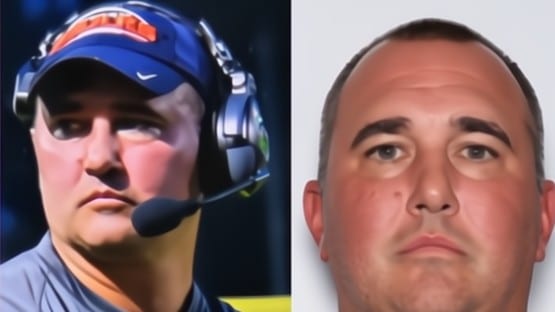
In the quiet mountains of Wise County, a narrative whiplash has occurred that is so severe it has attracted the gaze of the entire internet.
Travis Turner, the celebrated head football coach of the undefeated Union High School Bears, has transformed overnight from a local hero into a fugitive wanted on charges of possession of child pornography and soliciting a minor.
But the story playing out on TikTok, YouTube and Facebook is often vastly different from the one in police files.
As the Virginia State Police hunt for Turner in the rugged terrain of Appalachia, a secondary hunt is happening online – a race for clicks, views, and clout by “internet sleuths” who are muddying the waters with sensationalism, false “capture” reports, and wild conspiracy theories.
This frenzy highlights the exact problem with the current social media. If you scroll through TikTok or YouTube today, you will likely find thumbnails with bold red arrows and titles screaming “Turner’s wife speaks in exclusive interview,” “The untold story,” or “BREAKING: New info …”
Here is the reality: There is no new information as to the saga.
ICYMI
- High school football coach in Wise County missing as team continues playoff run
- Update: Southwest Virginia football coach faces criminal charges
The “EXCLUSIVE” narratives driving social media traffic are largely fabricated by content creators desperate to be the first to break news, even if it isn’t true. These wannabe journalists capitalize on the public’s desire for closure.
Every time a drone flies over Wise County or a police cruiser speeds down a back road, a new wave of videos hits the web claiming the manhunt is over. This sensationalism does a disservice to the actual investigation, creating a “boy who cried wolf” scenario where the public may eventually tune out the real news when it finally breaks or the outcome of the manhunt.
While the capture reports are largely noise, the question of who tipped Travis Turner off is a legitimate and burning aspect of the investigation.
The timeline provided by authorities is incredibly suspicious. Agents from the Virginia State Police Bureau of Criminal Investigation were en route to Turner’s home to interview him regarding a “non-criminal complaint” (likely the initial stages of the inquiry before charges were formally filed). By the time agents arrived, Turner was gone.
This tight window has fueled rampant speculation that Turner had inside information. Was it a colleague? A friend in law enforcement? Or simply a coincidence? The rumor mill went into overdrive when Turner’s wife posted a frantic plea for prayers on Facebook, claiming he was “missing,” only to delete the post shortly after.
These so-called internet sleuths have dissected this deleted post frame-by-frame, as though accusing the family of buying him time. However, the “real story” the VSP is likely investigating is whether Turner was alerted by the digital trail of the investigation itself.
Local residents have asked why the VSP, rather than local sheriff’s deputies, are the face of this investigation. This is not a conspiracy; it is a matter of jurisdiction and resources.
Charges involving “using a computer to solicit a minor” and possession of child sexual abuse material often fall under the jurisdiction of ICAC (Internet Crimes Against Children) task forces. In Virginia, the State Police are the primary agency for these complex, often multi-jurisdictional digital investigations.
In a small town where the high school football coach is a revered figure, handing the investigation to a state-level agency removes the potential for (or appearance of) local bias or conflict of interest.
The media coverage has been breathless because the fall from grace is so steep. News outlets are fixated on the cinematic quality of the story. Turner disappeared right before his team’s playoff run, leaving players to win the Graham game in his absence.
This “sports tragedy” angle is being exploited heavily by national outlets.
The “sensational” version of the Travis Turner case is a chaotic mix of rumors, fake videos, and armchair detective work. The real story is a grim procedural: a serious investigation into the exploitation of children, a fugitive who likely panicked when the digital walls closed in, and a community left grappling with the betrayal of a public figure.
Until the VSP officially announces “in custody,” everything else on social media is likely just noise.
We won’t be reporting anymore about the Travis Turner case until we receive the word that he has been found or new developments are officially released by the Virginia State Police and other agencies.
We’re not looking for clicks. We are simply looking for answers.
Support AFP


 Share
Share