
The SEC, again, is dominant in college baseball – this year, historically so, getting a record five schools into the eight-team College World Series.
The ACC gets one – North Carolina, the #5 overall seed, which had to rally after losing Game 1 to Southern Cal, and had to rally from a late 3-1 deficit in Game 3, to punch its ticket.
UNC was our only program even in the Super Regionals, with #2 seed Georgia Tech and #10 seed Florida State losing Regionals at home, and none of our rest – Boston College, Miami, NC State, Virginia, Virginia Tech, Wake Forest – representing serious threats on the road.
The ACC was the second-ranked conference in the RPI (ACC: .5606, vs. SEC: .5810) this season, and the gap between #1 and #2 was almost what it was between #2 and #3 (Big 12: .5458).
The SEC, heading into the 2026 NCAA Tournament, had four of the RPI Top 10 and eight of the Top 20; the ACC had three of the Top 10 and four of the Top 20; the Big 10, which ranked fourth in conference RPI (.5384), had three in the Top 10 and four in the Top 20.
So, it’s not like the SEC was necessarily primed for what has happened the past two weekends.
For that matter, none of the five SEC schools to make it to Omaha were there in 2025; none of the eight schools in this year’s World Series was in Omaha in 2025, which says something about the parity in the sport.
LSU won the 2025 national title, and then didn’t get a bid to the NCAA Tournament this year.
That’s a testament to the depth of the SEC, though.
As is this: two of the SEC teams headed to Omaha (Georgia, Ole Miss) had to beat other SEC schools (Mississippi State, Auburn) to get there.
Again, our ACC had one team playing in the second weekend, and they had to fight their asses off to keep their season alive.
What’s going on here?
Is it money?
The answer there: yeah.
But it’s also complicated, because it’s not in the way you’d think.
Per the Sportico College Finances Database, the average SEC baseball program spends a tick over $8 million a year, while the average ACC program spends a tick under $6 million.
And they’re all losing money hand over fist, with the SEC schools running a $3.3 million annual operating deficit on average, and the ACC schools losing an average of $2.7 million a year.
Looks to me that it’s not so much the money the SEC makes from their baseball programs, as it is the willingness of SEC athletics directors to absorb bigger budget deficits with their baseball programs, that is the difference here.
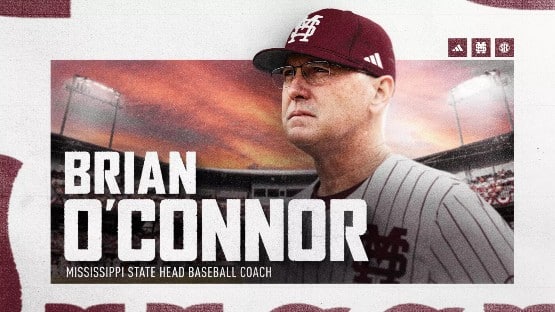
Mississippi State, for instance, where the baseball program ran a $4.2 million deficit in the 2024-2025 academic sports year, more than doubled the $1.4 million a year UVA (2024-2025 baseball deficit: $3.5 million) was paying Brian O’Connor to get him to pack his stuff up and head down to Starkville.
The sport-specific money numbers don’t add up, but then, SEC schools have more money to absorb losses in the money-losing sports – $231.5 million in athletics revenues per school in the 2024-2025 academic sports year, per the Sportico database, to $169.8 million for ACC schools.
I still don’t know why, if you’re running athletics at Mississippi State, you’re willing to add another $1.5 million a year to your baseball deficit to get Brian O’Connor, when you could spend that money on a new offensive or defensive coordinator for your football team, which made a $10.6 million profit in the 2024-2025 year, despite going 2-10 in the fall of 2024, but anyway, that’s what they did.




 Share
Share

Chris Graham