 It was a sunny evening in July and I had arranged for members of my staff to take a short walk from the Capitol down the National Mall to a building just off of Constitution Avenue.
The National Archives is a quiet spot in Washington, D.C., often passed over by tourists for more familiar sites like the Lincoln Memorial or the Smithsonian National Air and Space Museum. But inside the National Archives is a treasure trove of America’s story. Public vaults hold documents, films, maps, and photographs that provide raw, unedited glimpses into events that shaped history – the first report of the Titanic collision, personal letters written by presidents and pioneers, and records from the Civil War, among others. Satellite locations across the country hold archived Presidential communications like memos, official correspondence, and personal letters.
It is a magnet for American history buffs, and it’s one of my favorite spots in our nation’s capital. At the center of the National Archives – like the glue connecting all of the other vaults and galleries together – is the Rotunda for the Charters of Freedom. Inside lie three documents that changed the world: The Declaration of Independence, The Constitution of the United States, and The Bill of Rights.
The stately rotunda nearly overpowers the documents. They are displayed around the room, enclosed in cases and flanked by two large murals and American flags. The documents are smaller than you might expect; the parchment is worn, the letters faded, and the signatures imperfect. They are vulnerable, which is exactly what I had brought my staff there to see.
We hear a lot about freedoms and rights as Americans. We were taught about them in school, we are reminded of them when we hear inspiring speeches by national leaders, we are filled with pride for them on Independence Day, and we are grateful for them each time we witness another peaceful transition of power.
But there is something about actually standing in front of the foundational documents of freedom that deepens our perspective. We realize that men and women risked their lives, fortunes, and sacred honors over fragile documents – and they changed the world. We realize our founding fathers were everyday individuals – professors, clergymen, business owners, and farmers – with imperfect signatures who simply had core convictions about what America should stand for. We realize there wasn’t anything glamorous about the creation of these documents. Indeed, the documents in the Rotunda for the Charters of Freedom are gritty, courageous documents that address a very basic human need: freedom.
Today, our world looks a lot different than it did when our founding fathers authored the Declaration of Independence, our Constitution, and the Bill of Rights. We are certainly more global. We are more efficient. We’ve explored the corners of the Earth and the outer limits of space. We can communicate across our vast nation in real time. Despite all the ways we’ve changed, the values we see encased in the Rotunda persist: all people are created equal, endowed by their Creator with certain unalienable rights, that among these are life, liberty, and the pursuit of happiness.
Standing there that day with my staff in the Rotunda for the Charters of Freedom, we were reminded once again of the magnitude of the responsibility we have in Congress and as American citizens. We were reminded that greatness comes not from the power of the federal government, wealth, military power, or pride, but rather from empowering individual citizens to pursue their unique dreams. Just like our Founding Fathers, our own commitment to those freedoms exists in the midst of our everyday lives – as teachers, pastors, entrepreneurs, parents, farmers, and students. As American citizens we are carriers of hope and freedom to the world.
Although the Charters of Freedom look frail, they are strong. For as Alexander Hamilton said, “The sacred rights of mankind are not to be rummaged for, among old parchments, or musty records. They are written, as with a sun beam in the whole volume of human nature, by the hand of the divinity itself; and can never be erased or obscured by mortal power.”
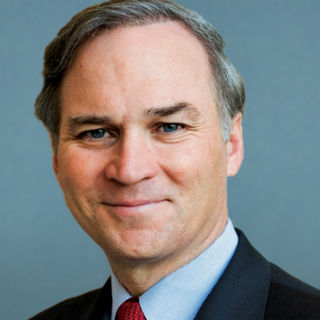
Randy Forbes represents Virginia’s Fourth Congressional District in the U.S. House of Representatives.
Support AFP


 Share
Share

Contributors