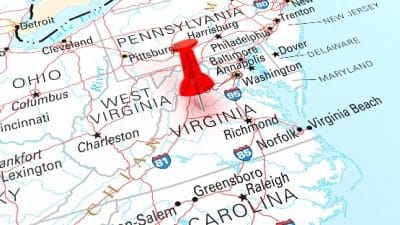
For a long time, the Staunton-Waynesboro corridor was where people from Charlottesville went to look for homes when they got priced out. That description still fits, but the buyer pool has widened considerably. Remote workers from Northern Virginia, retirees from the Mid-Atlantic, and younger buyers who simply cannot compete in larger markets are looking at this stretch of the Shenandoah Valley with fresh eyes.
Median sale prices in Waynesboro hovered around $307,000 in mid-2025, and Staunton was sitting near $248,000 to $300,000 depending on the month and data source. Compared to the statewide median of around $430,000 to $446,000 cited in recent reports from the Virginia Association of REALTORS, the math is hard to ignore.
What has changed is not just price but pace. In Waynesboro, homes were selling in roughly 16 to 25 days on average in 2025, and a meaningful share were going at or above asking price. That is not the behavior of a market nobody wants. It is the behavior of a market where demand has caught up with inventory, without prices having fully caught up with statewide norms. Buyers who do their homework are finding real opportunities here, particularly compared to metros where even a modest three-bedroom requires a stretch budget and a lot of luck with timing.
What is attracting new buyers
The appeal is partly financial and partly practical. Both Staunton and Waynesboro sit along interstates 64 and 81, and within reasonable driving distance of Charlottesville, Harrisonburg, and, for those willing to make the commute a couple days a week, the Washington metro area.
Staunton in particular has an established downtown with independent restaurants, arts venues and a walkable historic district. Waynesboro has added commercial development and offers proximity to Skyline Drive and the Blue Ridge Parkway, which matters to a growing cohort of buyers who want outdoor access as part of daily life, not just a weekend drive.
Remote work has restructured where people are willing to live, and the Shenandoah Valley has benefited from that shift. Buyers no longer need to be within 30 minutes of an office five days a week, which changes the calculus entirely. A household with two remote incomes from Northern Virginia or Richmond can walk into the Staunton-Waynesboro market at a price point that would represent a significant discount to almost anywhere else they might consider in Virginia.
The cost-of-living differential is real. According to available data, the overall cost of living in Staunton runs about 5 percent below the national average, which adds up over time for families managing budgets carefully.
The inventory problem is not unique here
None of this means buying in the corridor is simple. Inventory has been the persistent challenge across Virginia, and Staunton and Waynesboro are not immune to it. The Staunton metro area saw a median listing price of about $375,000 as of late 2025 according to Federal Reserve economic data, which represents meaningful appreciation from just a few years ago. The days of finding a solid three-bedroom at a throwaway price are mostly behind this market. What remains is a relative value story rather than an absolute bargain one. Buyers who understand that distinction tend to navigate it more successfully.
Augusta Free Press has covered Waynesboro’s housing squeeze in depth, including how rising demand and constrained supply have created real hardship for longtime residents and working families trying to enter the market. That tension is real and ongoing. At the same time, from the perspective of someone relocating from a higher-cost market, the same conditions that are painful locally can look like an opportunity. That gap in perception is not unique to Waynesboro; it is a recurring feature of any market that becomes newly desirable.
For buyers trying to understand conditions on the ground, current listing data tells part of the story. In Waynesboro, the median list price sits around $338,000 with homes moving in under three weeks on average. Staunton is seeing its own activity, where 171 homes sold in February 2026 alone — up from 126 the year prior — with a median sale price of $424,900. That combination of lower-than-statewide prices and steady transaction volume is what catches the attention of buyers comparing options across Virginia.
What buyers should know before making a move
Buyers coming from larger markets sometimes underestimate how competitive smaller inventory pools can be. In a city like Waynesboro where a few dozen homes trade hands in an average month, a single motivated buyer can have an outsized effect on a specific segment. Three-bedroom homes in good condition near good schools have moved fast, often with multiple offers. Buyers expecting the lower prices to mean less competition have sometimes been caught off guard.
Working with an agent who knows the local market is more important here than in larger cities where data is abundant and transactions are frequent. In a thin market, local knowledge, existing relationships and familiarity with off-market listings can make a meaningful difference. Buyers actively searching can browse homes for sale in Waynesboro and Staunton to get a real-time sense of what is available and at what price points before committing to a search. The Consumer Financial Protection Bureau’s homebuying resources offer solid foundational guidance on what to prepare for, particularly around financing timelines and what to expect during the offer process in competitive conditions.
Financing is its own consideration. With statewide median prices well above $400,000 and corridor prices in the $250,000 to $375,000 range, monthly payment differences can be substantial depending on how much a buyer puts down and what rate they secure. The Virginia Housing Development Authority offers programs specifically for Virginia buyers, including down payment assistance and below-market rate loans for qualifying first-time buyers, which can be especially relevant in a market like this one where buyers are often coming from situations where they have been renting at higher costs for years and have less equity to bring forward.
The Shenandoah Valley corridor has always had a loyal resident base, and nobody who lives there needs to be told what makes it worth staying. What is newer is the volume of outside attention the market has attracted. Whether that translates into a lasting shift in prices and demand, or whether it moderates as mortgage rates and broader economic conditions evolve, is genuinely hard to predict. What the data shows now is a market that is active, competitively priced against the rest of the state, and drawing buyers who have done the comparison work and decided it makes sense. That is about as concrete a signal as housing markets tend to send.
Related stories
- Virginia home sales report looks good for everybody but the underhoused
- Virginia property owners have new tool to combat growing problem of deed fraud
- SAW Housing: Lunch and Learn series return with focus on ALICE households
Support AFP



 Share
Share