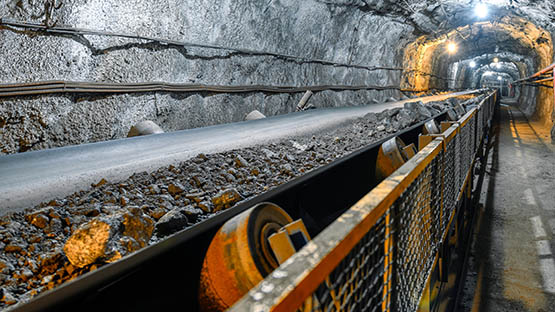
Most people picture mining as the open pit, the haul trucks, the ore leaving on rail cars. The waste piles get a shrug. That’s the mistake. Those piles might be the most valuable part of the operation, and they’re the ones sitting closest to communities like ours.
Virginia knows a thing or two about legacy industrial waste. From coal country to the smelter sites scattered along old rail corridors, the Commonwealth is dotted with tailings, slag heaps, and refinery byproducts nobody quite knows what to do with. Here’s the twist: the same piles regulators worry about are now being eyed as untapped mines for the critical minerals the U.S. is scrambling to secure.
So what’s inside all that leftover material, and why are engineers finally taking it seriously?
The waste stream nobody wanted is suddenly a resource
Start with red mud, the caustic byproduct of turning bauxite into aluminum. Research published in Nature estimates roughly 180 million tons generated each year and about 4 billion tons stockpiled worldwide, making it one of the largest hazardous industrial waste streams on the planet. Only a sliver of the annual output gets recycled, and most of that goes into construction after expensive neutralization.
The Bayer process is efficient at pulling alumina out of bauxite, but it’s brutal on the tailings side. Producing a single ton of alumina leaves behind between one and 1.5 tons of bauxite residue, according to a peer-reviewed review on reusing that residue. Multiply that by decades of global aluminum demand and you get the mountain we’re standing on.
Steel slag tells a similar story on U.S. soil. Tens of millions of tons are generated annually stateside, and only a small share gets reused. The rest sits in impoundments, leaching into groundwater in the worst cases and eating up acreage in the best ones.
Why old piles are suddenly worth a second look
Two things changed. First, the market. Rare earth elements, germanium, gallium, phosphorus, and cobalt all show up on federal critical mineral lists, and the U.S. imports most of them.
Second, the chemistry. A generation of researchers has worked out how to pull those elements out of waste streams at yields that would have sounded absurd a decade ago.
One published hydrometallurgical method combines nitric acid leaching, cryogenic crystallization, and solvent extraction to recover the vast majority of the rare earth elements and nearly all of the phosphorus from apatite mine tailings. That’s not a rounding-error improvement. That’s the difference between a liability and a product line.
Similar work is happening around coal ash, acid mine drainage sludge, and slag. The common thread is treating waste as a feedstock with its own particle size, mineralogy, and process route, not as garbage that happens to contain something useful.
The engineering problem is bigger than the chemistry
Recovering a valuable element in a beaker is one thing. Doing it at 50 tons an hour, with a byproduct stream that meets landfill or beneficial-use standards, is another problem entirely.
That’s where most projects stall.
The operators who make it work tend to focus on three things:
- Feedstock characterization. Every waste pile is a little different. A slag from one mill will behave nothing like the slag two counties over, and pretending otherwise burns capital fast.
- Modular process design. Building a fixed plant next to a finite pile is a bad bet. Skidded, relocatable units let operators chase the resource instead of stranding equipment.
- Downstream product fit. Recovered oxides, aggregates, and ceramic precursors only pay if they meet real spec sheets. That means partnering with people who understand how minerals behave in a kiln, not only in a lab.
That last piece is where specialized firms come in. Groups like IntoCeramics in Houston work on turning waste minerals into salable ceramic and aggregate products, the unglamorous handoff between a promising lab result and something a customer will buy.
What Virginia stands to gain
The Commonwealth has a real seat at this table. Virginia’s coal legacy, its ports, and its proximity to federal labs and research universities put it in position to host the kind of pilot facilities this industry needs. Turning a Wise County refuse pile or an old Roanoke Valley slag heap into a source of critical minerals isn’t science fiction. It’s a permitting, financing, and engineering problem, and each of those is solvable.
The bigger shift is cultural. For a century, waste was something to bury, cap, and forget. The next decade will reward the operators, regulators, and communities who look at those same piles and ask a better question: what’s in there, and who can pull it out cleanly?
For a state that’s spent generations doing the extracting, being the one to figure out the recovering would be a fitting second act.
This content is provided for informational purposes only and is not a substitute for professional advice. AFP editorial staff were not involved in the creation of this content.



 Share
Share