Interventional radiology rarely attracts attention outside of medical circles, yet it has quietly transformed the principles of modern oncology. Instead of large procedures, it relies on image‑guided treatments measured in millimeters – a shift that has made minimally invasive cancer care one of the fastest‑growing areas in European oncology, with usage increasing by more than 40% over the past decade.
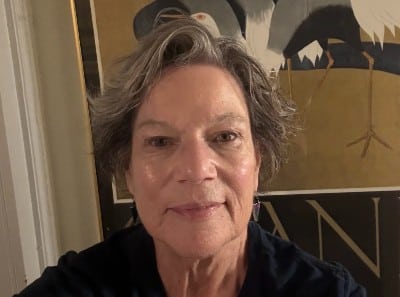
Few people have been closer to that evolution than Prof. Dr. Thomas Vogl, Director of the Department of Diagnostic and Interventional Radiology at the University Hospital Frankfurt am Main of Goethe-University in Germany. Every day, his department deals with complex cases, often for international patients who come to Germany for structured diagnostics, predictable timelines, and quick decision-making.
What stands out in conversation with Prof. Thomas Vogl in Germany is not the technology itself, but the mindset behind it. He discusses interventional oncology like a craftsman discusses materials – with discipline, respect, and an eye toward reproducibility.
“Precision is not a slogan,” he says. “We have that responsibility every day.”
Leadership, innovation and the future of cancer treatment
In this interview, Vogl discusses leadership, innovation, and the future of minimally invasive cancer treatment – and what it takes to run a department where accuracy is not an aspiration but a daily practice.
Interventional radiology has changed how many cancer patients are treated – smaller procedures, faster recovery, and far less disruption to the rest of the body. For someone who has worked in this field for decades, what feels most significant about this shift, especially now that so many treatments can be done on an outpatient basis?
Prof. Vogl: The biggest change is the way we look at intervention. Traditional oncology relied on large procedures that affected the whole body. Interventional radiology asks a simpler question: What is the smallest, most precise thing that will solve the problem? When you work in millimeters instead of incisions, planning, imaging, and workflow all become more focused.
The practical effect is obvious. Patients recover quicker, with less systemic stress, and often go home the same day. Up to 70% of interventional oncology procedures in Germany no longer require an overnight stay in hospital, and that changes the way a department operates.
But for me, the shift is also personal. Precision is not a buzzword. It’s a daily thing. Humility and respect for reproducible processes come from working in imaging conditions with a needle or catheter. Technology is important, but discipline is more important. Changes in this field come not only from new tools but also from a new way of thinking about intervention itself.
You run one of the busiest interventional oncology departments in Germany. When a program reaches that level of volume, what actually keeps it functioning day after day?
Prof. Vogl: The truth is that it doesn’t come from doing more – it comes from doing things the same way every time. People imagine large medical departments as places full of dramatic decisions, but most of the work is routine by design. We start with standardized diagnostics: every patient follows the same imaging protocol, and every case is reviewed with the same structure.
Communication is a must in our field. Interventional radiology is never a solo effort; we work with oncology, surgery, pathology and nuclear medicine on a daily basis. We therefore depend on established practices such as short meetings, group imaging reviews and clear delineation of responsibilities.
While technology can be helpful, it is only effective if the team knows how to use it properly. New devices don’t solve workflow problems–people do. We invest in tools that improve reproducibility, but we also stress training our teams to use those tools consistently.
In the end, running a large program is less about scale and more about rhythm. When the rhythm is right, volume becomes manageable. When it isn’t, even small days feel big.
Minimally invasive cancer treatment is often described as “technology‑driven,” but that phrase can mean almost anything. When you’re the one actually doing the work – guiding instruments under imaging, making decisions in real time – which technologies genuinely matter? What has changed the way you treat tumors, not in theory but in daily practice?
Prof. Vogl: The most important technology is the one that clarifies decision-making. Everything starts with imaging–CT scans, MRIs, and ultrasounds. If the images are clear, the plan will be effective. If they’re unclear, no other solution can rectify that. Innovation in our field begins with accurately identifying the problem.
Navigation systems have also changed daily practice. Modern platforms provide instruments with sub-millimeter accuracy, and this level of precision is crucial–it can mean the difference between successfully treating a tumor and harming healthy tissue. When near blood vessels or nerves, a millimeter can be incredibly significant. These systems don’t replace clinical judgment, they enhance and support it.
Ablation technologies have improved as well. Radiofrequency, microwave, cryoablation – each has its place. What has changed is control. We can shape the treatment zone more predictably, so planning is more reliable.
Germany attracts many international patients who are looking for minimally invasive cancer treatment. When people travel long distances for care, they’re not just choosing a doctor – they’re choosing a system. What do you think makes the German approach appealing to patients who need clarity, speed, and structure during one of the most stressful moments of their lives?
Prof. Vogl: Most international patients want one thing – predictability. Cancer already brings enough uncertainty, and traveling for treatment adds more. In Germany, diagnostics usually take two to five days, and this isn’t a special arrangement. That’s the way the system works. That’s what people go for. This will help them get a better sense of what the first few days will look like.
Structured coordination also plays a role. Many patients arrive through Airomedical, a platform connecting people with specialists and clinics that are verified and right for their specific medical condition. When they arrive in our department, they have already organized important information. This preparation allows us to diagnose and decide quickly.
Consistency is another reason. Leading German centers follow standardized protocols, so care doesn’t depend on timing or chance. When somebody comes on a Monday or a Thursday, it’s the same thing. It reduces stress for patients and makes planning easier for families who are managing travel, work, and finances at the same time.
Outpatient care is important, too. Many interventional procedures do not require an overnight stay, which facilitates planning and allows patients to recover close to their families.
If I had to choose one word, it would be clarity. Patients know what will happen and when decisions will be made. That combination of speed and structure is what makes Germany a reliable place for complex treatment.
When you think about the future of minimally invasive oncology, what do you see changing next in daily practice?
Prof. Vogl: The future is not one big invention. It’s many small pieces finally working together. For years, imaging, molecular diagnostics, and targeted therapies developed in parallel. Each field made progress, but they didn’t always communicate with one another. The next step is integration – making sure every piece of information we have about a tumor can be used in one continuous workflow.
Imaging will remain the backbone, with more detailed biological data added to it. Molecular diagnostics can tell us how a tumor behaves, not just how it looks. When these insights are combined with image-guided precision treatment, they help make decision-making easier. This approach allows us to move from guesswork to effectively matching the right intervention to the right tumor at the right time.
Another part of the future is simplicity. Technology becomes more powerful when it becomes easier to use. A system that requires constant troubleshooting is not progress. A system that makes a complex decision feels calm – that is progress.
People often imagine that running a complex medical program requires constant big decisions. But most of the time, progress comes from smaller habits – the way a team communicates, the way a workflow is built, the way a department stays calm under pressure. What advice would you give someone who is building a program in a high-complexity field? When the work is hard, and the stakes are high, what really matters?
Prof. Vogl: The first thing I would say is: don’t chase complexity. It will find you on its own. The work in medicine, especially in oncology, is already difficult. There’s no need to make it complicated with complicated systems and dramatic decisions. It all starts with the basics: good diagnostics, predictable workflow, and a team that knows precisely what to do on a busy day.
The second thing is consistency. People believe innovation is the most important thing for progress. But consistency safeguards patients. A breakthrough is only significant if you can deliver it day after day. That means training, repetition, and a willingness to polish the little things until they work without a hitch.
I would also say: listen to the people who do the work. Technology helps, but it doesn’t replace human experience. The nurses, technicians, and radiologists who stand in the room every day notice changes early. If you don’t listen to them, you will miss the most valuable information.
And finally, stay humble. In complex fields, confidence can turn into overconfidence very quickly. The work always reminds you that you don’t control everything. Staying careful – with the tools, with the workflow, with the team – is what keeps a program stable. With that attitude, even difficult days stay manageable.
This content is provided for informational purposes only and is not a substitute for professional advice. AFP editorial staff were not involved in the creation of this content.




 Share
Share