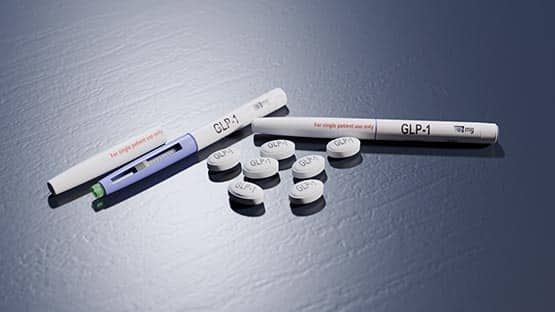
A patient told her doctor she’d rather stay heavier than give herself a weekly shot. Six months later, after switching to the oral version of the same medication, she’d lost more weight than she ever managed on any diet. Nothing about the drug changed. Her willingness to actually take it consistently did. That’s the part of this conversation that gets lost in side-by-side comparisons of efficacy numbers, the best medication is the one a person will actually stick with, and for a meaningful number of patients, that answer depends entirely on the format.
Now that oral semaglutide has FDA approval and sits on pharmacy shelves next to the injectable version, patients and their doctors are facing a real choice for the first time, rather than the injectable being the only serious option. Working through that choice means looking past the headline weight loss percentages and into the details that actually determine whether treatment sticks.
The efficacy gap is smaller than people assume
The oral tablet, taken once daily at the 25 mg dose, produced a mean weight loss of 16.6 percent in trial participants who stayed on treatment throughout the 64-week study period, a number that lands close to what injectable Wegovy has demonstrated. This surprises people who assume a pill form of any medication must be a weaker, more diluted version. It isn’t. The oral formulation uses an absorption enhancer that lets enough of the drug get through the gut lining to produce comparable results, though it does require a much higher milligram dose than the injectable version to get there.
Where the two diverge more is in day-to-day dosing requirements, not final outcomes. The pill has to be taken on an empty stomach, first thing in the morning, with a small sip of water, and then followed by a 30-minute wait before eating or drinking anything else. That’s a real behavioral requirement every single day. The injectable version asks for one weekly commitment and nothing else in between.
Daily routine vs. weekly ritual
This is where personal habits matter more than clinical data. Someone with an unpredictable morning schedule, shift workers, parents managing chaotic mornings, frequent travelers, might find a strict daily timing requirement harder to sustain than a single weekly injection they can plan around. On the other hand, someone with a consistent morning routine might find a daily pill easier to fold into an existing habit, like taking a daily vitamin, than remembering a weekly shot that’s easy to forget precisely because it isn’t part of the daily rhythm.
Neither format is objectively easier. The honest answer is that adherence depends on which structure fits a person’s actual life, not which one sounds simpler on paper.
Needle aversion is a real clinical factor, not a minor preference
Doctors have long known that needle aversion keeps some patients from starting or continuing effective treatments, and it’s not a trivial psychological quirk. For a real subset of patients, the injectable format was the entire barrier standing between them and losing weight successfully, regardless of how well the medication itself worked. The oral option removes that barrier completely for these patients, which matters clinically even though it has nothing to do with the drug’s pharmacology.
This is worth naming plainly because it sometimes gets waved off as a soft consideration next to “real” medical factors. It isn’t soft. It’s the difference between a patient who starts treatment and one who doesn’t.
Cost and access still favor neither option cleanly
Pricing between the two formats isn’t dramatically different once someone accounts for the full dosing range, though the oral version launched with an aggressive self-pay price at the starting dose specifically to compete on that front. Insurance coverage remains inconsistent for both formats, and coverage decisions often come down to plan-specific criteria rather than any meaningful difference between pill and injection. Anyone comparing costs should get actual numbers for their own insurance situation rather than assuming one format is inherently cheaper.
Side effects show up differently, even with the same drug
Both formats carry similar side effect profiles overall, nausea, digestive changes, fatigue, since they’re delivering the same underlying compound. Some patients report that the oral version’s morning dosing requirement makes nausea more noticeable early in the day, while others find the injectable’s slower, steadier release easier on their stomach. This varies enough person to person that it’s genuinely hard to predict in advance, which is part of why some doctors suggest trying one format for a few months and switching if it isn’t working well.
The choice that actually matters
Losing weight with either of these medications comes down less to which one performs better in a trial and more to which one a specific person will actually take, correctly and consistently, for as long as it takes to see results. The patient who switched formats didn’t succeed because the pill was medically superior. She succeeded because she finally had a version of the treatment she was willing to use every single day, and that’s the variable that decides outcomes far more often than the number on a clinical trial summary.
This content is provided for informational purposes only and is not a substitute for professional advice. AFP editorial staff were not involved in the creation of this content.


 Share
Share