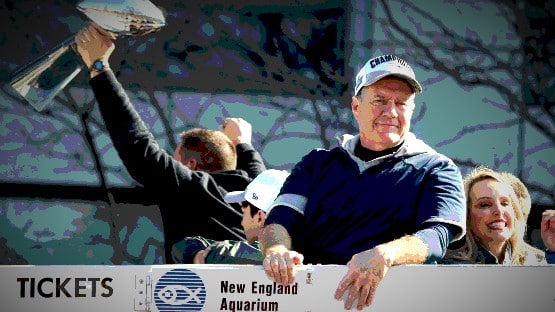
UNC football coach Bill Belichick – I still have a hard time processing this – recently made the case for college-football programs to follow the NFL management model.
“College football has changed. I think you can see many other schools have models similar to what we have, a general manager and head coach model. That’s what it is. It’s pro football on a much smaller scale in terms of what each school is spending,” Belichick said in an interview for “Carolina Insider.”
UNC is investing plenty into the football program – $10 million annually is what it took to convince Belichick to come to a part of the country that is now accepting that college football isn’t just something to do until basketball season.
And that’s just for starters.
The school is putting millions into assistant coaches, support staff, and of course, NIL.
Players coming into college football now are professionals; it’s time to stop pretending they aren’t.
Belichick knows they are: “These kids are being played to play, they’re monetized, they’re compensated, they pay taxes,” Belichick said in the “Carolina Insider” interview.
A professional model is required
Revenue sharing is the latest bridge to the world of professional sports.
This will add another layer of complex decision-making to the schools’ athletic departments.
Which sports get what amounts?
Which players and positions are deemed most important to winning?
How much do you offer prospects, both high schoolers and transfer players?
How does the evaluation process work?
What compensation does the starting quarterback receive compared to the backup left tackle?
Schools are quickly learning this is too much to add to the head coach’s plate.
Welcome the general manager position in college athletics.
It’s a rapidly growing trend in college sports that is quickly evolving into exactly what Belichick labeled “professional sports on a smaller scale.”
ODU Football recently hired former Tulane recruiting coordinator Hunter Sims to serve as the school’s first football general manager.
How did a school like ODU on a limited budget add a GM to the staff?
They didn’t.
They replaced a previous staff member with Sims.
That’s how vital the GM position is to ODU.
The gap between the haves and the have-nots will always exist in big-time college athletics; the general manager’s role will be to help the program maintain a competitive balance regardless of which side it is competing with.
The new GM isn’t in place to narrow the gap between ODU and Ohio State; he’s there to stay a step ahead of other Sun Belt Conference opponents.
The roster is significant at a school like ODU, but the revenue stream is equally crucial.
Sims might be positioning the Monarchs with money games, and keeping an eye on the fertile local high-school talent field and the ever-present transfer portal.
While the GM’s role in pro sports involves operations, scouting and contract negotiations, the GM in college concentrates on NIL, recruitment, and athletic support.
But both are in place for the same reason: to allow head coaches to mentor and develop players, putting the best product on the field.
College coaches should do just that: coach
The role of the college football coach has changed dramatically in the past few years.
In the old days, pre-NIL, pre-transfer portal, the head coach’s responsibility primarily focused on developing players, game planning, and creating a positive team culture.
The NIL and the transfer portal have ushered in a massive shift into the collegiate athletics landscape.
This new world of high-stakes college athletics has opened our eyes to what we are asking and expecting from the head coaching position.
The increasing demands seem to indicate the necessity of a GM.
Like in professional sports, the GM will take on a significant portion of the off-field duties, freeing head coaches to focus on what they do best: coaching and developing players.
The days of relying solely on a head coach to assemble a team are gone.
Schools that don’t adopt this model will be left watching.




 Share
Share