
Climate and Energy News Roundup: November 2023

 Share
Share
Recent research indicates that accelerated ice melt in west Antarctica is inevitable for the rest of the century.
 Share
Share
Recent research indicates that accelerated ice melt in west Antarctica is inevitable for the rest of the century.

 Share
Share
When a Florida manatee swims into the Chesapeake Bay, it makes waves. Such was the case on Aug. 19, when one of the gentle giants was photographed munching on underwater grass in the St. Mary’s River in Maryland.

 Share
Share
New research suggests that cats taken out in strollers have increased health and wellbeing, and improved chances for adoption.
 Share
Share
Recent encounters with bears on the Blue Ridge Parkway have prompted park staff to issue important reminders to visitors.

 Share
Share
The Edith J. Carrier Arboretum is offering a Summer Brown Bag Lecture series May – July at James Madison University in Harrisonburg. The event starts at noon and is free to attend.
Share
New research by Virginia Tech scientists shows that sections of the Chesapeake Bay are sinking at rates of nearly a quarter an inch – or 7 millimeters – a year.
 Share
Share
Bald eagles are conservation darlings. Once lurching toward extinction, eagles flew off the endangered species list as the number of mating pairs nationwide soared from a low of a few hundred in the 1960s to nearly 10,000 by 2010.
 Share
Share
Ultimately, climate change will not be solved by climate scientists and engineers calculating how many solar panels we need installed.
 Share
Share
In honor of the 50th anniversary of the Clean Water Act, the James River Association held its 2022 Annual Meeting last night.
 Share
Share
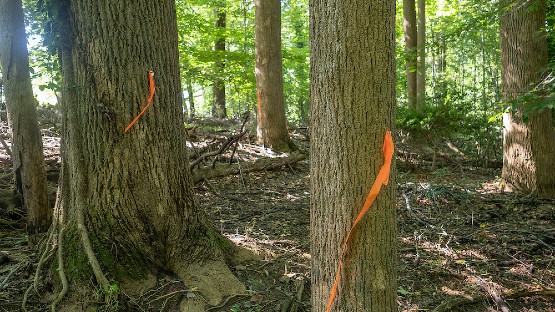
Looking at the skinny elm sapling reaching for the sky in his backyard, James Bryant said that he hopes he lives long enough to be able to sit under its canopy and read a book in summer.


We don’t take press releases or official statements as the final word. Digging in to get the whole story takes time and resources.