
Rockbridge Cattlemen’s Association Dinner set for Thursday

 Share
Share
The Rockbridge Cattlemen’s Association annual dinner meeting is set for Thursday at 6:30 p.m. at the South River Volunteer Fire Department in Fairfield.
 Share
Share
The Rockbridge Cattlemen’s Association annual dinner meeting is set for Thursday at 6:30 p.m. at the South River Volunteer Fire Department in Fairfield.
 Share
Share
Want a smartphone that stretches, takes damage, and still doesn’t miss a call?
 Share
Share
Virginia Tech sophomore Evan Allen knows his way around Reddit’s r/WallStreetBets, an online forum where millions of users gather to talk about the stock market.

 Share
Share
Isaac Izzillo, the director of COVID vaccination and education at Augusta Medical Group, takes us inside the effort to get the Staunton-Waynesboro-Augusta community protected against COVID-19.
 Share
Share
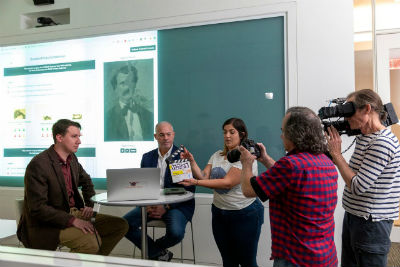
When the History Channel needed an expert to help weigh in on the theory that John Wilkes Booth may have survived beyond 1865, they called on the expertise of Virginia Tech computer science associate professor Kurt Luther.
 Share
Share
Each year, over 180 million tons of dust are swept up from the Sahara Desert, blown across the western edge of Africa, wisped across the Atlantic Ocean, and deposited throughout the Americas. These are called dust plumes, and they carry more than just sand.
 Share
Share
In April of this year, young salamanders emerged from two northwestern Florida wetlands where they hadn’t been seen in over a decade. Their presence is the result of a long-term collaborative recovery effort between Virginia Tech and Eglin Air Force Base.
 Share
Share
For centuries, people around the world have used garlic as a spice, natural remedy, and pest deterrent – but they didn’t know how powerful or pungent the heads of garlic were until they tasted them.
Share
The implementation of integrated pest management strategies is improving livelihoods and bringing billions of dollars in economic benefits to developing nations.
Share
While the Central Appalachian region is known for such hydrocarbon resources as coal, it also hosts unconventional gas resources, such as coalbed methane, shale gas, and other tight gas formations.


We don’t take press releases or official statements as the final word. Digging in to get the whole story takes time and resources.