Dear EarthTalk: Is there any proof that recent advances in air quality monitoring and the widespread sharing of the results have materially reduced air pollution?
– Mitch B., New Haven, CT
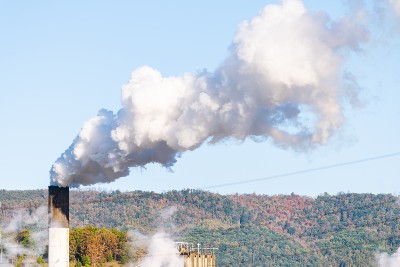
According to the World Health Organization (WHO), air pollution kills upwards of seven million people annually around the world. Asthma, lung cancer, chronic obstructive pulmonary disease (COPD) and stroke are the most common afflictions associated with acute exposure.
Aside from human health risks, air pollution discolors the hues of the sky, creates acid rain and destroys ecosystems. The United Nations has included the improving of air quality in its Sustainable Development Goals, pushing policymakers in a growing number of cities around the world to take proactive steps to protect our shared “wild blue yonder.”
But while public policy is an important tool in reducing air pollution, it has its limitations. For example, informed by traditional, static monitoring stations, most policies targeting cleaner skies have focused on outdoor spaces only, neglecting indoor areas where people congregate. However, in recent years advances in sensor technology have facilitated lower cost, mobile monitoring of air quality in outdoor and indoor environments. Nowadays we even have technologies that can track air pollution exposure of an individual using sensors that can be worn. This personalization of air quality data may encourage the design and synthesis of individual plans to reduce exposure, in turn keeping all of us healthier.
Air quality data that is accessible, shared in real time and amenable to public interpretation is an effective strategy for motivating individual behavior change and the development of actions that reduce air pollution. Research from the University of Queensland has shown that the sharing of real time data on air pollution has led to a reduction in fine particulate levels and associated mortalities.
In 2008, the U.S. embassy in Beijing began to publish hourly air quality reports on social media. These reports did wonders for air pollution awareness in China, prompting citizen action. Today, U.S. embassies share live air quality readings in OECD (Organisation for Economic Co-operation and Development) countries, of which there are 38. A study that compared pollution levels before and after U.S. embassies started sharing live air quality updates found that fine particulate levels declined annually by as much as four micrograms per cubic meter in each of the 38 countries.
The more people are informed on an issue, the less abstract it becomes. Crucial information is often trapped in elite circles of academia with no outlet to the person on the street. Providing the public with credible, real-time, accessible data on environmental issues is a first step toward establishing behaviors and actions that supplement policy efforts in support of a healthier planet. The more each of us knows about the potential harm in the air around us, the better able we are to protect ourselves and the environment at large.
CONTACTS: Real-time air quality data ‘life saving’, sciencedaily.com/releases/2022/10/221024153605.htm; Monitoring Air Quality and the Impacts of Pollution, datasmart.ash.harvard.edu/news/article/monitoring-air-quality-and-the-impacts-of-pollution-679; Collective action needed to improve quality of the air we share, unep.org/news-and-stories/story/collective-action-needed-improve-quality-air-we-share.
EarthTalk® is produced by Roddy Scheer & Doug Moss for the 501(c)3 nonprofit EarthTalk. See more at emagazine.com. To donate, visit earthtalk.org. Send questions to: [email protected].



 Share
Share