 In today’s professional climate, undergraduates need research experience to be competitive for jobs that tackle complex issues such as the spread of bacterial disease. In response, Virginia Tech faculty members in the department of biological sciences in the College of Science have created a course that provides authentic scientific research opportunities for undergraduates.
The new course, called “Phage Hunters,” provides students with real-world problem-solving activities, unlike more traditional lab courses where students merely follow pre-set instructions for experiments with known results.
“Science is an active endeavor that moves beyond memorization and instruction sets, so our goal is for students to understand science as doing – as a process with real challenges and real discoveries,” said Rich Walker, associate department head of biological sciences in the College of Science.
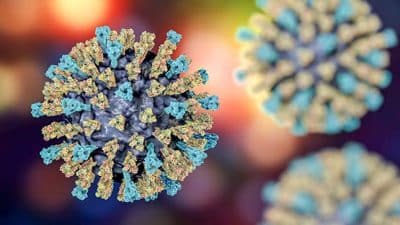
Virginia Tech is partnering with the Science Education Alliance-Phage Hunters Advancing Genomics and Evolutionary Science program, known as SEA-PHAGES, at the Howard Hughes Medical Institute to do research in the field of bacteriophage genomics – the genetic sequencing of bacteriophages, or viruses that infect bacteria.
These bacteriophages, or simply phages, are commonly found in the environment, from soil to seawater. But, many of them have not been identified, leaving a wide knowledge gap in terms of how phages infect bacteria and affect the environment.
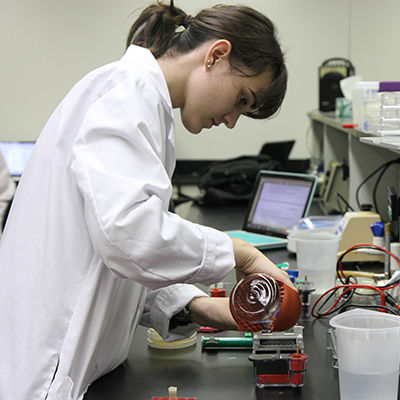
Students must discover a phage and learn wet lab techniques to grow and isolate it. Finding one of these viruses, though, is easier said than done. Some students had a hard time finding one, or producing enough of it to study, which became an investigational process that demonstrated the reality of research.
“This class has taught me that science and research is all about finding new ways to approach a result,” said Dawn Wright of Suffolk, Virginia, a sophomore majoring in neuroscience.
“Although we all had the same goal, we had to go about achieving it differently through trial and error. This was frustrating, but I learned that just because something is written in a protocol does not mean it is concrete – we have to adjust according to what’s effective.”
This fall, students looked for phages in soil around campus and found them in soil from the Duck Pond, the Drillfield, the Hahn Horticulture Garden, and the lawn outside of Dietrick Dining Hall.
After separating phages from the soil, students purified their phage’s genetic material, saw their phage close-up using electron microscopy, and named it.
“Naming and characterizing the phage gives students a sense of pride and ownership of their work,” said Kristi DeCourcy, a senior research associate in the Fralin Life Science Institute. DeCourcy and Stephanie Voshell, an instructor in biological sciences, established and teach the course, which began this fall after the university joined SEA-PHAGES.
Once named and characterized, students will add their phages to the Actinobacteriophage Database, run by Graham Hatfull, a professor at the University of Pittsburgh, who worked with the Howard Hughes Medical Institute to develop the program into a national effort.
In addition to contributing to the database, students can become authors on journal articles related to their research.
“In the future, we hope to collaborate with faculty in the biological sciences who are already conducting phage-related research,” said Walker. “For example, associate professor Lisa Belden’s efforts to characterize the microbiome of amphibian skin could allow us to look at the types of phage that infect the bacterial cells that comprise that microbiome.”
Two of the student samples from this semester have been sent to the University of Pittsburgh to have their genomes sequenced. In the spring, students will continue their research by assembling and annotating the genomes of these two sequenced phages.
Approximately 100 schools from around the country are involved in the project, and Virginia Tech is part of the 8th cohort.
The Virginia Tech course was recently approved as BIOL 1135-1136 Phage Hunters, and is open to all majors. There are no prerequisites, so students in any academic year are eligible.
Current students shared their research in a poster session on Dec. 3.


 Share
Share

AFP