Valley Hope Counseling in Waynesboro is a nonprofit that makes mental health services accessible to all, including Medicaid patients.
Outside funding sources according to family income makes it possible for patients at Valley Hope to pay lower co-payments per counseling visit.
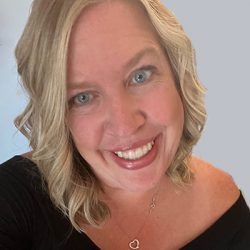
“Be kind to the people you meet,” said Ginny Harris, a graduate of Waynesboro High School, who is leaving her role as executive director of Valley Hope to pursue private practice.
Harris said that as a counselor at Valley Hope for 21 years she has considered her role as someone who is joining patients on their journey. Each patient has to figure out what works for them.
In undergrad at UVA, Harris, who lives in Waynesboro, said she thought she would become a teacher, until she took Psych 101. She changed her major to psychology and then earned a master’s in counseling at Wake Forest University.
“I would say I was fascinated with how the mind works,” Harris said of Psych 101‘s impact on her career. “I used to love to read detective stories and I feel like it’s a little bit like detective stories. Everybody, what they do or how they cope, it all makes sense when you understand where [they] come from.”
She said she still finds how individuals learn to cope fascinating and also inspirational.
“It has always felt like a real privilege to sit with people and hear their very vulnerable stories,” Harris said of her career in counseling. She has one patient whom she has seen for all of the 21 years she has been at Valley Hope. She enjoys hearing from patients later and finding out how they are doing.
Many of her patients will follow her to her private practice, Ginny Harris LLC in Staunton on the corner of Commerce Avenue and Statler Boulevard. But she will miss the nonprofit atmosphere, working with nonprofit partners, including Valley Mission and the Community Foundation of the Central Blue Ridge, and attending nonprofit community meetings. She is sure she will find a way outside of her private practice to still be involved in the nonprofit world.
“It’s really bittersweet. Yes, I’m excited and also sad,” Harris said of the transition in her career.
However, Harris said, she wants to focus more on the clinical side of her role and helping patients, not on the administrative requirements.
“It’s been great. It’s just also time for somebody else to come in and move in a different direction,” she said.
As a counselor at Valley Hope, Harris’s patients were all age groups, but especially adults, struggling with anxiety, depression, relationship issues, substance abuse and domestic abuse.
“We see people of really all income levels, all presenting types of issues,” she said of Valley Hope‘s patient base.
She said she thinks most are unaware that many are struggling in the community because of the the world we live in now, social media and isolation.
“People are hurting,” she said. “There’s a really high demand right now. In the last few years, it’s definitely gone up.”
She thinks, in general, many are struggling with anxiety.
“I think our country or the state of the world right now, there’s a lot of unsettledness that feels like is creating angst. Also, it’s just a different world. There’s social media.”
While much more awareness exists regarding mental health now, a lot of isolation also exists, especially for youth when it comes to social media.
“There’s just this sense that people are hurting. Everybody is hurting in some kind of way,” Harris said. She’s unsure of all of the factors as to why, but she feels a lot of pain in the world.
The COVID-19 pandemic did not help, but it did introduce her to the advantages of telehealth. While she still prefers meeting with patients in person, she has come to embrace the opportunities that telehealth provides for her patients who have transportation issues, daycare expenses, a sick child, or when work schedules change unexpectedly.
In her private practice, Harris will continue to accept patients on Medicaid.
“I still want to be meeting a need in the community,” she said.
Valley Hope began in 1998 and welcomes online donations to enable patients to pay lower co-payments to attend sessions.
Support AFP


 Share
Share
Rebecca Barnabi