Virginia Environmental News
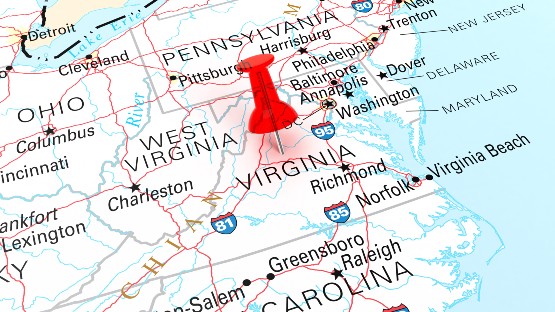
Local advocates are petitioning to bring passenger rail to Harrisonburg and the surrounding Shenandoah Valley in Virginia’s 2026 State Rail Plan. Learn more at the Blue Ridge Rail website where you can also sign the petition. The goal is to provide clean, affordable, and reliable public transportation to DC, Richmond, and beyond.
The Faith Alliance for Climate Solutions’ 10th annual Climate Crisis Forum will be on Oct. 22, 6:15-8:45 p.m. It will examine the public health consequences of extreme heat and explore local solutions such as tree cover. This is related to their urban heat mapping project in Northern Virginia with George Mason University. You can grab a ticket with a virtual option.
NextEra Energy is slashing its clean energy commitments and downplaying its public communications about renewable energy since President Trump returned to the White House. This is raising concerns in Virginia about its plans to merge with Dominion Energy.
The Trump administration is pushing for a full repeal of the 2001 Roadless Area Conservation Rule that protects millions of acres of virgin forestland nationwide. In Virginia, it would open up about 400,000 acres of forest, largely across the Shenandoah Valley region, to development.
Our Climate Crisis

A massive glacial collapse caused a catastrophic flash flood in the Himalayan border region of Nepal and Tibet. The death count is more than 900 people with over 4,400 still missing. The mountainous region is especially vulnerable to extreme weather events such as melting glaciers that have become more common because of global warming.
The world’s oceans hit their hottest temperatures ever recorded for July and August. It was fueled by developing El Niño conditions in the Pacific and heat waves in Europe and the Mediterranean.
Deaths increased by 16,000 in one week in June during Europe’s record heatwave. Most of the deaths were in France, Belgium and Germany, which are not accustomed to such heat.
Our climate crisis is affecting corporate bottom lines — making insurance harder to get, disrupting supply chains, and lowering crop yields. This, in turn, makes debt and equities markets riskier and could filter through to stock index funds and retirement portfolios.
Hotter summers are buckling roads and bending railroad tracks in the U.S. Engineering and construction standards have remained static while weather patterns have been changing.
Politics and Policy

Solar and EV sales cratered after Congress eliminated federal tax credits. Home batteries, however, bucked the trend partially because they offer people the ability to radically reduce their reliance on the centralized electrical grid in the midst of rising electric costs.
Canada is betting big on hydro and wind power in what could be North America’s largest-ever clean energy investment. At the same time they’re doubling down on oil sands in Alberta, alongside plans to build additional pipelines to get the oil to market.
President Trump is taking extraordinary steps to attack California’s position as a national leader in environmental protection. He is enlisting at least a half-dozen federal agencies to undermine the state’s efforts to pivot away from fossil fuels.
The Trump administration is promoting the opening of two new grid-scale battery manufacturing facilities in Michigan and Maine.
A tenured science professor at West Point was ordered last year to cut information about the human causes of climate change from his curriculum. He was fired when he refused.
Energy and Technology
What will be the world’s largest green hydrogen facility is near completion in Saudi Arabia. This reflects a broader shift in Saudi Arabia’s energy strategy by establishing itself as a major producer and exporter of renewable energy and clean fuels.
Indonesia is planning to start the mass production of homegrown electric motorcycles and cars. They set a target to have 13 million electric motorcycles and 2 million electric cars on their roads by 2030.
Sales of electric trucks and buses nearly doubled globally in 2025. China accounted for nearly 90% of these sales, while sales were also up substantially in the EU and India.
Tesla is advancing plans to build a $10.1 billion solar cell factory in Texas, and Translucent Solar says it will soon begin production at its South Carolina panel assembly site.
The South Korean grid-battery company DeltaX plans to construct a $141 million manufacturing headquarters outside of Atlanta. The company will join the Southeast’s battery belt that began expanding during the Biden administration.
Startup Sage Geosystems is now producing power from its first next-generation geothermal plant in Texas. The enhanced system involves drilling deep into hot rocks and fracturing them to create water pockets, then using the heat to generate power.
Climate-friendly electric heat pumps are becoming the norm among American home builders. Factors driving the change include improvements in the technology, energy savings, and the need for air-conditioning during hotter summers.
The dream of future, small-scale, and inexpensive nuclear reactors lives on despite repeated startup failures. Two former SpaceX engineers now seek to revive a long-dormant nuclear reactor experiment near Lynchburg, Virginia, to power the needs of data centers.
In our warming climate, the increase in electricity demand for air conditioning systems will exceed that for data centers by 2030. Yet this is receiving far less attention than is needed.
Land, Food, Agriculture
Farmers using regenerative farming and grazing are protecting Spanish land from wildfires.
In many orchards across the U.S., fruit has all but disappeared this year as trees bloomed three weeks early and were then hit by a devastating severe frost that killed the blossoms.
Tyson Foods will close or sell three of its beef facilities as the industry struggles due to the decreased number of cattle. Numbers shrank to a 75-year low after a prolonged drought burned up grazing lands in the western U.S. Other large meatpackers are also retrenching.
German hops farmers are struggling with hotter and dryer summers. One farmer’s solution is to grow his hops in the shade of solar panels. Farmers in other parts of the world, including Egypt, are experimenting with similar strategies.
Ecojustice

Mary Sprunger, professor of history at Eastern Mennonite University, reflects on The More-With-Less Cookbook, which sold more than one million copies. She says it was “a response to hunger crises in parts of Africa and Central Asia.” It invites “the relatively wealthy of the world to consume less so that others would have enough.”
Urban heat islands pose a growing health threat in our rapidly warming climate. There are solutions such as creating shade by planting trees, constructing green roofs and walls, and painting roofs light colors. Many tropical cities, however, cannot afford them.
Ecological and Climate Action

EVs are equipped with one-pedal driving, meaning that the electric motor functions to brake the car when you lift your foot off the accelerator. This converts some of the energy normally lost during braking back into electricity and eliminates the wear-and-tear of brake pads.
Gas stoves are a major source of indoor pollution. If you have asthma, swapping out your gas stove for an electric one can result in a 70% reduction in the possibility of missed work or school days, and even a hospital admission.


 Share
Share