An invasive pest is targeting boxwood shrubs, and it has now been detected for the first time in Virginia.
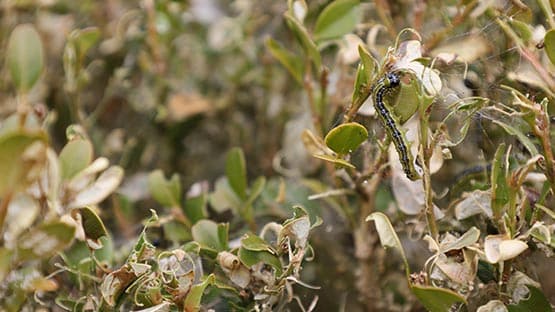
Box tree moth caterpillars feed directly on the leaves of boxwood shrubs and can completely strip a plant of its leaves and bark, according to a Virginia Tech entomologist.
The Virginia Department of Agriculture and Consumer Services has found the insect at four sites in Clarke, Loudoun and Frederick counties.
“Prior to this report, the moth had not been seen in Virginia,” said Alejandro Del-Pozo, also an extension specialist at the Hampton Roads Agricultural Research and Extension Center in Virginia Beach. “Given that, it’s very important to spot them early and respond quickly.”
As of July, the box tree moth had been confirmed in New York, Delaware, Massachusetts, Michigan, Ohio, Pennsylvania and West Virginia.
Saving infested shrubs is possible, but it requires early detection, Del-Pozo said.
Virginia Cooperative Extension offers a guide to recognizing box tree moths and the damage they cause at each stage of their life cycle.
The caterpillars and their eggs are small, making them hard to spot.
Related stories
Search “entomologist” on Augusta Free Press.
- Spotted lanternfly continues infestation of Virginia; ‘learning to live with them’
- Forest service to use aerial pesticide to prevent defoliation from spongy moth caterpillars
- Declining number of fireflies in summer season likely due to weather, development, pesticides
- Virginia Tech entomologist: Ticks are everywhere, and they’re not going away
- Virginia Tech expert offers tips for keeping stink bugs out in the cold
Bacillus thuringiensis, a bacterium sold as a biological pesticide, has shown some success in controlling box tree moth caterpillars when applied early.
If you suspect a box tree moth infestation, VDACS will provide treatment for boxwood plants, if box tree moth is confirmed on boxwood plants.
The boxwood, one of the most popular ornamental evergreen shrubs in Virginia and the United States, may not be entirely doomed, according to experts.
“We’re doing work to understand the peak activity of this insect during the year, how long it takes to go through its life stages, and the presence of naturally occurring beneficial insects associated with infested boxwoods,” said Del-Pozo.
USDA: How to spot a box tree moth infestation
-

(© Henk – stock.adobe.com) A box tree moth starts out as a lime-green caterpillar, with black stripes, white spots, hairs and a shiny black head
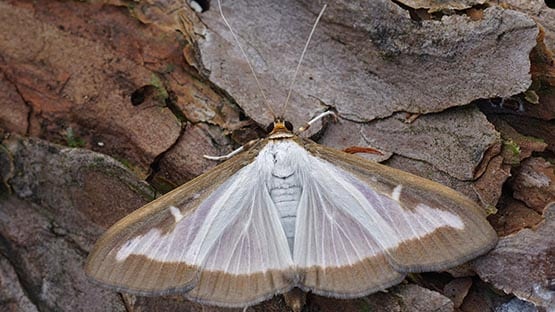
- Adult box tree moths generally have white wings with a thick brown border
- Brown leaves and defoliation
- Missing sections of leaves or skeletonized leaves
- Young caterpillars hide among twigs and leaves, which can grow up to 1.5 inches.
- Frass: Sawdust-like excrement from insects
- Pupa: May be wrapped in webbing
- Adult moths: Can be difficult to spot, most active at night
Support AFP


 Share
Share

Crystal Graham