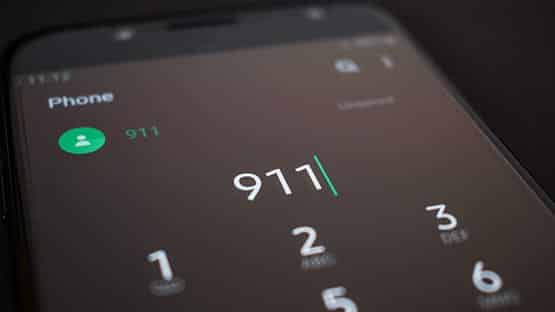
When someone struggles with addiction or suicidal ideation, there are times when a call to 911 may be necessary due to a medical issue or concern for someone’s safety.
Police, fire and rescue departments are most often the ones answering the call for help. Too often, a person in crisis ends up in the back of a police car or ambulance and is taken to jail or the emergency room.
Recognizing that both of those solutions were not ideal for those experiencing a mental-health crisis, Albemarle County Police Chief Sean Reeves began to explore other options.
“Can you think of any other type of medical condition where instead of a qualified medical expert helping you out, you have a police officer showing up?” asked Col. Reeves.
He wanted Albemarle County to develop a response plan that could “potentially decouple law enforcement from the larger narrative of not being the face of mental health.”
The inception of HART
Worldwide, anxiety and depression increased by approximately 25 percent during the COVID-19 pandemic, in part due to the social isolation it caused. The World Health Organization said it was a “wake-up call to all countries to pay more attention to mental health and do a better job of supporting … mental health.”
As demand increased for mental-health services, the state began to discuss alternative response models to address the need. At the same time, multiple departments in Albemarle County put their heads together to try to develop a program specifically for Albemarle County residents.
The brainchild of the collective group was HART, or Human Services Alternative Response Team, a program that is now administered by the Department of Social Services, fire and rescue and police departments.
The response model of HART allows law enforcement, behavioral health providers and emergency services personnel an opportunity to work together to respond and offer crisis support and intervention, when necessary.
“I think HART is the result of years of working really close – fire, rescue, police and social services – on a lot of things that overlap in terms of the service,” said Dan Eggleston, Albemarle County Fire Rescue Chief.
“We all understood that mental health was a big challenge, and that many times, we often shared the same client list. Long before the idea really took off nationally, we thought a co-responder team may be more applicable in this type of situation.”
Intervention over involuntary treatment

With the HART team in place in Albemarle County, the goal is set out to provide an alternative crisis response through intervention.
“One of the benefits of the HART team is that we, the team, are not in a hurry to be at their next thing,” said Kaki Dimock, Chief Human Services Officer for Albemarle County. “We can sit on your front porch for the next three hours and talk this through to see if we can de-escalate the situation and then call in some natural supports: the people that you would call if you were distressed and need some help from people that are already in your life, or connect to the resources and supports you have.”
If the crisis can be de-escalated by the intervention, then that trip to jail or the emergency room may no longer necessary.
“You can imagine what it would take for you to say, I’m having a mental health crisis, and I’m going to call 911 because I don’t know who else to call,” she said.
“They’re already in a state of real distress at that point. But that distress doesn’t always necessarily lead to somebody being in need of immediate, 72-hour care in an emergency room or psychiatric care.”
HART is designed to offer short-term crisis intervention support, not long-term case management. However, if a person in crisis doesn’t have a support system in place, the team will make referrals to community resources that can help get them started.
“The HART team will start to figure out what those layers are in between,” said Dimock.
The model helps the county provide better quality service, but Eggleston remains frustrated with things outside their control.
“I think we’re swimming against the stream of a broken healthcare system that makes it hard for us to create a situation where people have quick and easy access to healthcare, both on general medical care and mental health services as well,” Eggleston told AFP. “And in some cases, the stigma, which I think is starting to wane somewhere, but it’s still there.”
Prevention at heart of teamwork
In a perfect world, having a team in place like HART could avert a crisis entirely. That isn’t always what happens, unfortunately.
There has been at least one instance when the HART team responded to a call for help, and there wasn’t a happy ending.
Earlier this year, two people were shot and killed in the Harris Teeter parking lot in Crozet before an off-duty police officer killed the man who pulled the trigger. There had been two calls to 911 from the shooter’s residence in the two months before the incident due to mental-health concerns. On the second call, the HART team responded. In this case, according to police, the family was advised of the requirements and process to obtain an emergency custody order.
No further action was taken.
ICYMI
- Crozet shooter’s family says system failed him; CSB says it can be ‘a confusing process’
- Crozet shooter: He was paranoid, schizophrenic, fighting his own mind, sister says
Of course, hindsight is 20/20, and the best the HART team can do now is use the tragedy to analyze the team’s response and look for missed opportunities.
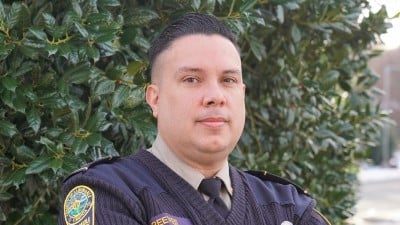
“When we have these incidents where family members are saying, hey, my loved one is not acting like themselves, and we have police or HART go talk to the individual, and they’re not expressing any type of harmful ideation, the family says they haven’t threatened them, they’re not a threat to themselves, not a threat to others, that’s where HART can come in and provide the family with services that might be available,” Reeves said. “That changes if there’s some sort of harmful ideation.
“There are people that live in a gap of services. There are people that we run across that hallucinate, but they’re not harmful, or hear voices, but it’s not harmful. There’s nothing illegal about that,” said Reeves. “That type of behavior doesn’t arise to an emergency custody order or a temporary detention order, per se, unless there’s some sort of threat or idea of a threat. If somebody’s not acting in such a way where they’re a threat to themselves or others, it becomes challenging to obtain an ECO or a TDO from a magistrate.
“It’s all situational. Most people don’t understand that it’s not as simple as well, this person was acting bizarre. It’s not illegal to be bizarre.”
The call for help in Crozet was just one of the approximate 500 the team responds to every year.
“By no means are we perfect with HART; we are constantly learning and evolving,” Reeves said.
So far, the community overall has been receptive to the HART team.
“I do think we are having a positive impact. I don’t think I’ve ever been part of a team that gets as many thank-you notes as this team does,” Dimock said. “I think we’re doing a good job, and also, there’s an opportunity for us to get better.”
Alternatives to jail and hospitals

Prior to implementing this model, people in the fire and rescue departments didn’t have a lot of options when they responded to crisis calls, and many expressed frustrations over not being able to offer more alternatives.
“I think the focus was really on knowing that our responding police officers and firefighters were dissatisfied with the choices that they had available to them in the toolboxes that they were carrying,” said Dimock.
With the HART model, the team is dispatched and police can make sure everybody is safe; rescue personnel can ensure there isn’t a medical emergency; and then the team can stop and listen.
“I think that’s one of the things about not being in a big rush to go to the next scene is that you have the capacity to ask good questions and listen really well and listen for a long time to try to find out what somebody needs next and to have that person who is in distress be the person who decides the most about what comes next,” Dimock said.
The HART model offers responding team members alternatives to taking those in crisis to jail or an emergency room at a hospital.
“We’ve struggled over the years, and I think that this co-responder model is the right model to collectively address this, and it makes sure that we try to deescalate to the level where the person feels safe and then ensure they get connected with the right services,” Eggleston said. “I think overall that’s better for the person in crisis, too.
“Before, we only had a few options in our toolkit in terms of how to deal with this, and none of them at the time were very good for the person in crisis. I think this is better quality service in the long run.
“The real benefit of this is to make sure the right services get to the right people.”
Having heart: How the community fits in
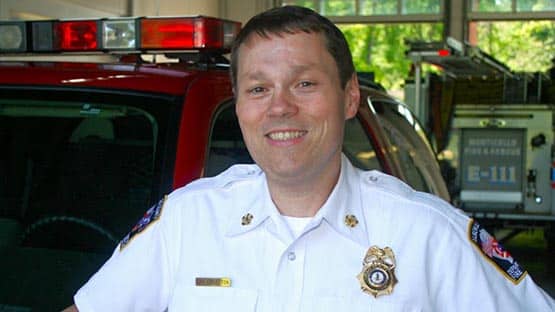
The three departments that partner to deliver the HART program hope they can expand their outreach beyond just responding to emergency calls. As their team grows, they hope to do some preventative mitigation work and engage with folks who struggle and “try to prevent the emergency from happening in the first place,” Eggleston said.
“We really need the community’s help on this. One of the things I often see in our business, and it does cross over to some kind of mental crisis event, is social isolation or lack of community. We run across people sometimes that are really suffering in the shadows of their neighbors and families and friends, and you’re just not aware.”
Eggleston, who announced plans to retire next month, hopes that people will check on their family, their neighbors and make those connections.
“We lost so much during COVID because we were so isolated, and I’m not sure we ever recovered from that, but we have a lot of people out there that are suffering and alone and silent, and it’s a shame.
“They develop health issues or a mental health crisis, and it’s because of a lack of engagement with their family and friends and neighbors. We just ask people to become involved. Check on your neighbors, and let’s get back to helping each other.”
Related stories
- Albemarle County Fire Rescue Chief Dan Eggleston announces retirement
- Responding with HART: Albemarle County team answers call for mental-health distress
- Harrisonburg: A mental health crisis is among top five emergency calls to police
- Black and male: Why Chris Jones may not have sought help for mental-health condition
- Why did Chris Jones pull the trigger? He was a top student, but troubled young man
Support AFP


 Share
Share
Crystal Graham